格物
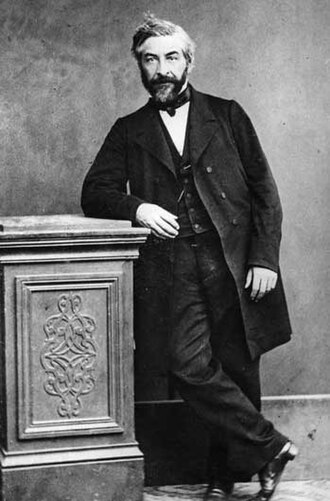
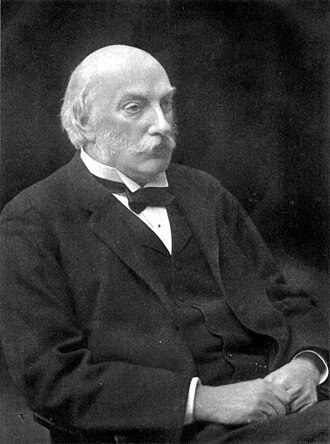
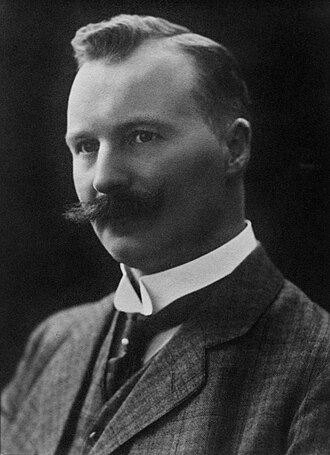
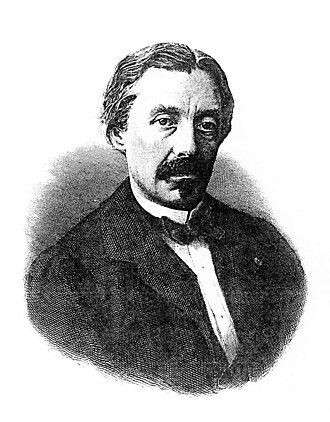
图:作者不详 · Public domain · Wikimedia Commons
让-夏尔·加利萨·德马里尼亚1817—1894
Jean Charles Galissard de Marignac
Swiss chemist (1817–1894)
Jean Charles Galissard de Marignac was a Swiss chemist whose work with atomic weights suggested the possibility of isotopes and the packing fraction of nuclei. His study of the rare earth elements led to his discovery of ytterbium in 1878 and co-discovery of gadolinium in 1880.
摘自英文维基百科「Jean Charles Galissard de Marignac」(英文维基百科,暂无中文条目),CC BY-SA 4.0
- 出生
- 1817 年 4 月 24 日,日内瓦
- 逝世
- 1894 年 4 月 15 日,日内瓦
- 国籍
- 瑞士
- 学科
- 物理学、化学、地球科学
- 职业
- 化学家、晶体学家、大学教师
- 母语 / 工作语言
- 法语
- 母校
- 巴黎综合理工学院、国立巴黎高等矿业学校
- 工作单位
- 日内瓦大学
研究领域
主要贡献
发现的元素
所获奖项(3)
- 1881英国皇家学会外籍会员
- 1886戴维奖章
- —Pour le Mérite for Sciences and Arts order
学会与院士
百科正文
本条目暂无中文维基百科条目,下面是英文维基百科原文。
He was considered "one of the great chemists of the nineteenth century", particularly in the area of inorganic chemistry.
On 13 September 2011, the site of his laboratory at the University of Geneva was designated a historical chemical landmark of Switzerland.
Life and work
Jean Charles Galissard de Marignac was born in Geneva on 24 April 1817, to Jacob Galissard de Marignac, a judge, and Susanne Le Royer, a sister of well-known chemist and physiologist Elie Le Royer. Le Royer's pharmacy was in the same building as their home.
Marignac attended the École polytechnique in Paris with the intention of becoming a mining engineer. From 1837 to 1839, he studied at the École des mines.
The following year was spent traveling and visiting well-known scientists. Marignac worked briefly with Justus von Liebig, and with Alexandre Brongniart in the Sèvres porcelain factory. He also may have been influenced by Jöns Jacob Berzelius.
On his return, Marignac became in 1841 a professor of chemistry at the Academy of Geneva. In 1845 he was appointed professor of mineralogy as well. He held both chairs until 1878, when he resigned due to poor health. He was able to continue working in a laboratory at his house until 1884, when he became so debilitated that he could no longer work. Marignac died at Geneva on 15 April 1894.
Marignac's name is well known for the careful and exact determinations of atomic weights. Whenever possible, he used at least two independent methods to assess a sample. He carried these out for long-identified elements and for newly proposed elements. In undertaking this work he had, like Belgian chemist Jean Stas, the purpose of testing Prout's hypothesis, the idea that atomic weights are multiples of hydrogen. However, he remained more disposed than the Belgian chemist to consider the possibility that it may have some degree of validity. By establishing well-defined values for a wide variety of elements, he seriously contributed to the underlying basis of inorganic chemistry.
Throughout his life he paid great attention to the rare earths and the problem of separating and distinguishing them. In 1878 Marignac extracted ytterbium from what was supposed to be pure erbia.
In 1880 he found gadolinium and samarium in the samarskite earths.
In 1858, he pointed out the isomorphism of the fluostannates and the fluosilicates, thus settling the then vexed question of the composition of silicic acid. This research helped him to confirm the atomic weights of zirconium and titanium.
Subsequently Marignac studied the fluorides of boron, tungsten, and other elements. He prepared silicotungstic acid, one of the first examples of the complex inorganic acids.
Marignac discovered that niobium and tantalum could be separated by fractional crystallization separation of potassium heptafluorotantalate from potassium oxypentafluoroniobate monohydrate, a process which was used commercially until displaced by solvent extraction separation of the same fluorides starting in the 1950s.
In physical chemistry, he carried out extensive research on the nature and process of solutions, investigating in particular the thermal effects produced by the dilution of saline solutions, the variation of the specific heat of saline solutions with temperature and concentration, and the phenomena of liquid diffusion.
Galissard de Marignac is buried with his wife Marie, née Dominicé, and their son Edouard (1849-1871) at the Cimetière des Rois, which is considered the Pantheon of Geneva.
以上内容摘自英文维基百科「Jean Charles Galissard de Marignac」,按 CC BY-SA 4.0 使用,去掉了参考文献、外部链接等尾部小节,公式改写成了纯文本。全文、配图和出处见原文。
同一学科、同时代的科学家



同一学科的科学家
更多 ›