格物
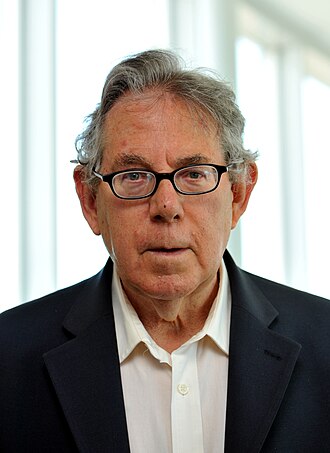
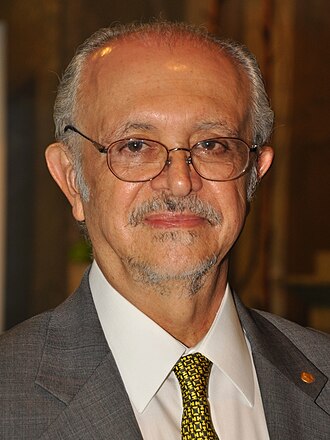
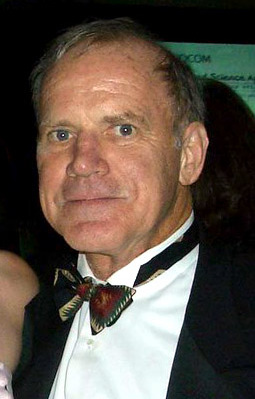
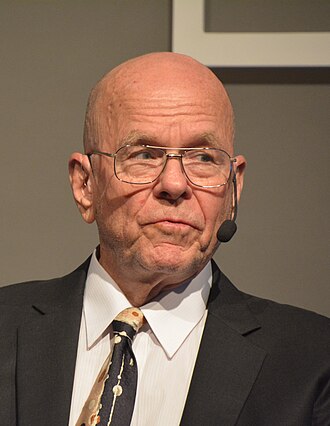
图:Teemu Rajala · CC BY 3.0 · Wikimedia Commons
保罗·约泽夫·克鲁岑1933—2021
Paul J. Crutzen
化学家, 荷兰王国
保罗·约瑟夫·克鲁岑,荷兰大气化学家,因“他们对大气化学的研究工作,特别是臭氧的形成与分解”,与马里奥·莫利纳、弗兰克·舍伍德·罗兰共同获得1995年诺贝尔化学奖。
摘自维基百科「保罗·克鲁岑」,CC BY-SA 4.0
- 出生
- 1933 年 12 月 3 日,阿姆斯特丹
- 逝世
- 2021 年 1 月 28 日,美因茨
- 国籍
- 荷兰王国、德国
- 学科
- 化学、地球科学、工程与发明
- 职业
- 化学家、工程师、大学教师、气候学家
- 母语 / 工作语言
- 德语、荷兰语、英语
- 母校
- 斯德哥尔摩大学(哲学博士,1973 年)、伊格内修斯文理中学
- 工作单位
- 乌得勒支大学、佐治亚理工学院、美因茨大学、阿姆斯特丹、斯德哥尔摩大学(1958—)、马克斯·普朗克化学研究所(1980—2000)
研究领域
师承
博士导师1
博士生2
来自 Wikidata 的「博士导师」「师从」「博士生」「学生」记录,可能不全。
所获奖项(21)
- 1985Leo Szilard Lectureship Award
- 1989泰勒环境成就奖
- 1991沃尔沃环境奖
- 1994马克斯·普朗克研究奖
- 1994德国环境奖
- 1995诺贝尔化学奖
- 1996Commander of the Order of the Netherlands Lion
- 1997honorary doctorate of University of Burgundy
- 2004美国科学促进会会士
- 2005honorary doctorate from Joseph Fourier University
- 2006英国皇家学会外籍会员
- 2010honorary doctor of Ca' Foscari University of Venice
- 2019罗蒙诺索夫金质奖章
- —Humboldt Research Fellowship
- —Knight Commander's Cross of the Order of Merit of the Federal Republic of Germany
- —honorary doctor of Tel Aviv University
- —Honorary doctor of the University of Liège
- —Honorary doctor of the Catholic University of Louvain
- —honorary doctor of the University of Athens
- —洪堡奖
- —美国地球物理联盟会士
学会与院士
百科正文
生平
1933年生于荷兰阿姆斯特丹,1973年获斯德哥尔摩大学气象学博士学位,目前在位于德国美因茨的马克斯·普朗克化学研究所大气化学部工作。
克鲁岑是以研究臭氧层的破坏机理而闻名的,其研究兴趣为研究“平流层和对流层臭氧在生物地球化学循环和气候中的作用”。他也是核冬天理论的创始人之一。
获奖
这里列出他的部分获奖记录:
1986: 美国地球物理协会理事
1989: 泰勒奖.
- 1991: 瑞典皇家科学院院士
- 1995: 诺贝尔化学奖 (与马里奥·莫利纳和弗兰克·舍伍德·罗兰分享)
- 1995: 因为"保护臭氧层的突出贡献"而获得由联合国环境署颁发的全球臭氧奖
- 1996: 国际臭氧委员会荣誉委员
- 1999: 俄罗斯科学院外籍院士
2002: 地球科学领域引用率最高的作者(从1991年到2001年所发表的110篇文章总共被引用2911次——科学信息研究所)
以上内容摘自维基百科「保罗·克鲁岑」,按 CC BY-SA 4.0 使用,去掉了参考文献、外部链接等尾部小节,公式改写成了纯文本。全文、配图和出处见原文。
英文维基百科补充中文条目比较短,下面是英文条目「Paul J. Crutzen」的原文
Paul Jozef Crutzen (Dutch pronunciation: [pʌul ˈjoːzəf ˈkrʏtsə(n)]; 3 December 1933 – 28 January 2021) was a Dutch meteorologist and atmospheric chemist. In 1995, he was awarded the Nobel Prize in Chemistry alongside Mario Molina and Frank Sherwood Rowland for their work on atmospheric chemistry and specifically for his efforts in studying the formation and decomposition of atmospheric ozone. In addition to studying the ozone layer and climate change, he popularized the term Anthropocene to describe a proposed new epoch in the Quaternary period when human actions have a drastic effect on the Earth. He was also amongst the first few scientists to introduce the idea of a nuclear winter to describe the potential climatic effects stemming from large-scale atmospheric pollution including smoke from forest fires, industrial exhausts, and other sources like oil fires.
He was a member of the Royal Swedish Academy of Sciences and an elected foreign member of the Royal Society in the United Kingdom.
Early life and education
Crutzen was born in Amsterdam, the son of Anna (Gurk) and Josef Crutzen. In September 1940, the same year Germany invaded The Netherlands, Crutzen entered his first year of elementary school. His classes moved around to different locations after the primary school was taken over by the Germans; during the last months of the war he experienced the 'winter of hunger' with several of his schoolmates dying of famine or disease. In 1946 with some special help he graduated from elementary school and moved onto Hogere Burgerschool (Higher Citizens School). There, with the help of his cosmopolitan parents he became fluent in French, English, and German. Along with languages he also focused on natural sciences in this school, graduating in 1951; however his exam results did not qualify him for university scholarships. Instead, he studied Civil Engineering at a Higher Professional Education school with lower costs, and took a job with the Bridge Construction Bureau in Amsterdam in 1954.
Beginning of academic career
In the 1920's Norwegian meteorologists began using fluid mechanics in analyse weather, and by 1959 the Meteorology Institute of Stockholm University was at the forefront of meteorology research using numerical modeling. The theories were validated in 1960 by images from TIROS, the first weather satellite.
At that time, Stockholm University housed the fastest computers in the world with the BESK (Binary Electronic Sequence Calculator) and its successor, the Facit EDB. Crutzen was involved with the programming and application of some of those early numerical models for weather prediction, and also developed a tropical cyclone model himself.
Working as a programmer at the university, he was able to take other lectures and in 1963 applied for a PhD program with a thesis combining mathematics, statistics and meteorology.
Research career
Crutzen conducted research primarily in atmospheric chemistry. He is best known for his research on ozone depletion. In 1970 he pointed out that emissions of nitrous oxide (N2O), a stable, long-lived gas produced by soil bacteria, from the Earth's surface could affect the amount of nitric oxide (NO) in the stratosphere. Crutzen showed that nitrous oxide lives long enough to reach the stratosphere, where it is converted into NO. Crutzen then noted that increasing use of fertilizers might have led to an increase in nitrous oxide emissions over the natural background, which would in turn result in an increase in the amount of NO in the stratosphere. Thus human activity could affect the stratospheric ozone layer.
Awards and honours
Crutzen, Mario J. Molina, and F. Sherwood Rowland were awarded the Nobel Prize in Chemistry in 1995 "for their work in atmospheric chemistry, particularly concerning the formation and decomposition of ozone". Some of Crutzen's others honours include the below:
Personal life
In 1956 Crutzen met Terttu Soininen, whom he married a few years later in February 1958. In December of the same year, the couple had a daughter. In March 1964, the couple had another daughter.
Crutzen died aged 87 on 28 January 2021.
以上节选摘自英文维基百科「Paul J. Crutzen」,按 CC BY-SA 4.0 使用,去掉了参考文献、外部链接等尾部小节,公式改写成了纯文本。篇幅所限,较长的小节只摘了开头一部分,有的小节没有收;全文、配图和出处见原文。