格物
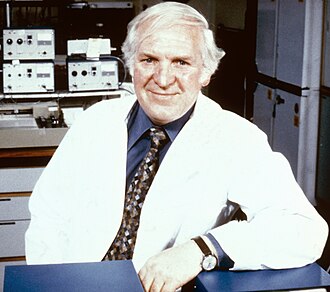
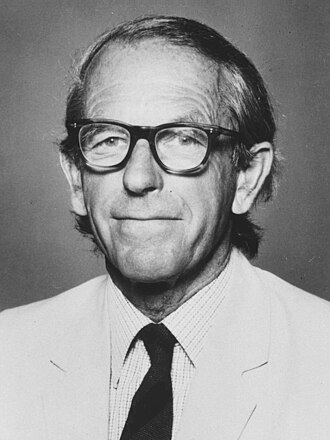
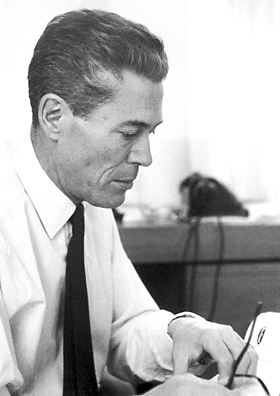
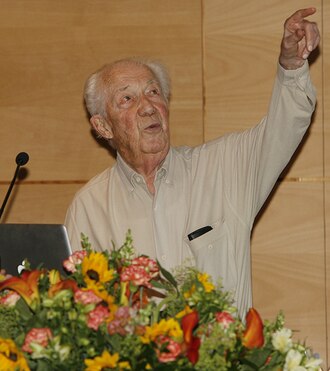
图:作者不详 · CC BY 4.0 · Wikimedia Commons
詹姆士·W·布拉克1924—2010
James Black
医生, 英国
詹姆士·怀特·布拉克爵士,OM,FRS,FRSE,FRCP,苏格兰药理学家,发明药物Propranolol和合成出Cimetidine。他因这些成就而在1988年获颁赠诺贝尔医学奖。
摘自维基百科「詹姆士·W·布拉克」,CC BY-SA 4.0
- 出生
- 1924 年 6 月 14 日,Uddingston
- 逝世
- 2010 年 3 月 21 日,伦敦
- 国籍
- 英国
- 学科
- 化学、医学、工程与发明
- 职业
- 医生、药理学家、药师、发明家
- 母语 / 工作语言
- 英语
- 母校
- 圣安德鲁斯大学、邓迪大学、Beath High School
- 工作单位
- 伦敦大学学院、伦敦国王学院、格拉斯哥大学、帝国化学工业、圣安德鲁斯大学
研究领域
所获奖项(18)
- 1976拉斯克临床医学研究奖
- 1978Mullard Award
- 1979InBev-Baillet Latour Health Prize
- 1979盖尔德纳国际奖
- 1980Cameron Prize of the University of Edinburgh
- 1981约翰·斯科特奖
- 1982沃尔夫医学奖
- 1983舍勒奖
- 1988诺贝尔生理学或医学奖
- 1993Honorary Fellow of the Royal College of Surgeons
- 1994Ellison–Cliffe Lecture
- 1996honorary doctorate of the University of Salamanca
- 2004皇家奖章
- —功绩勋章
- —下级勋位爵士
- —爱丁堡皇家学会会员
- —Fellow of the Royal College of Physicians of London
- —英国皇家学会院士
学会与院士
百科正文
生平
布拉克早年就读于苏格兰法夫(Fife)考登比思(Cowdenbeath)的比思高中,其后在法夫的圣安德鲁斯大学修读药理学,并曾经在邓迪(Dundee)作实习。他在马来亚大学取得教席前,曾加入圣安德鲁斯大学的生理学系。布拉克在1950年回到苏格兰,加入格拉斯哥大学的兽医学院,并为该校成立生理学院。除了活跃于学术界外,布拉克曾先后获帝国化学工业(1958年至1964年)、葛兰素史克(1964年至1973年)和惠康基金会(1978年至1984年)聘用。另外,他又获伦敦大学学院(1973年至1978年)和伦敦国王学院(1984年至1992年)聘用为药理学教授。在1976年,他当选为皇家学会会员,同年获颁拉斯克奖。
布拉克在1981年获册立为下级勋位爵士。在2000年,布拉克爵士获英女皇伊莉莎伯二世颁赠功绩勋章,该勋章只有24个名额,是英国君主所能授予的最高级荣誉。
布拉克爵士在科学界甚有贡献,当中尤以心脏病学为最。他发明的β受体阻断药Propranolol,对治疗心绞痛起革命性的影响,并被认为是20世纪对药理学起最大贡献的药物之一,他凭这些贡献在1988年获颁赠诺贝尔奖。他上述的的研究完全是凭他一人之功劳。
自1992年至2006年5月,布拉克爵士出任丹地大学的校监。在2006年8月,属于该校生命科学学院的詹姆士·布拉克爵士中心落成启用。
请参见
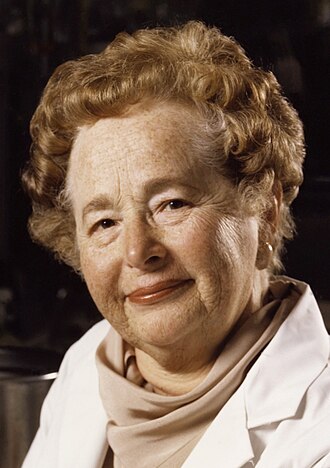
格特鲁德·B·埃利恩(1988年诺贝尔医学奖得奖者)
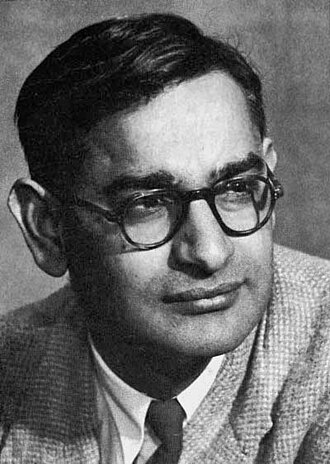
乔治·H·希钦斯(1988年诺贝尔医学奖得奖者)
以上内容摘自维基百科「詹姆士·W·布拉克」,按 CC BY-SA 4.0 使用,去掉了参考文献、外部链接等尾部小节,公式改写成了纯文本。全文、配图和出处见原文。
英文维基百科补充中文条目比较短,下面是英文条目「James Black (pharmacologist)」的原文
Sir James Whyte Black born (14 June 1924 – Died 22 March 2010) was a Scottish physician and pharmacologist. Together with Gertrude B. Elion and George H. Hitchings, he shared the Nobel Prize for Medicine in 1988 for pioneering strategies for rational drug-design, which, in his case, led to the development of propranolol and cimetidine. Black established a Veterinary Physiology department at the University of Glasgow, where he became interested in the effects of adrenaline on the human heart. He went to work for ICI Pharmaceuticals in 1958 and, while there, developed propranolol, a beta blocker used for the treatment of heart disease. Black was also responsible for the development of cimetidine, an H2 receptor antagonist, a drug used to treat stomach ulcers.
Early life and education
Black was born on 14 June 1924 in Uddingston, Lanarkshire, the fourth of five sons of a Baptist family which traced its origins to Balquhidder, Perthshire. His father Walter Black was a mining engineer and his mother was Catherine Reid Whyte. He was brought up in Fife, educated at Beath High School, Cowdenbeath, and, at the age of 15, won a scholarship to the University of St Andrews. His family had been too poor to send him to university and he had been persuaded to sit the St Andrews entrance exam by his maths teacher at Beath.
Until 1967, University College, Dundee was the site for all clinical medical activity for the University of St Andrews. He matriculated at University College (which eventually became the University of Dundee) in 1943 and graduated from University of St Andrews School of Medicine with an MB ChB in 1946.
Career
Black had large debts upon his graduation from university, so he took a teaching job in Singapore for three years, before moving to London in 1950 and then on to join the University of Glasgow (Veterinary School) where he established the Veterinary Physiology Department and developed an interest in the way adrenaline affects the human heart, particularly in those suffering from angina. Having formulated a theory of an approach by which the effects of adrenaline might be annulled, he joined ICI Pharmaceuticals in 1958, remaining with the company until 1964, during which time he invented propranolol, which later became the world's best-selling drug. During this time Black pioneered a method of research whereby drug molecules were purposefully built instead of being synthesised first and then investigated for their potential medical uses.
Honours and awards
Black was made a Knight Bachelor on 10 February 1981 for services to medical research, receiving the honour from the Queen at Buckingham Palace. On 26 May 2000, he was appointed to the Order of Merit, of which there are only 24 members at any one time, by Queen Elizabeth II.
Black was elected a Fellow of the Royal Society (FRS) in 1976 and the same year he was awarded the Lasker award. His certificate of election to the Royal Society reads: Has made outstanding contributions, based on fundamental considerations of receptor theory, to the development of new drugs of clinical importance. Introduced the first effective beta blockers and analysed their cardiovascular effects. These drugs have opened up new perspectives for the treatment of angina pectoris, cardiac irregularities and hypertension.
Personal life
Black met Hilary Joan Vaughan (1924–1986) at a university ball in 1944 and the couple married in 1946 upon his graduation. He described her as the "mainspring" of his life until she died aged 61 in Surrey. The couple had a daughter, Stephanie, born in 1951. Black remarried in 1994, to Professor Rona MacKie. Black was a very private man who was averse to publicity and was horrified to discover he had won the Nobel Prize.
Black died, aged 85, on the morning of 22 March 2010, after a long illness. His death was announced by the University of Dundee, where Black served as Chancellor from 1992 to 2006. His funeral was held on 29 March at St. Columba's Church, London. He is buried at the Ardclach cemetery, a parish established in 1655, near Nairn, Scotland.
以上节选摘自英文维基百科「James Black (pharmacologist)」,按 CC BY-SA 4.0 使用,去掉了参考文献、外部链接等尾部小节,公式改写成了纯文本。篇幅所限,较长的小节只摘了开头一部分,有的小节没有收;全文、配图和出处见原文。