格物
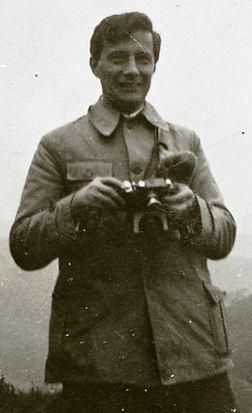
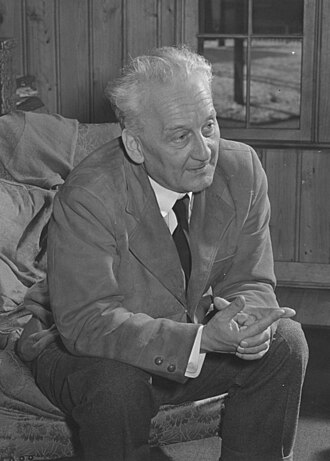
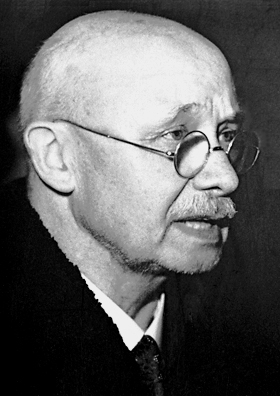
图:Original author is unknown, found in Manchester archives · Public domain · Wikimedia Commons
- 出生
- 1891 年 3 月 11 日,布达佩斯
- 逝世
- 1976 年 2 月 22 日,北安普敦
- 国籍
- 英国、奥地利、匈牙利
- 学科
- 化学
- 职业
- 哲学家、经济学家、化学家
- 母语 / 工作语言
- 英语、匈牙利语
- 母校
- 罗兰大学(医学士,1914 年)、罗兰大学(哲学博士,1917 年)
- 工作单位
- 曼彻斯特大学
主要贡献
本站收录的发现与发明
师承
博士导师1
博士生4
来自 Wikidata 的「博士导师」「师从」「博士生」「学生」记录,可能不全。
学会与院士
百科正文
他在物理化学中的研究包括化学动力学,X射线晶体学和气体的吸附。在1921年,他成为了研究纤维衍射的先驱;1934年开始研究延展金属塑性变形的位错理论。
他于1926年移居德国,在柏林的凯撒-威廉学院担任化学教授。 1933年他移居英国,在曼彻斯特大学一开始做了化学教授,后来成了社会科学教授。他的两名学生(其中有尤金·维格纳)和他的儿子(约翰·查尔斯·波兰尼)获得了诺贝尔奖。1944年,他成为了皇家学会的一员。
生平
早年生活
迈克尔·波兰尼,原名米哈利·波拉茨克(匈牙利语:Polányi Mihály),在布达佩斯出生,是米哈利·波拉茨克(匈牙利语:Milhály Pollacsek)和希希莉娅·波拉茨克(原名希希莉娅·沃尔,匈牙利语:Cecília Wohl)的第五个孩子。
教育
1909年,波兰尼从布达佩斯-法所里福音文理中学(匈牙利语:Budapest-Fasori Evangélikus Gimnázium)毕业后,他参加了医生培训,并在1914年拿到了医师证。他是伽利略小组的一员。在皇家约瑟夫理工大学教授伊格纳奇·费弗尔的帮助下,他获得了在德国卡尔斯鲁厄的一所理工大学学习化学的奖学金。在第一次世界大战中,作为奥匈帝国的一名军医,他被派往了塞尔维亚前线。1916年,他在病假中完成了他关于吸附的博士论文。他的研究被阿尔伯特·爱因斯坦支持,导师是古斯塔夫·布赫博科。1919年,他被授予皇家佩斯大学的博士学位。
家庭
迈克尔·波兰尼的哥哥卡尔·波兰尼也是一位哲学与经济学的通才。他的儿子约翰·查尔斯·波拉尼获得了诺贝尔奖。
以上内容摘自维基百科「迈克尔·波兰尼」,按 CC BY-SA 4.0 使用,去掉了参考文献、外部链接等尾部小节,公式改写成了纯文本。全文、配图和出处见原文。
英文维基百科补充中文条目比较短,下面是英文条目「Michael Polanyi」的原文
Michael Polanyi ( poh-LAN-yee; Hungarian: Polányi Mihály; 11 March 1891 – 22 February 1976) was a Hungarian-British polymath, who made important theoretical contributions to physical chemistry, economics, and philosophy. He argued that positivism is a false account of knowing.
His wide-ranging research in physical science included chemical kinetics, x-ray diffraction, and adsorption of gases. He pioneered the theory of fibre diffraction analysis in 1921, and the dislocation theory of plastic deformation of ductile metals and other materials in 1934. He emigrated to Germany, in 1926 becoming a chemistry professor at the Kaiser Wilhelm Institute in Berlin, and then in 1933 to England, becoming first a chemistry professor, and then a social sciences professor at the University of Manchester. Two of his students won the Nobel Prize, as did his son. In 1944 Polanyi was elected to the Royal Society.
The contributions which Polanyi made to the social sciences include the concept of a polycentric spontaneous order and his rejection of a value neutral conception of liberty. They were developed in the context of his opposition to central planning.
Life
Early life
Polanyi, born Mihály Pollacsek in Budapest, was the fifth child of Mihály and Cecília Pollacsek (born as Cecília Wohl), secular Jews from Ungvár (then in Hungary but now in Ukraine) and Wilno, then Russian Empire, respectively. His father's family were entrepreneurs, while his mother's father, Osher Leyzerovich Vol, was the senior teacher of Jewish history at the Vilna rabbinic seminary. The family moved to Budapest and Magyarized their surname to Polányi. His father built much of the Hungarian railway system, but lost most of his fortune in 1899 when bad weather caused a railway building project to go over budget. He died in 1905. Cecília Polányi established a salon that was well known among Budapest's intellectuals, and which continued until her death in 1939. His older brother was Karl Polanyi, the political economist and anthropologist, and his niece was Eva Zeisel, a world-renowned ceramist.
Education
In 1908, Polanyi graduated the teacher-training secondary school, the Minta Gymnasium. He then studied medicine at the University of Budapest, obtaining his medical diploma in 1914. He was an active member of the Galileo Circle. With the support of Ignác Pfeifer, professor of chemistry at the Royal Joseph University of Budapest, he obtained a scholarship to study chemistry at the Technische Hochschule in Karlsruhe, Germany. In the First World War, he served in the Austro-Hungarian army as a medical officer, and was sent to the Serbian front. While on sick-leave in 1916, he wrote a PhD thesis on adsorption. His research was encouraged by Albert Einstein and supervised by Gusztáv Buchböck, and in 1919 the Royal University of Pest awarded him a doctorate.
Work
Physical chemistry
Polanyi's scientific interests were extremely diverse, including work in chemical kinetics, x-ray diffraction, and the adsorption of gases at solid surfaces. He is also well known for the potential theory of adsorption, which was disputed for quite some time. In 1921, he laid the mathematical foundation of fibre diffraction analysis. In 1934, Polanyi, at about the same time as G. I. Taylor and Egon Orowan, realised that the plastic deformation of ductile materials could be explained in terms of the theory of dislocations developed by Vito Volterra in 1905. The insight was critical in developing the field of solid mechanics.
Freedom and community
In 1936, as a consequence of an invitation to give lectures for the Ministry of Heavy Industry in the USSR, Polanyi met Bukharin, who told him that in socialist societies all scientific research is directed to accord with the needs of the latest Five Year Plan. Polanyi noted what had happened to the study of genetics in the Soviet Union once the doctrines of Trofim Lysenko had gained the backing of the State. Demands in Britain, for example by the Marxist John Desmond Bernal, for centrally planned scientific research led Polanyi to defend the claim that science requires free debate. Together with John Baker, he founded the influential Society for Freedom in Science.
In a series of articles, re-published in The Contempt of Freedom (1940) and The Logic of Liberty (1951), Polanyi claimed that co-operation amongst scientists is analogous to the way agents co-ordinate themselves within a free market.
以上节选摘自英文维基百科「Michael Polanyi」,按 CC BY-SA 4.0 使用,去掉了参考文献、外部链接等尾部小节,公式改写成了纯文本。篇幅所限,较长的小节只摘了开头一部分,有的小节没有收;全文、配图和出处见原文。
同一学科、同时代的科学家