格物

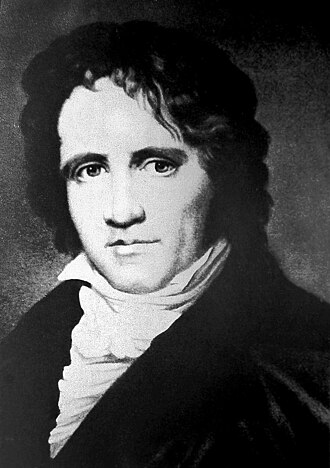
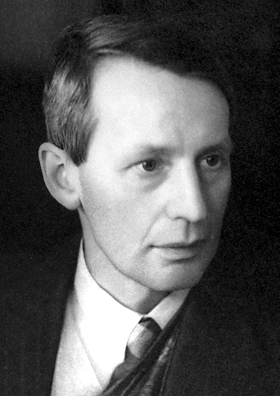
图:Léonard François Berger · Public domain · Wikimedia Commons
- 出生
- 1765 年 3 月 7 日,索恩河畔沙隆
- 逝世
- 1833 年 7 月 5 日,圣卢德瓦雷讷
- 国籍
- 法国
- 学科
- 物理学、工程与发明、博物与综合
- 职业
- 物理学家、工程师、发明家、技师
- 母语 / 工作语言
- 法语
研究领域
主要贡献
代表成就
本站收录的发现与发明

百科正文
1825年,涅普斯委托法国光学仪器商人夏尔·舍瓦利耶为他的暗箱(camera obscura)制作光学镜片。并于1826年将其发明的感光材料放进暗箱,拍摄现存最早的照片。作品在其法国勃艮第的家里拍摄完成,并在其阁楼上的窗户边拍摄,曝光时间超过8小时。1829年与路易·达盖尔达成伙伴关系,共同研究摄影术。1833年7月5日,涅普斯死于中风。1839年8月19日,法国政府买下摄影术专利。法国科学与艺术学院公开展示路易·达盖尔的银版摄影法。达盖尔获得每年6000法朗的津贴,尼埃普斯的儿子也获得每年4000法朗。
以上内容摘自维基百科「約瑟夫·尼塞福爾·涅普斯」,按 CC BY-SA 4.0 使用,去掉了参考文献、外部链接等尾部小节,公式改写成了纯文本。全文、配图和出处见原文。
英文维基百科补充中文条目比较短,下面是英文条目「Nicéphore Niépce」的原文
Joseph Nicéphore Niépce (French: [nisefɔʁ njɛps]; 7 March 1765 – 5 July 1833) was a French inventor and one of the pioneers of photography. Niépce developed heliography, a technique he used to create the world's oldest surviving products of a photographic process. In the mid-1820s, he used a primitive camera to produce the oldest surviving photograph of a real-world scene. Among Niépce's other inventions was the Pyréolophore, one of the world's first internal combustion engines, which he conceived, created, and developed with his older brother Claude Niépce.
Biography
Early life
Niépce was born in Chalon-sur-Saône, Saône-et-Loire, where his father was a wealthy lawyer. His older brother Claude (1763–1828) was also his collaborator in research and invention, but died half-mad and destitute in England, having squandered the family wealth in pursuit of non-opportunities for the Pyréolophore. Niépce also had a sister and a younger brother, Bernard.
Nicéphore was baptized Joseph but adopted the name Nicéphore, in honour of Saint Nicephorus the ninth-century Patriarch of Constantinople, while studying at the Oratorian college in Angers. At the college he learned science and the experimental method, rapidly achieving success and graduating to work as a professor of the college.
Military career
Niépce served as a staff officer in the French army led by Napoleon, spending years in Italy and on the island of Sardinia, but ill health forced him to resign, whereupon he married Agnes Romero and became the Administrator of the district of Nice in post-revolutionary France. In 1795, he resigned as administrator of Nice to pursue scientific research with his brother Claude. One source reports his resignation to have been forced due to his unpopularity.
Scientific research
In 1801 the brothers returned to the family's estates in Chalon to continue their scientific research, and where they were united with their mother, their sister and their younger brother Bernard. Here they managed the family estate as independently wealthy gentlemen-farmers, raising beets and producing sugar.
Claude Niépce
In 1827 Niépce journeyed to England to visit his seriously ill elder brother Claude Niépce, who was now living in Kew, near London.
Achievements
Photography
The date of Niépce's first photographic experiments is uncertain. He was led to them by his interest in the new art of lithography, for which he realized he lacked the necessary skill and artistic ability, and by his acquaintance with the camera obscura, a drawing aid which was popular among affluent dilettantes in the late 18th and early 19th centuries. The camera obscura's beautiful but fleeting little "light paintings" inspired a number of people, including Thomas Wedgwood and Henry Fox Talbot, to seek some way of capturing them more easily and effectively than could be done by tracing over them with a pencil.
Letters to his sister-in-law around 1816 indicate that Niépce had managed to capture small camera images on paper coated with silver chloride, making him apparently the first to have any success at all in such an attempt, but the results were negatives, dark where they should be light and vice versa, and he could find no way to stop them from darkening all over when brought into the light for viewing.
Niépce turned his attention to other substances that were affected by light, eventually concentrating on Bitumen of Judea, a naturally occurring asphalt that had been used for various purposes since ancient times. In Niépce's time, it was used by artists as an acid-resistant coating on copper plates for making etchings. The artist scratched a drawing through the coating, then bathed the plate in acid to etch the exposed areas, then removed the coating with a solvent and used the plate to print ink copies of the drawing onto paper.
Legacy and commemoration
The lunar crater Niépce is named after him, as is the minor planet (3117) Niépce.
The Niépce Heliograph is on permanent display at the Harry Ransom Center at the University of Texas at Austin. The object was located by historians Alison and Helmut Gernsheim in 1952 and sold to the Humanities Research Center (later renamed the Harry Ransom Center) in 1963.
The Niépce Prize has been awarded annually since 1955 to a professional photographer who has lived and worked in France for over three years. It was introduced in honour of Niépce by Albert Plécy of the l'Association Gens d'Images.
以上节选摘自英文维基百科「Nicéphore Niépce」,按 CC BY-SA 4.0 使用,去掉了参考文献、外部链接等尾部小节,公式改写成了纯文本。篇幅所限,较长的小节只摘了开头一部分,有的小节没有收;全文、配图和出处见原文。
同一学科、同时代的科学家



同一学科的科学家
更多 ›