格物
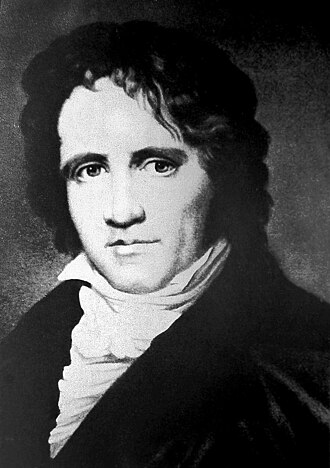
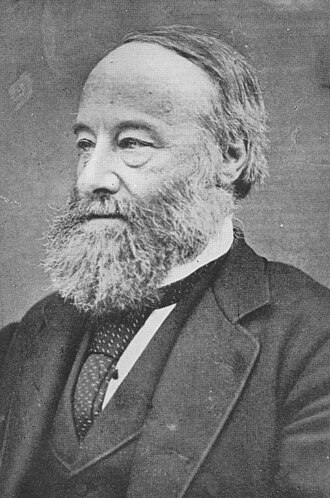
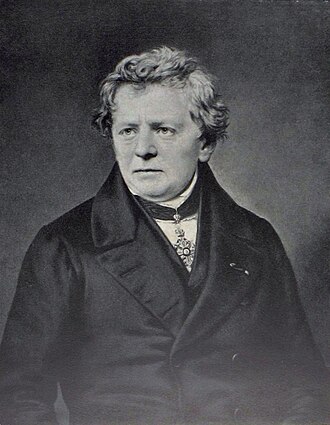
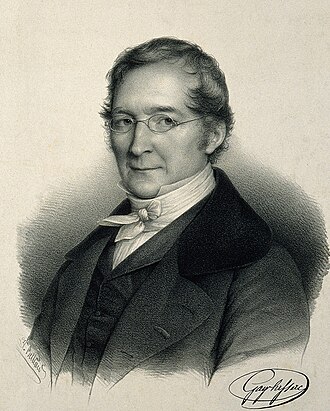
图:Johann Eduard Wolff · Public domain · Wikimedia Commons
弗里德里希·威廉·贝塞尔1784—1846
Friedrich Bessel
German astronomer and mathematician
弗里德里希·威廉·贝塞尔,德国天文学家及数学家。他精确测定了岁差常数和恒星视差。
摘自维基百科「弗里德里希·威廉·贝塞尔」,CC BY-SA 4.0
- 出生
- 1784 年 7 月 22 日,明登
- 逝世
- 1846 年 3 月 17 日,柯尼斯堡
- 国籍
- 普鲁士王国
- 学科
- 物理学、数学、天文学、博物与综合
- 职业
- 天文学家、数学家、大学教师、测绘师
- 母语 / 工作语言
- 德语
- 工作单位
- 柯尼斯堡天文台(1809—1846)、Arnold Kulenkamp(1799—1806)、Lilienthal Observatory(1806—1809)
研究领域
主要贡献
代表成就
以他 / 她命名
师承
博士导师1
来自 Wikidata 的「博士导师」「师从」「博士生」「学生」记录,可能不全。
所获奖项(6)
- 1812美国文理科学院院士
- 1816拉朗德奖
- 1825英国皇家学会外籍会员
- 1841英国皇家天文学会金质奖章
- 1842Pour le Mérite for Sciences and Arts order
- —Order of the Red Eagle 2nd Class
学会与院士
百科正文
贝塞尔出身贫寒,少年时只读过4年书。15岁在商行当学徒,尤其对国际贸易感兴趣。此后,他逐渐对天文学产生了兴趣,开始自学数学和天文学。
1810年,他被普鲁士国王腓特烈·威廉三世任命为柯尼斯堡天文台台长,直到去世。
贡献
贝索函数
预测天狼星B和南河三B的存在。
荣誉
1829年和1841年两度获得英国皇家天文学会金质奖章。
以上内容摘自维基百科「弗里德里希·威廉·贝塞尔」,按 CC BY-SA 4.0 使用,去掉了参考文献、外部链接等尾部小节,公式改写成了纯文本。全文、配图和出处见原文。
英文维基百科补充中文条目比较短,下面是英文条目「Friedrich Wilhelm Bessel」的原文
Friedrich Wilhelm Bessel (German: [ˈbɛsl̩]; 22 July 1784 – 17 March 1846) was a German astronomer, mathematician, physicist, and geodesist. He was the first astronomer who determined reliable values for the distance from the Sun to another star by the method of parallax. Certain important mathematical functions were first studied systematically by Bessel and were named Bessel functions in his honour.
Life and family
Bessel was born in Minden, Westphalia, then capital of the Prussian administrative region Minden-Ravensberg, as second son of a civil servant into a large family. At the age of 14 he left the school, because he did not like the education in Latin language, and apprenticed in the import-export concern Kulenkamp at Bremen. The business's reliance on cargo ships led him to turn his mathematical skills to problems in navigation. This in turn led to an interest in astronomy as a way of determining longitude.
Bessel came to the attention of Heinrich Wilhelm Olbers, a practising physician of Bremen and well-known astronomer, by producing a refinement on the orbital calculations for Halley's Comet in 1804, using old observation data taken from Thomas Harriot and Nathaniel Torporley in 1607. Franz Xaver von Zach edited the results in his journal Monatliche Correspondenz.
Having finished his commercial education, Bessel left Kulenkamp in 1806 and became assistant at Johann Hieronymus Schröter's private observatory in Lilienthal near Bremen as successor of Karl Ludwig Harding. There he worked on James Bradley's stellar observation data to produce precise positions for some 3,222 stars.
Work
While the observatory was still in construction Bessel elaborated the Fundamenta Astronomiae based on Bradley's observations. As a preliminary result he produced tables of atmospheric refraction that won him the Lalande Prize from the French Academy of Sciences in 1811. The Königsberg Observatory began operation in 1813.
Starting in 1819, Bessel determined the position of over 50,000 stars with a meridian circle from Reichenbach, assisted by some of his qualified students. The most prominent of them was Friedrich Wilhelm Argelander, his successors were Otto August Rosenberger and August Ludwig Busch.
Bessel determined the first reliable value for the distance between a star and the Solar System with a heliometer from Fraunhofer using the method of stellar parallax. In 1838 he published a parallax of 0.314 arcseconds for 61 Cygni, which indicated that the star is 10.3 ly away. Compared with the current measurement of 11.4 ly, Bessel's figure had an error of 9.6%. Thanks to these results astronomers had not only enlarged the vision of the universe well beyond the cosmic magnitude, but after the discovery in 1728 by James Bradley of the aberration of light a second empirical evidence of the Earth's relative movement was produced. A short time later Friedrich Georg Wilhelm Struve and Thomas Henderson reported the parallaxes of Vega and Alpha Centauri.
Honors and prizes
- Honorary doctor degree from the University of Göttingen in March 1811
- Lalande Prize of the French Academy of Sciences in 1811 and 1816
- Member of the Prussian Academy of Sciences in 1812
- Member of the French Academy of Sciences in 1816
- Foreign member of the Royal Swedish Academy of Sciences in 1823
- Fellow of the Royal Society in 1825
- Foreign Honorary Member of the American Academy of Arts and Sciences in 1832
Member of the Royal Institute of the Netherlands, predecessor of the Royal Netherlands Academy of Arts and Sciences in 1827
- Member of the American Philosophical Society in 1840
- Member of the National Academy of Science in Verona (1842),
- Bessel won the Gold Medal of the Royal Astronomical Society twice, in 1829 and 1841
Bessel was one of the first members of the Order Pour le Merite (Civil class) when it was established in 1842.
The first cosmic object named after Bessel is the largest crater in the Moon's Mare Serenitatis. The main-belt asteroid 1552 Bessel was named at the centenary of the parallax determination in 1938.
Geographical commemorations are two fjords in Greenland, Bessel Fjord, NE Greenland and Bessel Fjord, NW Greenland.
Xyletinus besseli a fossil beetle from the Eocene belonging to the family Ptinidae, found in the Baltic amber in Sambia, was named in his honour.
BeSSel, the Bar and Spiral Structure Legacy Survey, is named after him.
以上节选摘自英文维基百科「Friedrich Wilhelm Bessel」,按 CC BY-SA 4.0 使用,去掉了参考文献、外部链接等尾部小节,公式改写成了纯文本。篇幅所限,较长的小节只摘了开头一部分,有的小节没有收;全文、配图和出处见原文。
同一学科、同时代的科学家






同一学科的科学家
更多 ›