格物

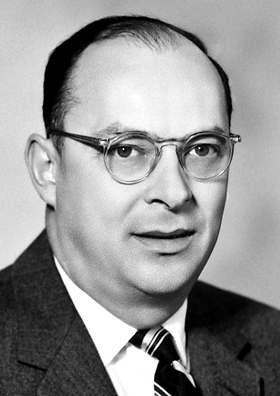
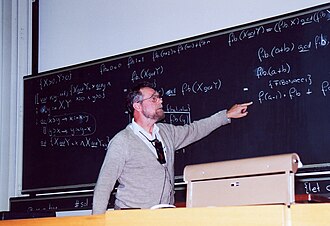
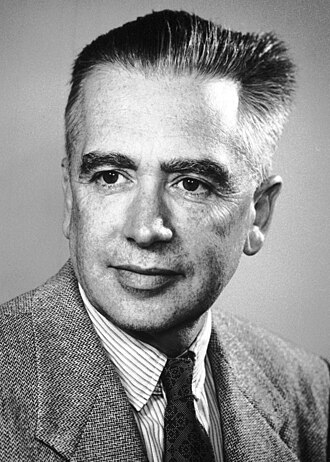
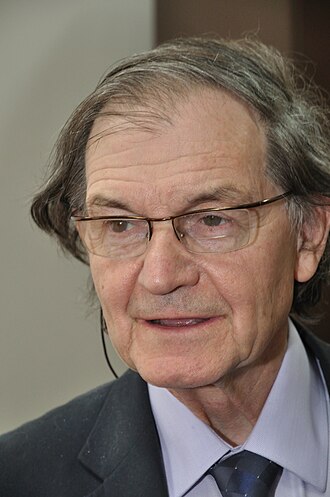
图:Kenneth C. Zirkel · CC BY-SA 3.0 · Wikimedia Commons
戴维·李1931—
David Lee
物理学家, 美国
戴维·莫里斯·李,美国物理学家,1996年,因为发现了在氦-3里的超流动性,与道格拉斯·奥谢罗夫、罗伯特·理查森共同荣获诺贝尔物理学奖。
摘自维基百科「戴维·李 (物理学家)」,CC BY-SA 4.0
- 出生
- 1931 年 1 月 20 日,拉伊
- 国籍
- 美国
- 学科
- 物理学、博物与综合
- 职业
- 物理学家、大学教师
- 母语 / 工作语言
- 英语
- 母校
- 哈佛大学、耶鲁大学、康涅狄格大学
- 工作单位
- 得克萨斯农工大学、康奈尔大学、佛罗里达大学
研究领域
师承
博士生2
来自 Wikidata 的「博士导师」「师从」「博士生」「学生」记录,可能不全。
所获奖项(8)
- 1966古根海姆学者奖
- 1981奥利弗·巴克利奖
- 1996诺贝尔物理学奖
- 1997honorary doctorate from Joseph Fourier University
- 1998Wilbur Lucius Cross奖章
- 1998Honorary doctorate of the University of Florida
- —美国物理学会会士
- —Simon Memorial Prize
学会与院士
百科正文
英文维基百科补充中文条目比较短,下面是英文条目「David Lee (physicist)」的原文
David Morris Lee (born January 20, 1931) is an American physicist who shared the 1996 Nobel Prize in Physics with Robert C. Richardson and Douglas Osheroff "for their discovery of superfluidity in helium-3." Lee is professor emeritus of physics at Cornell University and distinguished professor of physics at Texas A&M University.
Personal life
Lee was born and raised in Rye, New York. His parents, Annette (Franks), a teacher, and Marvin Lee, an electrical engineer, were children of Jewish immigrants from England and Lithuania. He graduated from Harvard University in 1952 and then joined the U.S. Army for 22 months. After being discharged from the army, he obtained a master's degree from the University of Connecticut. In 1955 Lee entered the Ph.D. program at Yale University where he worked under Henry A. Fairbank in the low-temperature physics group, doing experimental research on liquid 3He.
After graduating from Yale in 1959, Lee took a job at Cornell University, where he was responsible for setting up the new Laboratory of Atomic and Solid State Physics. Shortly after arriving at Cornell he met his future wife, Dana, then a PhD student in another department; the couple went on to have two sons.
Lee moved his laboratory from Cornell to Texas A&M University on November 16, 2009.
Work
The work that led to Lee's Nobel Prize was performed in the early 1970s. Lee, together with Robert C. Richardson and graduate student, Doug Osheroff used a Pomeranchuk cell to investigate the behaviour of 3He at temperatures within a few thousandths of a degree of absolute zero. They discovered unexpected effects in their measurements, which they eventually explained as phase transitions to a superfluid phase of 3He. Lee, Richardson and Osheroff were jointly awarded the Nobel Prize in Physics in 1996 for this discovery.
Lee's research also covered a number of other topics in low-temperature physics, particularly relating to liquid, solid and superfluid helium (4He, 3He and mixtures of the two). Particular discoveries include the antiferromagnetic ordering in solid helium-3, nuclear spin waves in spin polarized atomic hydrogen gas with Jack H. Freed, and the tri-critical point on the phase separation curve of liquid 4He-3He, in collaboration with his Cornell colleague John Reppy. His former research group at Cornell currently studies impurity-helium solids.
As well as the Nobel Prize, other prizes won by Lee include the 1976 Sir Francis Simon Memorial Prize of the British Institute of Physics and the 1981 Oliver Buckley Prize of the American Physical Society along with Doug Osheroff and Robert Richardson for their superfluid 3He work. In 1997, Lee received the Golden Plate Award of the American Academy of Achievement.
Lee is a member of the National Academy of Sciences and the American Academy of Arts and Sciences.
Lee is currently teaching physics at Texas A&M University and continuing his (formerly Cornell-based) research program there as well.
Lee is one of the 20 American recipients of the Nobel Prize in Physics to sign a letter addressed to President George W. Bush in May 2008, urging him to "reverse the damage done to basic science research in the Fiscal Year 2008 Omnibus Appropriations Bill" by requesting additional emergency funding for the Department of Energy’s Office of Science, the National Science Foundation, and the National Institute of Standards and Technology.
以上内容摘自英文维基百科「David Lee (physicist)」,按 CC BY-SA 4.0 使用,去掉了参考文献、外部链接等尾部小节,公式改写成了纯文本。全文、配图和出处见原文。
同年获同一奖项
同一学科、同时代的科学家


同一学科的科学家
更多 ›