格物
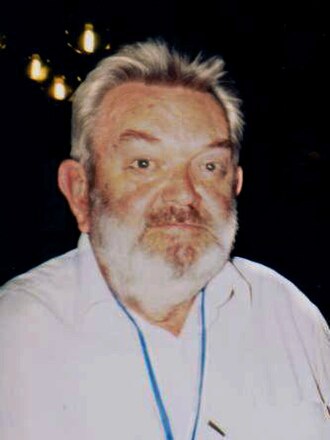
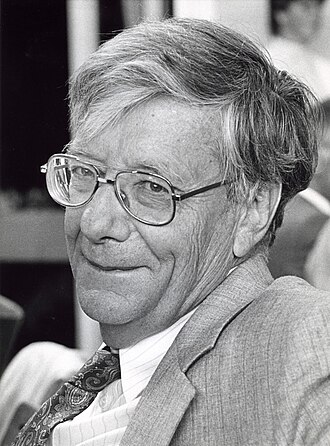
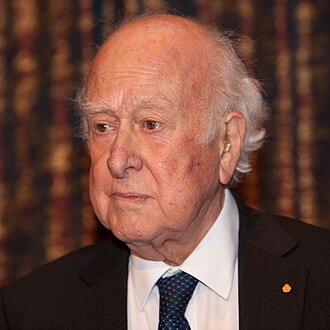
图:Silin2005 · Public domain · Wikimedia Commons
马丁纽斯·韦尔特曼1931—2021
Martinus J. G. Veltman
理论物理学家, 荷兰王国
马丁纽斯·尤斯蒂努斯·霍德弗里德斯·韦尔特曼,荷兰理论物理学家,密歇根大学退休教授。他和杰拉德·特·胡夫特因在量子规范场论的重整化上的工作而获得了1999年诺贝尔物理学奖。
摘自维基百科「马丁纽斯·韦尔特曼」,CC BY-SA 4.0
- 出生
- 1931 年 6 月 27 日,瓦尔韦克
- 逝世
- 2021 年 1 月 4 日,Bilthoven
- 国籍
- 荷兰王国
- 学科
- 物理学、博物与综合
- 职业
- 理论物理学家、物理学家、大学教师
- 母语 / 工作语言
- 荷兰语
- 母校
- 乌得勒支大学
- 工作单位
- 乌得勒支大学、密歇根大学、莱顿大学(1989—)
研究领域
师承
博士导师1
博士生7
来自 Wikidata 的「博士导师」「师从」「博士生」「学生」记录,可能不全。
所获奖项(6)
- 1993高能和粒子物理奖
- 1996狄拉克奖章(ICTP)
- 1999诺贝尔物理学奖
- 1999Akademiepenning
- 2000honorary doctorate of the University of the Mediterranean - Aix Marseille II
- —Commander of the Order of the Netherlands Lion
学会与院士
百科正文
英文维基百科补充中文条目比较短,下面是英文条目「Martinus J. G. Veltman」的原文
Martinus Justinus Godefriedus "Tini" Veltman (Dutch pronunciation: [mɑrˈtinʏ ɕʏsˈtinʏs xoːdəˈfridʏs ˈtini ˈvɛltmɑn]; 27 June 1931 – 4 January 2021) was a Dutch theoretical physicist. He shared the 1999 Nobel Prize in Physics with his former PhD student Gerardus 't Hooft for their work on particle theory.
Biography
Martinus Justinus Godefriedus Veltman was born in Waalwijk, Netherlands, on 27 June 1931. His father was the head of the local primary school. Three of his father's siblings were primary school teachers. His mother's father was a contractor and also ran a café. He was the fourth child in a family with six children. He started studying mathematics and physics at Utrecht University in 1948.
As a youth he had a great interest in radio electronics, which was a difficult hobby to work on because the occupying German army had confiscated most of the available radio equipment.
In 1955, he became an assistant to Prof. Michels of the Van Der Waals laboratory in Amsterdam. Michels was an experimental physicist, working in high pressure physics. His primary task was the upkeep of a large library collection and occasional lecture preparations for Michels.
His research career advanced when he moved to Utrecht to work under Léon Van Hove in 1955. He received his MSc degree in 1956, after which he was drafted into military service for two years, returning in February 1959. Van Hove then hired him as a doctoral researcher. He obtained his PhD degree in theoretical physics in 1963 and became professor at Utrecht University in 1966.
In 1960, Van Hove became director of the theory division at CERN in Geneva, Switzerland, the European High Energy laboratory. Veltman followed him there in 1961. Meanwhile, in 1960, he married his wife Anneke, who gave birth to their daughter Hélène in the Netherlands, before moving to Geneva to live with Martinus. Hélène followed in her father's footsteps and in due time completed her particle physics thesis with Mary Gaillard at Berkeley, though she now works in the financial industry in London.
In 1963/64, during an extended stay at SLAC he designed the computer program Schoonschip for symbolic manipulation of mathematical equations, which is now considered the very first computer algebra system.
Veltman was closely involved in the 1963 CERN neutrino experiment, analyzing images as they were generated by the detectors. When no spectacular events came out, enthusiasm waned, and after a while Veltman and Bernardini were the only ones analyzing the images. As a result, Veltman became the spokesman for the group at the Brookhaven Conference in 1963.
In 1971, Gerardus 't Hooft, who was completing his PhD under the supervision of Veltman, renormalized Yang–Mills theory. They showed that if the symmetries of Yang–Mills theory were to be realized in the spontaneously broken mode, referred to as the Higgs mechanism, then Yang–Mills theory can be renormalized. Renormalization of Yang–Mills theory is a major achievement of twentieth century physics.
In 1980, Veltman became member of the Royal Netherlands Academy of Arts and Sciences. In 1981, Veltman left Utrecht University for the University of Michigan-Ann Arbor, from where he retired in 1996. He subsequently moved back to the Netherlands.
In 1993 Veltman was awarded the High Energy Particle Physics Prize of the European Physical Society "for the role of massive Yang-Mills theories for weak interactions".
Eventually, he shared the Nobel Prize for Physics in 1999 with 't Hooft, "for elucidating the quantum structure of electroweak interactions in physics". Veltman and 't Hooft joined in the celebrations at Utrecht University when the prize was awarded.
In 2003, Veltman published a book about particle physics for a broad audience, entitled Facts and Mysteries in Elementary Particle Physics.
On 4 January 2021, Veltman died in his home in Bilthoven, the Netherlands.
Asteroid 9492 Veltman is named in his honor.
以上内容摘自英文维基百科「Martinus J. G. Veltman」,按 CC BY-SA 4.0 使用,去掉了参考文献、外部链接等尾部小节,公式改写成了纯文本。全文、配图和出处见原文。
同年获同一奖项
同一学科、同时代的科学家


同一学科的科学家
更多 ›