格物
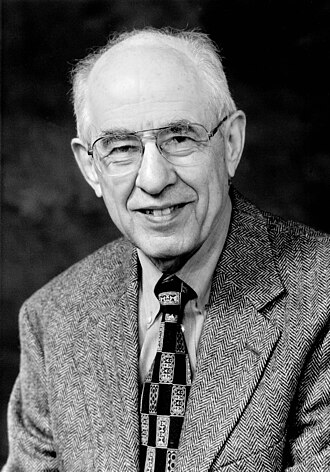
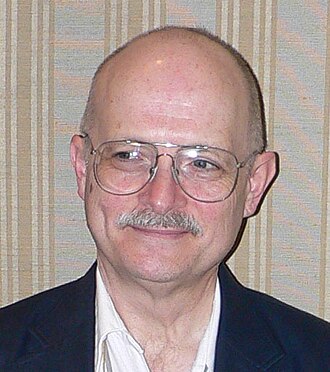
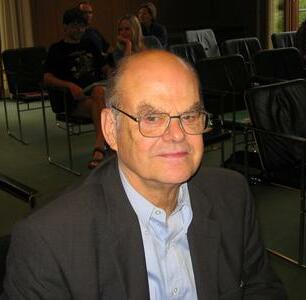
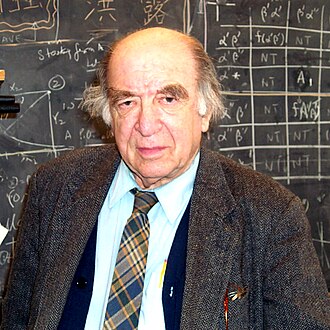
图:作者不详 · CC BY-SA 2.5 · Wikimedia Commons
- 出生
- 1926 年 7 月 31 日,芝加哥
- 逝世
- 2016 年 3 月 13 日,阿灵顿
- 国籍
- 美国
- 学科
- 数学、计算机科学、博物与综合
- 职业
- 数学家、哲学家、大学教师、非虚构文学作家
- 母语 / 工作语言
- 英语
- 母校
- 哈佛大学、宾夕法尼亚大学、中央高中、加州大学洛杉矶分校(哲学博士,1951 年)
- 工作单位
- 普林斯顿大学、哈佛大学、麻省理工学院、西北大学
研究领域
主要贡献
代表成就
本站收录的发现与发明
师承
博士导师1
博士生21
来自 Wikidata 的「博士导师」「师从」「博士生」「学生」记录,可能不全。
所获奖项(6)
- 1985Carus Lectures
- 2011Rolf Schock Prize in Logic and Philosophy
- 2012Lauener Prize
- 2014Nicholas Rescher Prize for Systematic Philosophy
- —美国文理科学院院士
- —古根海姆学者奖
学会与院士
百科正文
生平
希拉里·普特南出生于芝加哥,1944年入宾夕法尼亚大学跟随丘奇曼(C. West Churchman)和怀特(Morton White)学习科学哲学和美国哲学史,1949年就读于加州大学洛杉矶分校,在赖欣巴哈指导下,获哲学博士学位。曾先后职教于普林斯顿大学和麻省理工学院,后任哈佛大学哲学教授和皮尔逊讲座现代数学与数理逻辑教授。
普特南的研究兴趣非常广泛,内容涉及逻辑、数学、心灵哲学、语言哲学、科学哲学、物理学、历史学、伦理学、宗教、社会政治等众多领域,最初是以理论物理学家和数学家为人所知,曾与戴维斯(Martin Davis)和罗宾森(Julia Robinson)共同解决希尔伯特第十问题,引起当时学界的高度重视,晚年则关注伦理学和宗教问题。普特南的思想善变,最显著的变化表现他在对实在论的态度,50-70年代为科学实在论者,70-80年代为内在的实在论者,90年代之后倾向常识的实在论或实用主义的实在论。
著名思想实验
孪生地球
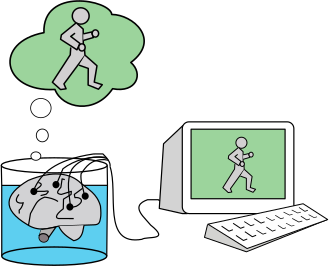
缸中之脑
以上内容摘自维基百科「希拉里·怀特哈尔·普特南」,按 CC BY-SA 4.0 使用,去掉了参考文献、外部链接等尾部小节,公式改写成了纯文本。全文、配图和出处见原文。
英文维基百科补充中文条目比较短,下面是英文条目「Hilary Putnam」的原文
Hilary Whitehall Putnam (; July 31, 1926 – March 13, 2016) was an American philosopher, mathematician, computer scientist, and figure in analytic philosophy in the second half of the 20th century. He contributed to the studies of philosophy of mind, philosophy of language, philosophy of mathematics, and philosophy of science. Outside philosophy, Putnam contributed to mathematics and computer science. Together with Martin Davis he developed the Davis–Putnam algorithm for the Boolean satisfiability problem and he helped demonstrate the unsolvability of Hilbert's tenth problem.
Putnam applied equal scrutiny to his own philosophical positions as to those of others, subjecting each position to rigorous analysis until he exposed its flaws. As a result, he acquired a reputation for frequently changing his positions. In philosophy of mind, Putnam argued against the type-identity of mental and physical states based on his hypothesis of the multiple realizability of the mental, and for the concept of functionalism, an influential theory regarding the mind–body problem. Putnam also originated the computational theory of mind. In philosophy of language, along with Saul Kripke and others, he developed the causal theory of reference, and formulated an original theory of meaning, introducing the notion of semantic externalism based on a thought experiment called Twin Earth.
In philosophy of mathematics, Putnam and W. V. O. Quine developed the Quine–Putnam indispensability argument, an argument for the reality of mathematical entities, later espousing the view that mathematics is not purely logical, but "quasi-empirical". In epistemology, Putnam criticized the "brain in a vat" thought experiment, which appears to provide a powerful argument for epistemological skepticism, by challenging its coherence. In metaphysics, he originally espoused a position called metaphysical realism, but eventually became one of its most outspoken critics, first adopting a view he called "internal realism", which he later abandoned. Despite these changes of view, throughout his career Putnam remained committed to scientific realism, roughly the view that mature scientific theories are approximately true descriptions of ways things are.
In his later work, Putnam became increasingly interested in American pragmatism, Jewish philosophy, and ethics, engaging with a wider array of philosophical traditions. He also displayed an interest in metaphilosophy, seeking to "renew philosophy" from what he identified as narrow and inflated concerns. He was at times a politically controversial figure, especially for his involvement with the Progressive Labor Party in the late 1960s and early 1970s.
以上节选摘自英文维基百科「Hilary Putnam」,按 CC BY-SA 4.0 使用,去掉了参考文献、外部链接等尾部小节,公式改写成了纯文本。篇幅所限,较长的小节只摘了开头一部分,有的小节没有收;全文、配图和出处见原文。
同一学科、同时代的科学家



同一学科的科学家
更多 ›