格物
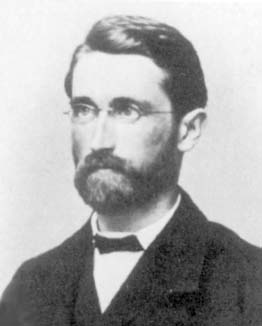
图:not found · Public domain · Wikimedia Commons
理查德·戴德金1831—1916
Richard Dedekind
German mathematician (1831–1916)
尤利乌斯·威廉·里夏德·戴德金 是一名德国数学家,在数论、抽象代数(特别是环论)和算术公理基础方面做出重要贡献。他最知名的贡献是通过戴德金分割概念定义实数。他还被认为是现代集合论和被称为“逻辑主义”的数学哲学发展的先驱。戴德金在这一领域的工作预示了格奥尔格·康托尔的工作,后者通常被认为是集合论的创始人。同样,他对数学基础的贡献也启发了逻辑主义主要倡导者,如戈特洛布·弗雷格和伯特兰·罗素等人的后续工作。
摘自维基百科「理查德·戴德金」,CC BY-SA 4.0
- 出生
- 1831 年 10 月 6 日,不伦瑞克
- 逝世
- 1916 年 2 月 12 日,不伦瑞克
- 国籍
- 不伦瑞克公国
- 学科
- 数学、博物与综合
- 职业
- 数学家、哲学家、大学教师
- 母语 / 工作语言
- 德语
- 母校
- 哥廷根大学(1852 年)、弗里德里希·威廉大学(1854 年)、Collegium Carolinum(1850 年)、Martino-Katharineum(1848 年)
- 工作单位
- 布伦瑞克工业大学(1862—1894)、苏黎世联邦理工学院(1858—1862)、哥廷根大学(1854—1858)
研究领域
主要贡献
代表成就
本站收录的发现与发明
师承
博士导师1
来自 Wikidata 的「博士导师」「师从」「博士生」「学生」记录,可能不全。
学会与院士
百科正文
英文维基百科补充中文条目比较短,下面是英文条目「Richard Dedekind」的原文
Julius Wilhelm Richard Dedekind (; German: [ˈdeːdəˌkɪnt]; 6 October 1831 – 12 February 1916) was a German mathematician who made important contributions to number theory, abstract algebra (particularly ring theory), and the axiomatic foundations of arithmetic. His best known contribution is the definition of real numbers through the notion of Dedekind cut. He is also considered a pioneer in the development of modern set theory and of the philosophy of mathematics known as logicism.
Life
Dedekind's father was Julius Levin Ulrich Dedekind, an administrator of Collegium Carolinum in Braunschweig. His mother was Caroline Henriette Dedekind (née Emperius), the daughter of a professor at the Collegium. Richard Dedekind had three older siblings. As an adult, he never used the names Julius Wilhelm. He was born in Braunschweig (often called "Brunswick" in English), which is where he lived most of his life and died. His body rests at Braunschweig Main Cemetery.
He first attended the Collegium Carolinum in 1848 before transferring to the University of Göttingen in 1850. There, Dedekind was taught number theory by professor Moritz Stern. Gauss was still teaching, although mostly at an elementary level, and Dedekind became his last student. Dedekind received his doctorate in 1852, for a thesis titled Über die Theorie der Eulerschen Integrale ("On the Theory of Eulerian integrals"). This thesis did not display the talent evident in Dedekind's subsequent publications.
At that time, the University of Berlin, not Göttingen, was the main facility for mathematical research in Germany. Thus Dedekind went to Berlin for two years of study, where he and Bernhard Riemann were contemporaries; they were both awarded the habilitation in 1854. Dedekind returned to Göttingen to teach as a Privatdozent, giving courses on probability and geometry. He studied for a while with Peter Gustav Lejeune Dirichlet, and they became good friends. Because of lingering weaknesses in his mathematical knowledge, he studied elliptic and abelian functions. Yet he was also the first at Göttingen to lecture concerning Galois theory. About this time, he became one of the first people to understand the importance of the notion of groups for algebra and arithmetic.
In 1858, he began teaching at the Polytechnic school in Zürich (now ETH Zürich).
Work
While teaching calculus for the first time at the Polytechnic school, Dedekind developed the notion now known as a Dedekind cut (German: Schnitt), now a standard definition of the real numbers. The idea of a cut is that an irrational number divides the rational numbers into two classes (sets), with all the numbers of one class (greater) being strictly greater than all the numbers of the other (lesser) class. For example, the square root of 2 defines all the nonnegative numbers whose squares are less than 2 and the negative numbers into the lesser class, and the positive numbers whose squares are greater than 2 into the greater class. Every location on the number line continuum contains either a rational or an irrational number. Thus there are no empty locations, gaps, or discontinuities. Dedekind published his thoughts on irrational numbers and Dedekind cuts in his pamphlet "Stetigkeit und irrationale Zahlen" ("Continuity and irrational numbers"); in modern terminology, Vollständigkeit, completeness.
Dedekind defined two sets to be "similar" when there exists a one-to-one correspondence between them. He invoked similarity to give the first precise definition of an infinite set: a set is infinite when it is "similar to a proper part of itself," in modern terminology, is equinumerous to one of its proper subsets. Thus the set N of natural numbers can be shown to be similar to the subset of N whose members are the squares of every member of N, (N → N2):
N 1 2 3 4 5 6 7 8 9 10...
N2 1 4 9 16 25 36 49 64 81 100...
Dedekind's work in this area anticipated that of Georg Cantor, who is commonly considered the founder of set theory. Likewise, his contributions to the foundations of mathematics anticipated later works by major proponents of logicism, such as Gottlob Frege and Bertrand Russell.
Dedekind edited the collected works of Lejeune Dirichlet, Gauss, and Riemann. Dedekind's study of Lejeune Dirichlet's work led him to his later study of algebraic number fields and ideals.
以上节选摘自英文维基百科「Richard Dedekind」,按 CC BY-SA 4.0 使用,去掉了参考文献、外部链接等尾部小节,公式改写成了纯文本。篇幅所限,较长的小节只摘了开头一部分,有的小节没有收;全文、配图和出处见原文。
同一学科、同时代的科学家



同一学科的科学家
更多 ›