格物
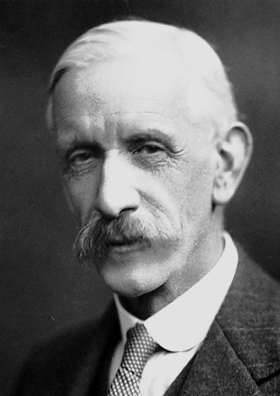
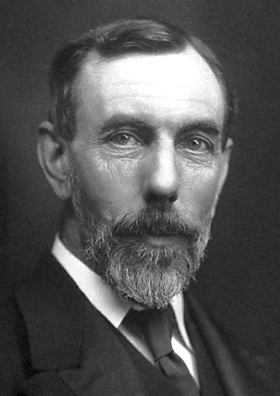
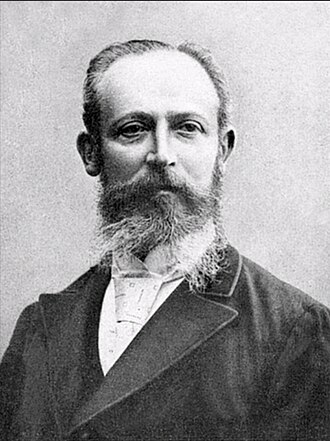
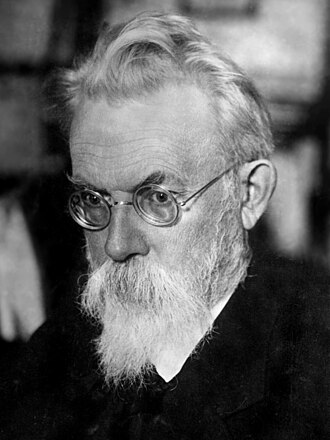
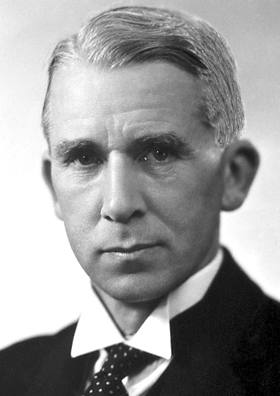
图:John Palmer Clarke (active 1890-1909) · Public domain · Wikimedia Commons
弗雷德里克·霍普金斯1861—1947
Frederick Hopkins
生物化学家, 英国
弗雷德里克·哥兰·霍普金斯爵士,OM,FRS,英国生物化学家,在1929年与克里斯蒂安·艾克曼因为发现了多种维生素,而获得诺贝尔医学奖。此外他也在1901年发现了色胺酸(主要氨基酸之一)。
摘自维基百科「弗雷德里克·霍普金斯」,CC BY-SA 4.0
- 出生
- 1861 年 6 月 20 日,伊斯特本
- 逝世
- 1947 年 5 月 16 日,剑桥
- 国籍
- 英国
- 学科
- 化学、生物学、医学
- 职业
- 生物化学家、医生、大学教师、化学家
- 母语 / 工作语言
- 英语
- 母校
- 伦敦国王学院、盖伊斯医院、剑桥大学三一学院、伦敦大学、帝国学院医学院
- 工作单位
- 伦敦国王学院、剑桥大学
研究领域
主要贡献
本站收录的发现与发明
师承
博士导师1
来自 Wikidata 的「博士导师」「师从」「博士生」「学生」记录,可能不全。
所获奖项(12)
- 1915克鲁内演讲
- 1915贝利奖章
- 1918皇家奖章
- 1926科普利奖章
- 1929诺贝尔生理学或医学奖
- 1934阿尔伯特奖章
- 1937Honorary Fellow of the Royal Society Te Apārangi
- 1945doctor honoris causa from the University of Paris
- —英国皇家学会院士
- —下级勋位爵士
- —功绩勋章
- —Cameron Prize of the University of Edinburgh
学会与院士
百科正文
生平
霍普金斯在1914年创立了剑桥大学生物化学系。1920年,在威廉·邓恩爵士的资金支持下剑桥大学建立了生物化学学院和实验室。1924年学院正式建成时, 霍普金斯即任第一任威廉.邓恩爵士讲座教授.霍普金斯专注于食物辅助因子(后来被称作维生素)的研究,并引领了学院的研究方向。他还发现肌肉收缩会积聚乳酸。
霍普金斯的众多贡献的其中一项为发现了谷胱甘肽并研究了其性质,他验证了谷胱甘肽的氧化还原可逆反应与GSH和GSSG分子中的二硫键相关。另一项重要的工作是他在1912年发现了维生素,该工作是在实验条件不大完善的条件下完成的,因为该项研究,霍普金斯与艾克曼共同获得1929年诺贝尔生理学或医学奖。
霍普金斯1925年接受英国国王乔治五世封爵,1930年被选为英国皇家学会会长。1947年去世。英国生物化学学会与1958年以他的名字命名设立了霍普金斯奖章。
以上内容摘自维基百科「弗雷德里克·霍普金斯」,按 CC BY-SA 4.0 使用,去掉了参考文献、外部链接等尾部小节,公式改写成了纯文本。全文、配图和出处见原文。
英文维基百科补充中文条目比较短,下面是英文条目「Frederick Gowland Hopkins」的原文
Sir Frederick Gowland Hopkins (20 June 1861 – 16 May 1947) was an English biochemist who was awarded the Nobel Prize in Physiology or Medicine in 1929, with Christiaan Eijkman, for the discovery of vitamins. He also discovered the amino acid tryptophan, in 1901. He was President of the Royal Society from 1930 to 1935.
Education and early life
Hopkins was born in Eastbourne, Sussex, and initially attended the City of London School. However, he soon transferred to Alexandra Park College in Hornsey and completed his further study with the University of London External Programme (through evening classes at Birkbeck College). He attended the medical school of Guy's Hospital, which is now part of King's College London School of Medicine.
Career and research
After graduating, Hopkins then taught physiology and toxicology at Guy's Hospital from 1894 to 1898. In 1898, while attending a meeting of the Physiological Society, he was invited by Sir Michael Foster to join the Physiological Laboratory in Cambridge to investigate the chemical aspects of physiology. Biochemistry was not, at that time, recognised as a separate branch of science. He was a lecturer in chemical physiology at Emmanuel College, Cambridge in March 1900, when he received the academic rank Master of Arts (MA) honoris causa. He earned a doctorate in physiology (D.Sc.) from the University of London in July 1902, and at the same time was given a readership in biochemistry at Trinity College. While at Cambridge he was initiated into Freemasonry. In 1910 he became a Fellow of Trinity College, and an Honorary Fellow of Emmanuel College. In 1914 he was elected to the Chair of Biochemistry at Cambridge University, thus becoming the first Professor in that discipline at Cambridge. His Cambridge students included neurochemistry pioneer Judah Hirsch Quastel and pioneer embryologist Joseph Needham.
Hopkins had for a long time studied how cells obtain energy via a complex metabolic process of oxidation and reduction reactions. His study in 1907 with Sir Walter Morley Fletcher of the connection between lactic acid and muscle contraction was one of the central achievements of his work on the biochemistry of the cell. He and Fletcher showed that oxygen depletion causes an accumulation of lactic acid in the muscle. Their work paved the way for the later discovery by Archibald Hill and Otto Fritz Meyerhof that a carbohydrate metabolic cycle supplies the energy used for muscle contraction.
In 1912 Hopkins published the work for which he is best known, demonstrating in a series of animal feeding experiments that diets consisting of pure proteins, carbohydrates, fats, minerals, and water fail to support animal growth. This led him to suggest the existence in normal diets of tiny quantities of as yet unidentified substances that are essential for animal growth and survival. These hypothetical substances he called "accessory food factors", later renamed vitamins. It was this work that led his being awarded (together with Christiaan Eijkman) the 1929 Nobel Prize in Physiology or Medicine.
During World War I, Hopkins continued his work on the nutritional value of vitamins. His efforts were especially valuable in a time of food shortages and rationing.
Awards and honours
Hopkins was elected a Foreign Associate of the National Academy of Sciences (USA) in 1924. During his life, in addition to the Nobel Prize, Hopkins was awarded the Royal Medal of the Royal Society in 1918, the Cameron Prize for Therapeutics of the University of Edinburgh in 1922, and the Copley Medal of the Royal Society in 1926.
Other significant honours were his election in 1905 as a Fellow of the Royal Society (FRS), Great Britain's most prestigious scientific organisation; his knighthood by King George V in 1925; and the award in 1935 of the Order of Merit, Great Britain's most exclusive civilian honour.
From 1930 to 1935, he served as president of the Royal Society and, in 1933, served as president of the British Association for the Advancement of Science. He was elected to the American Philosophical Society in 1937.
Personal life
In 1898, he married Jessie Anne Stephens (1861–1937); they had one son and two daughters, the younger of whom, Jacquetta Hawkes, became a prominent archaeologist and married the author J. B. Priestley.
Gowland Hopkins died on 16 May 1947 in Cambridge and is buried at the Parish of the Ascension Burial Ground in Cambridge, with his wife.
以上节选摘自英文维基百科「Frederick Gowland Hopkins」,按 CC BY-SA 4.0 使用,去掉了参考文献、外部链接等尾部小节,公式改写成了纯文本。篇幅所限,较长的小节只摘了开头一部分,有的小节没有收;全文、配图和出处见原文。