格物
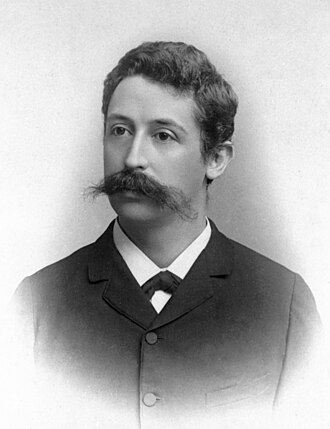
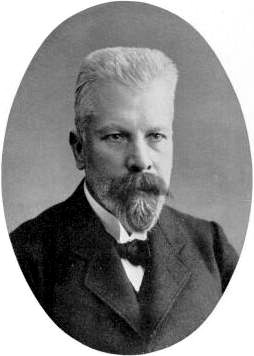
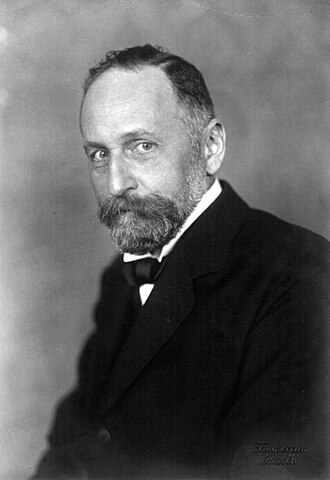
图:作者不详 · Copyrighted free use · Wikimedia Commons
克里斯蒂安·艾克曼1858—1930
Christiaan Eijkman
医生, 荷兰王国
克里斯蒂安·艾克曼,荷兰医生、病理学家。艾克曼研究并显示出脚气病是由于不良的饮食习惯造成,这导致他发现维生素。他与弗雷德里克·霍普金斯爵士一起获颁诺贝尔生理学或医学奖。
摘自维基百科「克里斯蒂安·艾克曼」,CC BY-SA 4.0
- 出生
- 1858 年 8 月 11 日,Nijkerk
- 逝世
- 1930 年 11 月 5 日,乌得勒支
- 国籍
- 荷兰王国
- 学科
- 化学、生物学、医学、博物与综合
- 职业
- 医生、生物化学家、大学教师、生理学家
- 母语 / 工作语言
- 荷兰语
- 母校
- 阿姆斯特丹大学、巴斯德研究院
- 工作单位
- 乌得勒支大学(1898—1918)
研究领域
师承
博士导师1
来自 Wikidata 的「博士导师」「师从」「博士生」「学生」记录,可能不全。
所获奖项(2)
- 1923约翰·斯科特奖
- 1929诺贝尔生理学或医学奖
学会与院士
百科正文
英文维基百科补充中文条目比较短,下面是英文条目「Christiaan Eijkman」的原文
Christiaan Eijkman (UK: AYK-mən, EYEK-mən, US: -mahn, Dutch: [ˈkrɪstijaːn ˈɛikmɑn]; 11 August 1858 – 5 November 1930) was a Dutch physician and professor of physiology whose demonstration that beriberi is caused by poor diet led to the discovery of antineuritic vitamins (thiamine). Together with Sir Frederick Hopkins, he received the Nobel Prize for Physiology or Medicine in 1929 for the discovery of vitamins.
Biography
Early life and education
Christiaan Eijkman was born on 11 August 1858, at Nijkerk, Netherlands, to Christiaan Eijkman, the headmaster of a local school, and Johanna Alida Pool. He was the youngest of seven children. His elder brother Johann Frederik Eijkman (1851–1915) became a physical chemist.
A year later, in 1859, the Eijkman family moved to Zaandam, where his father was appointed head of a newly founded school for advanced elementary education. It was here that Christiaan and his brothers received their early education. In 1875, after taking his preliminary examinations, Eijkman became a student at the Military Medical School of the University of Amsterdam, where he was trained as a medical officer for the Netherlands Indies Army, passing through all his examinations with honours.
From 1879 to 1881, he was an assistant of Thomas Place, Professor of Physiology, during which time he wrote his thesis Over Polarisatie in de Zenuwen (On Polarization of the Nerves), which earned him his doctoral degree with distinction on 13 July 1883.
Career
In 1883, Eijkman left the Netherlands for The Dutch East Indies, where he was made medical officer of health, first in Semarang, then later at Tjilatjap, a small village on the south coast of Java, and at Padang Sidempoean in Northern Sumatra. It was at Tjilatjap that he caught malaria, which later so impaired his health that in 1885 he had to return to Europe on sick-leave.
For Eijkman this was to prove a lucky event, as it enabled him to work in E. Forster's laboratory in Amsterdam, and also in Robert Koch's bacteriological laboratory in Berlin; here he came into contact with Cornelis Adrianus Pekelharing and Tiberius Cornelis Winkler, who were visiting the German capital before their departure to the Indies. In this way medical officer Christiaan Eijkman was seconded as assistant to the Pekelharing-Winkler mission, together with his colleague M. B. Romeny. This mission had been sent out by the Dutch Government to conduct investigations into Beriberi, a disease which at that time was causing havoc in that region.
In 1887, Pekelharing and Winkler were recalled, but before their departure Pekelharing proposed to the Governor General that the laboratory which had been temporarily set up for the Commission in the Military Hospital in Batavia should be made permanent. This proposal was readily accepted, and the Sekolah Dokter Djawa (also called Dokter Djawa School, or Javanese Doctors' School) was set up as the first medical school in Indonesia. Christiaan Eijkman was appointed its first director and with it departed from the army service. Now he was able to devote himself entirely to science.
Eijkman was appointed Director of the "Geneeskundig Laboratorium" (Medical Laboratory) from 15 January 1888 to 4 March 1896, and during that time he made a number of his most important researches. These dealt first of all with the physiology of people living in tropical regions. He was able to demonstrate that a number of theories had no factual basis. Firstly he proved that in the blood of Europeans living in the tropics the number of red corpuscles, the specific gravity, the serum, and the water content, undergo no change, at least when the blood is not affected by disease which will ultimately lead to anaemia. Comparing the metabolism of the European with that of the native, he found that in the tropics as well in the temperate zone, this is entirely governed by the work carried out. Neither could he find any disparity in respiratory metabolism, perspiration, and temperature regulation. He published his research in the journal Geneeskundig Tijdschrift voor Nederlandsch-Indië (Medical Journal of the Dutch East Indies) in 1890. Thus Eijkman put an end to a number of speculations on the acclimatization of Europeans in the tropics which had hitherto necessitated the taking of various precautions.
Greatest work
Eijkman had been sent to the Dutch East Indies to study beriberi, a disease of the peripheral nerves, but his discovery of the cause was accidental.
以上节选摘自英文维基百科「Christiaan Eijkman」,按 CC BY-SA 4.0 使用,去掉了参考文献、外部链接等尾部小节,公式改写成了纯文本。篇幅所限,较长的小节只摘了开头一部分,有的小节没有收;全文、配图和出处见原文。
同年获同一奖项
同一学科、同时代的科学家