格物
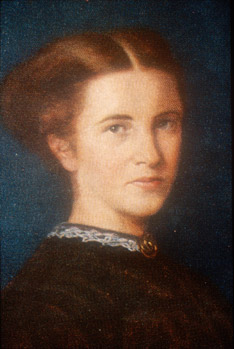
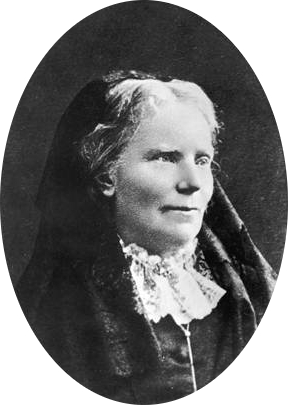
图:作者不详 · Public domain · Wikimedia Commons
伊丽莎白·安德森1836—1917
Elizabeth Garrett Anderson
英国女医生
Elizabeth Garrett Anderson was an English physician and suffragist. She is known for being the first woman to qualify in Britain as a physician and surgeon and as a co-founder and dean of the London School of Medicine for Women, which was the first medical school in Britain to train women as doctors. She was the first female dean of a British medical school, the first woman in Britain to be elected to a school board and, as mayor of Aldeburgh, the first female mayor in Britain.
摘自英文维基百科「Elizabeth Garrett Anderson」(英文维基百科,暂无中文条目),CC BY-SA 4.0
- 出生
- 1836 年 6 月 9 日,怀特查珀尔
- 逝世
- 1917 年 12 月 17 日,Alde House
- 国籍
- 大不列颠及爱尔兰联合王国
- 学科
- 医学
- 职业
- 政治人物、医生、选举权活动者、作家
- 母语 / 工作语言
- 英语
- 母校
- 米德尔塞克斯医院医学院(1861 年)、巴黎医学院
- 工作单位
- 伦敦女子医学院、伊丽莎白·加勒特·安德森妇产科医院
研究领域
学会与院士
百科正文
本条目暂无中文维基百科条目,下面是英文维基百科原文。
Early life
Elizabeth was born in Whitechapel, London, and was the second of eleven children of Newson Garrett (1812–1893), from Leiston, Suffolk, and his wife, Louisa (born Dunnell; c. 1813–1903), from London.
Her paternal ancestors had been ironworkers in East Suffolk since the early seventeenth century. Newson was the youngest of three sons and not academically inclined, although he possessed the family's entrepreneurial spirit. When he finished school, Newson found few opportunities in Leiston, so he moved to London to make his fortune. There, he fell in love with his brother's sister-in-law, Louisa Dunnell, the daughter of an innkeeper of Suffolk origin. After their wedding, the couple went to live in a pawnbroker's shop at 1 Commercial Road, Whitechapel. The Garretts had their first three children in quick succession: Louisa, Elizabeth, and a son, Dunnell, who died at the age of six months.
Early education
There was no school in Aldeburgh, so Garrett learned reading, writing, and arithmetic from her mother. When she was 10 years old, a governess, Miss Edgeworth, a poor gentlewoman, was employed to educate Garrett and her sister. Mornings were spent in the schoolroom; there were regimented afternoon walks; educating the young ladies continued at mealtimes when Edgeworth ate with the family; at night, the governess slept in a curtained off area in the girls' bedroom. Garrett reportedly despised her governess and sought to outwit the teacher in the classroom. When Garrett was 13 and her sister 15, they were sent to a private school, the Boarding School for Ladies in Blackheath, London, which was run by the step aunts of the poet Robert Browning. There, English literature, French, Italian and German as well as deportment, were taught.
Medical education
After an initial unsuccessful visit to leading doctors in Harley Street, Garrett decided to first spend six months as a surgery nurse at Middlesex Hospital, London in August 1860. On proving to be a good nurse, she was allowed to attend an outpatients' clinic, then her first operation. She unsuccessfully attempted to enroll in the hospital's Medical School but was allowed to attend private tuition in Latin, Greek and pharmacology with the hospital's apothecary, while continuing her work as a nurse. She also employed a tutor to study anatomy and physiology three evenings a week. Eventually she was allowed into the dissecting room and the chemistry lectures. Gradually, Garrett became an unwelcome presence among the male students, who in 1861 presented a memorial to the school against her admittance as a fellow student, despite the support she enjoyed from the administration.
Career
Though she was now a licentiate of the Society of Apothecaries, as a woman, Garrett could not hold a medical post in any hospital. So in late 1865, Garrett opened her own practice at 20 Upper Berkeley Street, London. At first patients were scarce, but the practice gradually grew. After six months in practice, she wished to open an outpatients dispensary, to enable poor women to obtain medical help from a qualified practitioner of their own gender. In 1865, there was an outbreak of cholera in Britain, affecting both rich and poor, and in their panic, some people forgot any prejudices they had in relation to a female physician. The first death due to cholera occurred in 1866, but by then Garrett had already opened St Mary's Dispensary for Women and Children, at 69 Seymour Place. In the first year, she tended to 3,000 new patients, who made 9,300 outpatient visits to the dispensary.
Women’s suffrage movement
Garrett Anderson was also active in the women's suffrage movement. In 1866, Garrett Anderson and Davies presented petitions with more than 1,500 signatures asking that female heads of household be given the right to vote. That year, Garrett Anderson joined the first British Women's Suffrage Committee. She was not as active as her sister, Millicent Garrett Fawcett, though Garrett Anderson became a member of the Central Committee of the National Society for Women's Suffrage in 1889. After her husband's death in 1907, she became more active. As mayor of Aldeburgh, she gave speeches for suffrage, before the increasing militant activity in the movement led to her withdrawal in 1911. Her daughter Louisa, also a physician, was more active and more militant, spending time in prison in 1912 for her suffrage activities.
Personal life
Elizabeth Garrett Anderson once remarked that "a doctor leads two lives, the professional and the private, and the boundaries between the two are never traversed". In 1871, she married James George Skelton Anderson (died 1907) of the Orient Steam Navigation Company, but she did not give up her medical practice. She had three children, Louisa (1873–1943), Margaret (1874–1875), who died of meningitis, and Alan (1877–1952). Louisa also became a pioneering doctor of medicine and feminist activist.
They retired to Aldeburgh in 1902, moving to Alde House in 1903, after the death of Elizabeth's mother. Skelton died of a stroke in 1907. She enjoyed a happy marriage and in later life, devoted time to Alde House, gardening, and travelling with younger members of the extended family.
On 9 November 1908, she was elected mayor of Aldeburgh, the first female mayor in England. Her father had been mayor in 1889.
Legacy
The New Hospital for Women was renamed the Elizabeth Garrett Anderson Hospital in 1918 and amalgamated with the Obstetric Hospital in 2001 to form the Elizabeth Garrett Anderson and Obstetric Hospital before relocating to become the University College Hospital Elizabeth Garrett Anderson Wing at UCH.
The former Elizabeth Garrett Anderson Hospital buildings are incorporated into the new National Headquarters for the public service trade union UNISON. The Elizabeth Garrett Anderson Gallery, a permanent installation set within the restored hospital building, uses a variety of media to set the story of Garrett Anderson, her hospital, and women's struggle to achieve equality in the field of medicine within the wider framework of 19th and 20th century social history.
The critical care centre at Ipswich Hospital was named the Garrett Anderson Centre in her honour and in recognition of her connection to the county of Suffolk.
以上节选摘自英文维基百科「Elizabeth Garrett Anderson」,按 CC BY-SA 4.0 使用,去掉了参考文献、外部链接等尾部小节,公式改写成了纯文本。篇幅所限,较长的小节只摘了开头一部分,有的小节没有收;全文、配图和出处见原文。