格物

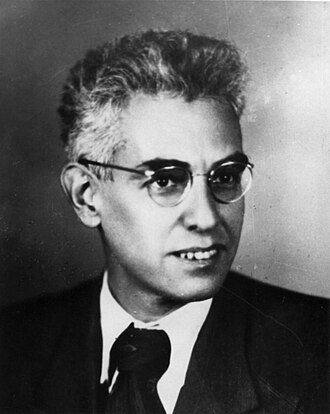
图:作者不详 · Public domain · Wikimedia Commons
- 出生
- 1906 年 2 月 18 日,维也纳
- 逝世
- 1980 年 10 月 21 日,维也纳
- 国籍
- 奥地利
- 学科
- 医学
- 职业
- 精神科医师、大学教师、儿科医生、医生
- 母语 / 工作语言
- 德语
- 母校
- 维也纳大学
- 工作单位
- 维也纳大学
研究领域
师承
师从1
来自 Wikidata 的「博士导师」「师从」「博士生」「学生」记录,可能不全。
所获奖项(1)
- —Kardinal-Innitzer-Preis
学会与院士
百科正文
争议
亚斯伯格的谎言:参加纳粹“优生灭绝”的小儿科权威 | 过去24小时 | 转角国际 udn Global (页面存档备份,存于互联网档案馆)
在希特勒眼皮底下拯救残疾儿童的医师,竟是纳粹“优生学”共谋!史学家翻旧档揭骇人真相-风传媒 (页面存档备份,存于互联网档案馆)
Did Hans Asperger actively assist the Nazi euthanasia program? | Molecular Autism | Full Text (页面存档备份,存于互联网档案馆)
Hans Asperger, National Socialism, and “race hygiene” in Nazi-era Vienna | Molecular Autism | Full Text (页面存档备份,存于互联网档案馆)
以上内容摘自维基百科「漢斯·亞斯伯格」,按 CC BY-SA 4.0 使用,去掉了参考文献、外部链接等尾部小节,公式改写成了纯文本。全文、配图和出处见原文。
英文维基百科补充中文条目比较短,下面是英文条目「Hans Asperger」的原文
Johann Friedrich Karl Asperger (; German: [ˈhans ˈaspɛɐ̯ɡɐ]; 18 February 1906 – 21 October 1980) was an Austrian physician. He studied atypical neurology, specifically in children, and is the namesake of Asperger syndrome. He wrote more than 300 publications on psychological disorders that posthumously acquired international renown in the 1980s.
In the late 2010s he was accused of referring children to the Am Spiegelgrund children's clinic in Vienna during the Nazi period. The clinic was responsible for murdering hundreds of disabled children deemed to be "unworthy of life" as part of the Third Reich's child euthanasia programs (as part of the T4 Programme).
However, subsequent peer-reviewed studies have concluded that, although it is not possible to determine with certainty what Asperger knew about the infant euthanasia program, he was not directly involved in it, did not violate professional medical ethics and the fatal decisions that led to the deaths of some of his patients were made by other physicians. Historical records indicate that Asperger did not report any children to the Berlin health authorities, despite being legally obliged to do so at the time.
Biography
Hans Asperger was born in Neustiftgasse in the 7th district of Vienna, Austria, on 18 February 1906, and was raised on a farm in Hausbrunn not far from the city. He was the eldest of three sons; his younger brother died shortly after birth. As a youth, he joined the Wandering Scholars of the Bund Neuland (in the group of Fahrende Scholaren, which organized outdoor activities such as hiking and mountaineering).
Career
Early career (1930–1938)
According to Czech, "with the appointment of Hamburger as president in 1930, the Vienna University Paediatric Clinic became a beacon of anti-Jewish policy, long before the Nazi takeover." This assessment is consistent with work from the 2020s on the role of academics at the University of Vienna long before the Nazi takeover in 1938. Ideas of "purity" were widespread and scholars were eager to enforce a narrow "conceptualization of what is ‘German’ and what not or by claiming some groups as forebears (Bavarians, Swabians) while excluding others (Slovene bilinguals, Yiddish, Rotwelsh speakers)".
Nazi involvement allegations
According to Simon Baron-Cohen et al., "The degree of Asperger’s involvement in the targeting of Vienna’s most vulnerable children has remained an open and vexing question in autism research for a long time." However, as is becoming clearer in historical research, collaboration of scientists and university teachers of all fields was the norm rather than the exception in the Third Reich and as various academic studies reveal, Hans Asperger did not violate professional medical ethics during the Nazi period, contrary to what was claimed in 2018.
Works and publications
Hans Asperger published a total of 359 texts, most of them devoted to "autistic psychopathy" and the notion of death. All of his publications are written in German. According to Edith Sheffer, the context in which Asperger evolved facilitated the development of his most famous publication, insofar as he and his colleagues frequently used the notion of "Gemüt", which had been misused in Nazi psychiatry to refer to "the metaphysical capacity of humans to form social bonds". This caused Nazi doctors and psychiatrists to pay attention to children they considered to have a weak Gemüt.
Posthumous adoption of Asperger syndrome diagnosis
Due to his major role in defining the notion of the "autism spectrum", Hans Asperger has been "often touted as a champion of neurodiversity", particularly by Adam Feinstein and Steve Silberman. Although he died before his identification of behavioural patterns in autistic people became widely recognized, this was in part due to his work being exclusively in German and as such it was little translated.
After the Second World War and before access to the archives concerning him, Hans Asperger had a reputation as a protector of sick and handicapped children, notably under the influence of Uta Frith's book published in 1991.
以上节选摘自英文维基百科「Hans Asperger」,按 CC BY-SA 4.0 使用,去掉了参考文献、外部链接等尾部小节,公式改写成了纯文本。篇幅所限,较长的小节只摘了开头一部分,有的小节没有收;全文、配图和出处见原文。