格物
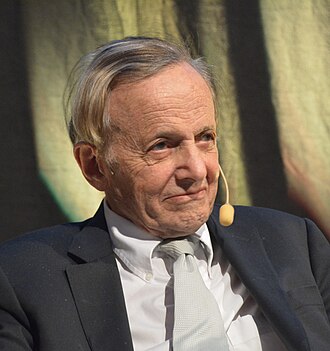
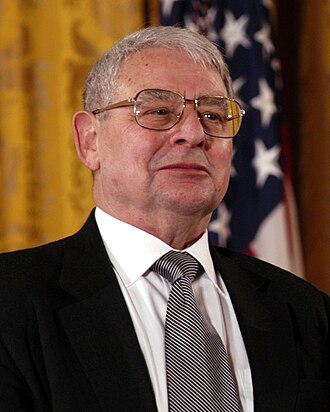
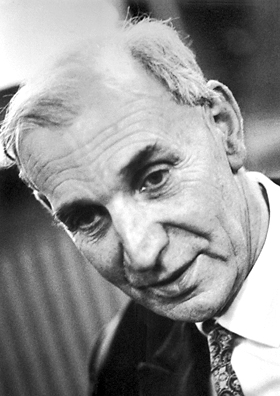
图:Bengt Oberger · CC BY-SA 4.0 · Wikimedia Commons
- 出生
- 1929 年 1 月 23 日,柏林
- 国籍
- 加拿大、德国
- 学科
- 物理学、化学、博物与综合
- 职业
- 化学家、物理学家、大学教师
- 母语 / 工作语言
- 德语
- 母校
- 英国曼彻斯特文法学校(1946 年)、曼彻斯特大学(哲学博士,1952 年)、多伦多大学(1954 年)、多伦多大学附属中学
- 工作单位
- 多伦多大学
研究领域
师承
博士生2
来自 Wikidata 的「博士导师」「师从」「博士生」「学生」记录,可能不全。
所获奖项(26)
- 1962Marlow Award
- 1964Centenary Prize
- 1965Steacie Prize
- 1966加拿大皇家学会院士
- 1970古根海姆学者奖
- 1974安大略勋章
- 1976Chemical Institute of Canada Medal
- 1977托利奖
- 1978Remsen Award
- 1979加拿大勋章同伴
- 1979古根海姆学者奖
- 1982沃尔夫化学奖
- 1982哈佛大学名誉博士
- 1986诺贝尔化学奖
- 1987honorary doctorate at the Laval University
- 1988honorary doctor of the University of Manchester
- 1988Killam奖
- 1988Polanyi Medal
- 1989皇家奖章
- 1990honorary doctorate of Concordia University
- 1994贝克演讲
- 1994贝克尔讲座
- 1998美国物理学会会士
- 2007赫茨伯格奖章
- 2010法拉第讲座奖
- 2012Helmholtz Medal
学会与院士
百科正文
生平
1929年出生于魏玛共和国柏林,毕业于曼彻斯特大学,加拿大多伦多大学化学系教授。
荣誉
波拉尼曾于1982年获沃尔夫化学奖。1986年,因有关化学动力学的研究,波拉尼与达德利·赫施巴赫、李远哲共享诺贝尔化学奖。
家庭
他是化学家和哲学家迈克·波拉尼之子,经济学家卡尔·波兰尼的侄子。
以上内容摘自维基百科「约翰·查尔斯·波拉尼」,按 CC BY-SA 4.0 使用,去掉了参考文献、外部链接等尾部小节,公式改写成了纯文本。全文、配图和出处见原文。
英文维基百科补充中文条目比较短,下面是英文条目「John Polanyi」的原文
John Charles Polanyi (Hungarian: Polányi János Károly; born 23 January 1929) is a German-born Hungarian-Canadian chemist. He was awarded the 1986 Nobel Prize in Chemistry for his research in chemical reaction dynamics.
Polanyi was born into the prominent Hungarian Polányi (Pollacsek) family in Berlin, Germany, prior to his family emigrating in 1933 to the United Kingdom where he was subsequently educated at the University of Manchester, achieving his Ph.D in 1952, and did postdoctoral research at the National Research Council in Canada (1952-1954) and Princeton University in New Jersey (1954-1956). Polanyi's first academic appointment was at the University of Toronto in 1956, and he remains there as of 2025 as University Professor Emeritus.
In addition to the Nobel Prize, Polanyi has received numerous other awards, including 33 honorary degrees, the Wolf Prize in Chemistry and the Gerhard Herzberg Canada Gold Medal for Science and Engineering. Outside his scientific pursuits, Polanyi is active in public policy discussion, especially concerning science and nuclear weapons. According to György Marx, he was one of "The Martians", a group of prominent Hungarian scientists who emigrated to the United States in the first half of the 20th century.
Early years
His father, Mihály (Michael), was a chemist, philosopher of science, and economist; his uncle Károly (Karl) was an economic historian. Michael was born Jewish and converted to Catholicism. He moved from Germany to Britain in 1933, partly as a result of the persecution of Jews under Adolf Hitler. During World War II, Polanyi's father sent him to Canada for three years when he was 11, so he would be safe from German bombings. While living in Toronto, he attended the University of Toronto Schools. After returning to Britain, Polanyi finished high school and attended university at Manchester, where he received his undergraduate degree in 1949 and his PhD in 1952.
Academic posts
John Polanyi started at the University of Toronto as a lecturer in 1956. He moved up the ranks quickly at the university, being promoted to assistant professor in 1957, associate professor in 1960 and becoming a full professor in 1962. In 1974, he was named University Professor, an honorary title he has retained since.
Research interests
Polanyi's PhD studies at Manchester University focused on measuring the strengths of chemical bonds using thermal dissociation, building on Warhurst's graduate studies using a sodium flame apparatus to determine the likelihood that a collision between a sodium atom and another molecule would lead to a chemical reaction. For the majority of his career, Polanyi's research has focused on chemical dynamics, attempting to determine the mechanics of a chemical reaction, and the properties of chemical species in the transition state.
Awards and honours
Nobel Prize
Polanyi was awarded the 1986 Nobel Prize in Chemistry for his work in chemical reaction dynamics. He shared the prize with Dudley Herschbach of Harvard University and Yuan T. Lee of the University of California, Berkeley. The trio were honoured for "their contributions concerning the dynamics of chemical elementary processes." Polanyi's contributions were centred around the work he did developing the technique of infrared chemiluminescence. This technique was used to measure weak infrared emissions from a newly formed molecule in order to examine energy disposal during a chemical reaction. Polanyi's Nobel lecture upon receipt of the award was entitled "Some Concepts in Reaction Dynamics."
Personal life
Polanyi was born in 1929 to Michael and Magda Elizabeth Kemény Polanyi in Berlin, Germany. His father was born in 1891, in Hungary. His uncle Karl was an economist, noted for his criticism of market capitalism. His brother George was noted for his defence of market capitalism. His paternal grandfather, Mihaly Pollacsek, built railways. Mihaly Pollacsek Magyarised the family's name to Polanyi, but did not change his own name. The Polanyi's were non-observant Jews, although Michael Polanyi became a Christian.
In 1958, Polanyi married Anne Ferrar Davidson (1929–2013). He has two children – a daughter, Margaret, born in 1961 and a son, Michael, born in 1963.
以上节选摘自英文维基百科「John Polanyi」,按 CC BY-SA 4.0 使用,去掉了参考文献、外部链接等尾部小节,公式改写成了纯文本。篇幅所限,较长的小节只摘了开头一部分,有的小节没有收;全文、配图和出处见原文。
同年获同一奖项
同一学科、同时代的科学家


同一学科的科学家
更多 ›