格物

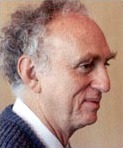
图:Flickr Commons · No restrictions · Wikimedia Commons
- 出生
- 1922 年 11 月 9 日,德布勒森
- 逝世
- 1974 年 2 月 2 日,伦敦
- 国籍
- 匈牙利、英国
- 学科
- 物理学、数学、博物与综合
- 职业
- 数学家、哲学家、大学教师、物理学家
- 母语 / 工作语言
- 匈牙利语、英语
- 母校
- 莫斯科国立大学(1949 年)、德布勒森大学(1944 年)、剑桥大学(哲学博士,1961 年)
- 工作单位
- 伦敦政治经济学院(1960—1974)、Ministry of Education and Religious Affairs(1947—1950)
研究领域
主要贡献
代表成就
师承
博士导师2
博士生1
来自 Wikidata 的「博士导师」「师从」「博士生」「学生」记录,可能不全。
学会与院士
百科正文
英文维基百科补充中文条目比较短,下面是英文条目「Imre Lakatos」的原文
Imre Lakatos (UK:, US:; Hungarian: Lakatos Imre [ˈlɒkɒtoʃ ˈimrɛ]; 9 November 1922 – 2 February 1974) was a Hungarian-born philosopher of mathematics and science, known for his thesis of the fallibility of mathematics and its "methodology of proofs and refutations" in its pre-axiomatic stages of development, and also for introducing the concept of the "research programme" in his methodology of scientific research programmes.
Life
Lakatos was born Imre Lipsitz to a well-to-do Hungarian-Jewish family in Debrecen, Hungary, in 1922. He received a degree in mathematics, physics, and philosophy from the University of Debrecen in 1944. In March 1944, the Germans invaded Hungary, and Lakatos, along with Éva Révész, his then-girlfriend and subsequent wife, formed a Marxist resistance group. In May of that year, the group was joined by Éva Izsák, a 19-year-old Jewish antifascist activist. Lakatos, considering that there was a risk that she would be captured and forced to betray them, decided that her duty to the group was to commit suicide. Subsequently, a member of the group took her to Debrecen and gave her cyanide.
During the occupation, Lakatos avoided Nazi persecution of Jews by changing his surname to Molnár. His mother and grandmother were murdered in Auschwitz. He changed his surname once again to Lakatos (Locksmith) in honor of Géza Lakatos.
After the war, from 1947, he worked as a senior official in the Hungarian Ministry of Education. He also continued his education with a PhD at Debrecen University (awarded in 1947) and also attended György Lukács's weekly Wednesday afternoon private seminars. He also studied at the Moscow State University under the supervision of Sofya Yanovskaya in 1949.
Philosophical work
Philosophy of mathematics
Lakatos's philosophy of mathematics was inspired by both Hegel's and Marx's dialectic, by Karl Popper's theory of knowledge, and by the work of mathematician George Pólya.
The 1976 book Proofs and Refutations is based on the first three chapters of his 1961 four-chapter doctoral thesis Essays in the Logic of Mathematical Discovery. But its first chapter is Lakatos's own revision of its chapter 1 that was first published as Proofs and Refutations in four parts in 1963–64 in the British Journal for the Philosophy of Science. It is largely taken up by a fictional dialogue set in a mathematics class. The students are attempting to prove the formula for the Euler characteristic in algebraic topology, which is a theorem about the properties of polyhedra, namely that for all polyhedra the number of their vertices V minus the number of their edges E plus the number of their faces F is 2 (V − E + F = 2). The dialogue is meant to represent the actual series of attempted proofs that mathematicians historically offered for the conjecture, only to be repeatedly refuted by counterexamples. Often, the students paraphrase famous mathematicians such as Cauchy, as noted in Lakatos's extensive footnotes.
Lakatos termed the polyhedral counterexamples to Euler's formula monsters and distinguished three ways of handling these objects: Firstly, monster-barring, by which means the theorem in question could not be applied to such objects.
Criticism
Feyerabend
Paul Feyerabend argued that Lakatos's methodology was not a methodology at all, but merely "words that sound like the elements of a methodology". He argued that Lakatos's methodology was no different in practice from epistemological anarchism, Feyerabend's own position. He wrote in Science in a Free Society (after Lakatos's death) that:
Lakatos realized and admitted that the existing standards of rationality, standards of logic included, were too restrictive and would have hindered science had they been applied with determination. He therefore permitted the scientist to violate them (he admits that science is not "rational" in the sense of these standards). However, he demanded that research programmes show certain features in the long run — they must be progressive... I have argued that this demand no longer restricts scientific practice. Any development agrees with it.
Lakatos and Feyerabend planned to produce a joint work in which Lakatos would develop a rationalist description of science, and Feyerabend would attack it. The correspondence between Lakatos and Feyerabend, where the two discussed the project, has since been reproduced, with commentary, by Matteo Motterlini.
以上节选摘自英文维基百科「Imre Lakatos」,按 CC BY-SA 4.0 使用,去掉了参考文献、外部链接等尾部小节,公式改写成了纯文本。篇幅所限,较长的小节只摘了开头一部分,有的小节没有收;全文、配图和出处见原文。
同一学科、同时代的科学家


同一学科的科学家
更多 ›