格物
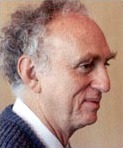
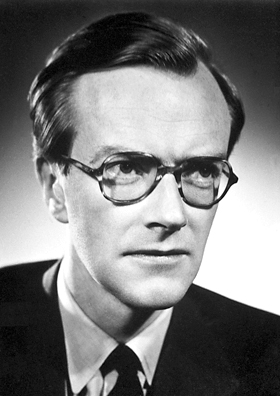
图:作者不详 · Public domain · Wikimedia Commons
马丁·佩尔1927—2014
Martin Lewis Perl
物理学家, 美国
马丁·路易斯·佩尔,美国化学工程师和物理学家,1995年因发现τ子而获诺贝尔物理学奖。
摘自维基百科「马丁·佩尔」,CC BY-SA 4.0
- 出生
- 1927 年 6 月 24 日,曼哈顿
- 逝世
- 2014 年 9 月 30 日,帕洛阿尔托
- 国籍
- 美国
- 学科
- 物理学、工程与发明、博物与综合
- 职业
- 物理学家、工程师、大学教师
- 母语 / 工作语言
- 英语
- 母校
- 哥伦比亚大学、纽约大学坦登工程学院、美国商船学院、詹姆斯·麦迪逊高中(纽约)
- 工作单位
- 密歇根大学
研究领域
师承
博士导师1
博士生5
来自 Wikidata 的「博士导师」「师从」「博士生」「学生」记录,可能不全。
所获奖项(3)
学会与院士
百科正文
美国国家科学院院士(1981 年)
简历
佩尔出生于纽约。父母为来自俄罗斯波兰犹太人聚居区的犹太人移民。
1948年毕业于布鲁克林理工学院(现纽约大学坦登工程学院),1955年于哥伦比亚大学取得博士学位,其论文指导教授为伊西多·拉比。佩尔的论文描述了钠原子核四极矩的测量过程,该研究采用了原子束共振法——此技术正是拉比于1944年凭借此法荣获诺贝尔物理学奖的关键技术。
其后曾任职密歇根大学及SLAC国家加速器实验室(史丹佛线性加速器中心)。
佩尔在密歇根大学度过了8年时间,研究强相互作用物理学,使用气泡室和火花室研究介子以及后来的中子在质子上的散射。 在密歇根大学期间,佩尔和劳伦斯琼斯 (Lawrence W. Jones) 担任丁肇中 (Samuel C. C. Ting) 的联合导师,丁肇中于1976年获得了诺贝尔物理学奖。
诺贝尔奖与晚年事业
1995年,佩尔与弗雷德里克·莱因斯共同荣获诺贝尔物理学奖。该奖项旨在表彰“对轻子物理学的开创性实验贡献”。佩尔因“发现粲轻子”获得半数奖项,莱因斯则因“探测到中微子”获得其应得份额。1996年他出版《实验科学的反思》(Reflections on Experimental Science),内容涵盖“评论、科学文献再版、思想箴言及回忆录...”。
他以客座教授身份加入利物浦大学,并担任“美国科学家与工程师协会”顾问委员会成员,该组织致力于推动美国政府采用可靠科学。1996年获颁美国成就学会金盘奖,2009年获贝尔格莱德大学授予荣誉博士学位。
以上内容摘自维基百科「马丁·佩尔」,按 CC BY-SA 4.0 使用,去掉了参考文献、外部链接等尾部小节,公式改写成了纯文本。全文、配图和出处见原文。
英文维基百科补充中文条目比较短,下面是英文条目「Martin Lewis Perl」的原文
Martin Lewis Perl (June 24, 1927 – September 30, 2014) was an American chemical engineer and physicist who won the Nobel Prize in Physics in 1995 for his discovery of the tau lepton.
Life and career
Perl was born in New York City, New York. His parents, Fay (née Resenthal), a secretary and bookkeeper, and Oscar Perl, a stationery salesman who founded a printing and advertising company, were Jewish immigrants to the US from the Polish area of Russia.
Perl was a 1948 chemical engineering graduate of Brooklyn Polytechnic Institute (now known as NYU-Tandon) in Brooklyn. After graduation, Perl worked for the General Electric Company, as a chemical engineer in a factory producing electron vacuum tubes. To learn about how the electron tubes worked, Perl signed up for courses in atomic physics and advanced calculus at Union College in Schenectady, New York, which led to his growing interest in physics, and eventually to becoming a graduate student in physics in 1950.
He received his Ph.D. from Columbia University in 1955, where his thesis advisor was I.I. Rabi. Perl's thesis described measurements of the nuclear quadrupole moment of sodium, using the atomic beam resonance method that Rabi had won the Nobel Prize in Physics for in 1944.
Following his Ph.D., Perl spent 8 years at the University of Michigan, where he worked on the physics of strong interactions, using bubble chambers and spark chambers to study the scattering of pions and later neutrons on protons.
While at Michigan, Perl and Lawrence W. Jones served as co-advisors to Samuel C. C. Ting, who earned the Nobel Prize in Physics in 1976.
Seeking a simpler interaction mechanism to study, Perl started to consider electron and muon interactions.
He had the opportunity to start planning experimental work in this area when he moved in 1963 to the Stanford Linear Accelerator Center (SLAC), then being built in California. He was particularly interested in understanding the muon: why it should interact almost exactly like the electron but be 206.8 times heavier, and why it should decay through the route that it does. Perl chose to look for answers to these questions in experiments on high-energy charged leptons. In addition, he considered the possibility of finding a third generation of lepton through electron-positron collisions.
Perl is one of the 20 American recipients of the Nobel Prize in Physics to sign a letter addressed to President George W. Bush in May 2008, urging him to "reverse the damage done to basic science research in the Fiscal Year 2008 Omnibus Appropriations Bill" by requesting additional emergency funding for the Department of Energy's Office of Science, the National Science Foundation, and the National Institute of Standards and Technology.
He died after a heart attack at Stanford University Hospital on September 30, 2014, at the age of 87. His son, Jed Perl, is an author and art critic for The New Republic.
Discovery of the tau particle
The tau lepton (τ, also called the tau particle, tauon or simply tau) is an elementary particle similar to the electron, with negative electric charge and a spin of 1⁄2, but with 3477 times the mass. Together with the electron, the muon, and the three neutrinos, it is classified as a lepton.
The tau was first detected in a series of experiments between 1974 and 1977 by Perl with his colleagues at the SLAC-LBL group. Their equipment consisted of SLAC's then-new e+–e− colliding ring, called SPEAR, and the LBL magnetic detector. They could detect and distinguish between leptons, hadrons and photons. SPEAR was able to collide electrons and positrons at higher energies than had previously been possible, initially at up to 4.8 GeV and eventually at 8 GeV, energies high enough to lead to the production of a tau/antitau pair. The tau has a lifetime of only 2.9×10⁻¹³ s and so these particles decayed within a few millimetres of the collision. Hence Perl and his coworkers did not detect the tau directly, but rather discovered anomalous events where they detected either an electron and a muon, or a positron and an antimuon:
We have discovered 64 events of the form
e+ + e− → e± + μ∓ + at least two undetected particles
for which we have no conventional explanation.
The need for at least two undetected particles was shown by the inability to conserve energy and momentum with only one. However, no other muons, electrons, photons, or hadrons were detected. It was proposed that this event was the production and subsequent decay of a new particle pair:
以上节选摘自英文维基百科「Martin Lewis Perl」,按 CC BY-SA 4.0 使用,去掉了参考文献、外部链接等尾部小节,公式改写成了纯文本。篇幅所限,较长的小节只摘了开头一部分,有的小节没有收;全文、配图和出处见原文。
同年获同一奖项
同一学科、同时代的科学家


同一学科的科学家
更多 ›