格物
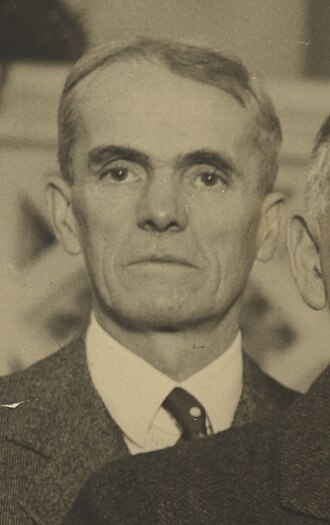
图:Smithsonian Institution · Public domain · Wikimedia Commons
沃尔特·亚当斯1876—1956
Walter Sydney Adams
美国天文学家
沃尔特·西德尼·亚当斯 是一名美国天文学家。主要从事光谱观测和研究,提出判断恒星是巨星还是矮星和估计恒星距离的方法,并确认了天狼星B是白矮星。
摘自维基百科「沃尔特·亚当斯」,CC BY-SA 4.0
- 出生
- 1876 年 12 月 20 日,安条克
- 逝世
- 1956 年 5 月 11 日,帕萨迪纳
- 国籍
- 美国
- 学科
- 天文学、博物与综合
- 职业
- 天文学家
- 母语 / 工作语言
- 英语
- 母校
- 达特茅斯学院
- 工作单位
- 威尔逊山天文台
研究领域
所获奖项(8)
- 1917英国皇家天文学会金质奖章
- 1918亨利·德雷伯奖章
- 1926皮埃尔·让森奖
- 1928布鲁斯奖
- 1934让森奖章
- 1947亨利·诺利斯·罗素讲座
- 1950英国皇家学会外籍会员
- —美国文理科学院院士
学会与院士
百科正文
生平
亚当斯1876年出生于土耳其安塔基亚的一个美国传教士家庭,1885年移居美国。1898年亚当斯毕业于达特茅斯学院。1900年获得芝加哥大学硕士学位,在慕尼黑逗留一年后,他返回美国后曾与著名天文学家乔治·海尔共同工作。1903年,他随海尔来到新建的威尔逊山天文台,1923年到1946年期间担任威尔逊山天文台台长。1956年亚当斯在美国加利福尼亚州的帕萨迪纳去世。
研究
亚当斯在威尔逊山天文台,主要使用两台反射望远镜从事恒星光谱方面的研究,与德国天文学家阿诺德·科尔许特(Arnold Kohlschütter)一道研究了太阳以及其它恒星的光谱。发现了谱线的相对强度与绝对星等的关系,这个关系可以用来测定恒星是巨星还是矮星。他还引入分析分光视差的方法,用来估计恒星的距离。
1915年,他开始从观察到的光谱中研究天狼星的伴星——天狼星B,发现虽然其大小仅比地球稍大,质量却和太阳相当,这是人类证认的第一颗白矮星。并借助广义相对论预言天狼星B的引力场会导致光波发生红移。1924年他实际观测到了红移,证实了自己的推测,也为广义相对论提供了证据。他还在金星的红外光谱中发现了强烈的二氧化碳谱线。
奖项和荣誉
亚当斯曾经获得1917年的英国皇家天文学会金质奖章,1918年获得亨利·德雷伯奖章,1928年获得布鲁斯奖。为纪念他,第3145号小行星被命名为沃尔特·亚当斯,火星上的一座环形山也以他的姓氏命名。
以上内容摘自维基百科「沃尔特·亚当斯」,按 CC BY-SA 4.0 使用,去掉了参考文献、外部链接等尾部小节,公式改写成了纯文本。全文、配图和出处见原文。
英文维基百科补充中文条目比较短,下面是英文条目「Walter Sydney Adams」的原文
Walter Sydney Adams (December 20, 1876 – May 11, 1956) was an American astronomer. He is renowned for his pioneering work in spectroscopy.
Life and work
Adams was born in Antioch, Ottoman Empire, to Lucien Harper Adams and Nancy Dorrance Francis Adams, missionary parents, and was brought to the U.S. in 1885 He graduated from Dartmouth College in 1898, then continued his education in Chicago and in Germany. After returning to the U.S., he began a career in Astronomy that culminated when he became director of the Mount Wilson Observatory.
His primary interest was the study of stellar spectra. He worked on solar spectroscopy and co-discovered a relationship between the relative intensities of certain spectral lines and the absolute magnitude of a star. He was able to demonstrate that spectra could be used to determine whether a star was a giant or a dwarf. In 1915 he began a study of the companion of Sirius and found that despite a size only slightly larger than the Earth, the surface of the star was brighter per unit area than the Sun and it was about as massive. Such a star later came to be known as a white dwarf. In 1925, he reported a gravitational redshift caused by Sirius B; this was regarded as significant confirmation of Albert Einstein's theory of General Relativity. It is now known that his reported measurements were incorrect. Along with Theodore Dunham, he discovered the strong presence of carbon dioxide in the infrared spectrum of Venus.
Adams died at the age of 79 in Pasadena, California.
Awards and honors
- Awards and honors
- Member of the American Philosophical Society (1915)
- Gold Medal of the Royal Astronomical Society (1917)
- Member of the United States National Academy of Sciences (1917)
- Henry Draper Medal from the National Academy of Sciences (1918)
- Fellow of the American Academy of Arts and Sciences (1922)
- Valz Prize from the French Academy of Sciences (1923)
Prix Jules Janssen, the highest award of the Société astronomique de France, the French astronomical society (1926)
- Bruce Medal (1928)
- Janssen Medal from the French Academy of Sciences (1934)
- Foreign Member of the Royal Society (ForMemRS) (1950)
- Henry Norris Russell Lectureship (1947)
- Named after him
The asteroid 3145 Walter Adams.
The crater Adams, a crater on Mars.
The crater Adams on the Moon is jointly named after him, John Couch Adams and Charles Hitchcock Adams.
以上内容摘自英文维基百科「Walter Sydney Adams」,按 CC BY-SA 4.0 使用,去掉了参考文献、外部链接等尾部小节,公式改写成了纯文本。全文、配图和出处见原文。
同一学科、同时代的科学家

同一学科的科学家
更多 ›