格物
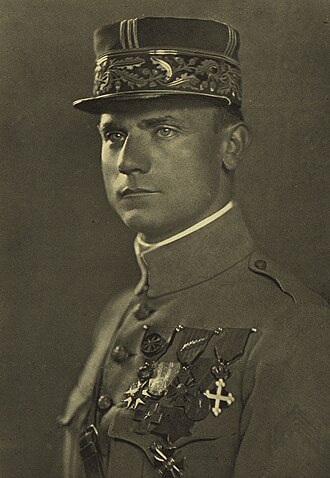
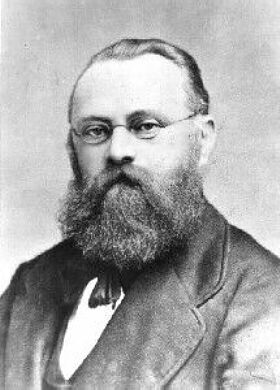
图:作者不详 · Public domain · Wikimedia Commons
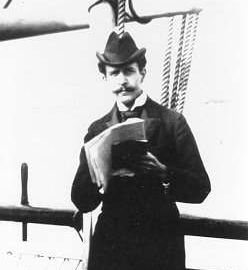
米兰·雷斯提斯拉夫·什特凡尼克1880—1919
Milan Rastislav Štefánik
Slovak politician, diplomat, French Army general and astronomer (1880-1919)
米兰·拉斯蒂斯拉夫·什特凡尼克,捷克斯洛伐克政要、外交官、军事将领和天文学者。他在第一次世界大战期间担任法国陆军将领,捷克斯洛伐克独立后成为首任战争部长。他作为捷克斯洛伐克全国委员会(抵抗运动)的主要成员之一,为捷克斯洛伐克的独立及主权事业做出了决定性的贡献,他也因此与托马斯·马萨里克、爱德华·贝奈斯一同被称为“捷克斯洛伐克独立三杰”。
摘自维基百科「米兰·拉斯蒂斯拉夫·什特凡尼克」,CC BY-SA 4.0
- 出生
- 1880 年 7 月 21 日,科沙里斯卡
- 逝世
- 1919 年 5 月 4 日,伊万卡-普里-杜纳吉
- 国籍
- 捷克斯洛伐克、法国
- 学科
- 天文学、博物与综合
- 职业
- 政治人物、天文学家、摄影师、军官
- 母语 / 工作语言
- 斯洛伐克语、法语
- 母校
- 布拉格查理大学文学院
所获奖项(11)
- 1907皮埃尔·让森奖
- 2023Grand cross of the Order of the White Lion
- —法国荣誉军团军官勋章
- —1914年-1918年战争十字勋章
- —捷克斯洛伐克战争十字勋章
- —圣弗拉基米尔勋章
- —一等白狮勋章附颈饰
- —捷克斯洛伐克战争十字勋章1918
- —荣誉军团司令
- —Medal for Bravery
- —圣莫利斯大绶勋章
百科正文
英文维基百科补充中文条目比较短,下面是英文条目「Milan Rastislav Štefánik」的原文
Milan Rastislav Štefánik (Slovak: [ˈmilan ˈrascislaw ˈʂcefaːɲik]; 21 July 1880 – 4 May 1919) was a Slovak politician, diplomat, aviator and astronomer. During World War I, he served at the same time as a general in the French Army and as Minister of War for Czechoslovakia. As one of the leading members of the Czechoslovak National Council (the resistance government), he contributed decisively to the cause of Czechoslovak sovereignty, since the status of Czech- and Slovak-populated territories was one of those in question until shortly before the dissolution of Austria-Hungary in 1918. His personal motto was "To Believe, To Love, To Work" (Slovak: Veriť, milovať, pracovať).
Background
Štefánik was born in Kosaras, Nyitra County, Kingdom of Hungary, Austria-Hungary (now Košariská, Slovakia), on 21 July 1880. He had 11 brothers and sisters, two of whom died young. His father, Pavol Štefánik, was a local Lutheran pastor, and his mother was Albertína Jurenková. He attended schools in Bratislava, Sopron and Szarvas.
In 1898, he began studying construction engineering in Prague. In 1900, he transferred his studies to Charles University, where he attended lectures in astronomy, physics, optics, mathematics and philosophy.
Scientist
In 1904, he went to Paris to find a job in astronomy with a recommendation from a Czech professor who was known in Paris. Initially, he had no money and no command of French, but he was nevertheless able to obtain a job at the famous Paris-Meudon Observatory after its director, Pierre Janssen, one of the cofounders of astrophysics, saw Štefánik's talent. Štefánik owed to Janssen and Camille Flammarion his social, political and scientific career.
Diplomacy
In addition to his scientific missions overseas, he also performed diplomatic tasks. He established contacts and friendships with leading scientific, artistic, political, diplomatic and business personalities. He participated in the establishment of business enterprises in France and other countries.
World War I
Štefánik believed that defeat of Austria-Hungary and of Imperial Germany would offer an opportunity for the Slovaks and the Czechs to gain independence from Austria-Hungary after the war. Therefore, he joined the French army and trained to become an aviator. He flew MFS-54s for the 10th Army on the Artois and was later transferred to MFS 99 Squadron on the Serbian Front. In May 1915, he flew a total of 30 missions over enemy territory.
Independence
In January 1919 after the war ended, Štefánik went from Russia to France and Italy, where he organized the March retreat of Czechoslovak troops from Siberia to Paris. In addition, his diplomatic skills were needed to solve disagreements between the French and the Italian missions in Czechoslovakia. In April, he went from Paris to Rome to negotiate with the Italian Ministry of War, where he met with his fiancée, Giuliana Benzoni, for the last time.
Death
When Štefánik wanted to return home to see his family, he decided to fly from Campoformido, near Udine, Italy, and to use an Italian military plane, a Caproni Ca.3. On 4 May 1919, at around 11:00, his plane tried to land near Bratislava, a military conflict area between the First Republic of Czechoslovakia and the Hungarian Soviet Republic, but crashed near Ivanka pri Dunaji.
Legacy and awards
Štefánik's tomb was built in 1927 to 1928 on Bradlo Hill in Brezová pod Bradlom. The monumental but austere memorial was designed by Dušan Jurkovič.
The minor planet 3571 Milanštefánik (discovered 1982 at Kleť Observatory) was named after him.
Bratislava Airport was named M.R. Štefánik Airport. (Slovak: Letisko M. R. Štefánika)
Slovak Government Flying Service aircraft Airbus 319 and Fokker 100 are painted with Štefánik's portrait.
The Slovak Armed Forces Academy is named as Armed Forces Academy of General Milan Rastislav Štefánik.
以上节选摘自英文维基百科「Milan Rastislav Štefánik」,按 CC BY-SA 4.0 使用,去掉了参考文献、外部链接等尾部小节,公式改写成了纯文本。篇幅所限,较长的小节只摘了开头一部分,有的小节没有收;全文、配图和出处见原文。
同一学科、同时代的科学家


同一学科的科学家
更多 ›