格物
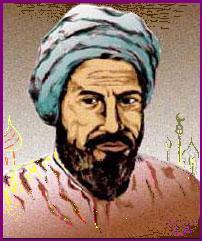
图:Original uploader was Nicolae Coman at ro.wikipedia · Public domain · Wikimedia Commons
伊本·纳菲斯1210—1280
Ibn al-Nafis
Arab polymath and physician (1213–1288)
ʿAlāʾ al-Dīn Abū al-Ḥasan ʿAlī ibn Abī Ḥazm al-Qarashī, known as Ibn al-Nafīs, was an Arab polymath whose areas of work included medicine, surgery, physiology, anatomy, biology, Islamic studies, jurisprudence, and philosophy. He is known for being the first to describe the pulmonary circulation of the blood. The work of Ibn al-Nafis regarding the right sided (pulmonary) circulation pre-dates the later work (1628) of William Harvey's De motu cordis. Both theories attempt to explain circulation. The 2nd century Greek physician Galen's theory about the physiology of the circulatory system remained unchallenged until the works of Ibn al-Nafis, who has therefore been described as "the father of circulatory physiology".
摘自英文维基百科「Ibn al-Nafis」(英文维基百科,暂无中文条目),CC BY-SA 4.0
- 出生
- 1215 年,大马士革
- 逝世
- 1288 年 12 月 17 日,开罗
- 学科
- 医学
- 职业
- 哲学家、作家、医生、法基赫
- 母语 / 工作语言
- 阿拉伯语、英语
研究领域
主要贡献
代表成就
百科正文
本条目暂无中文维基百科条目,下面是英文维基百科原文。
As an early anatomist, Ibn al-Nafis also performed several human dissections during the course of his work, making several important discoveries in the fields of physiology and anatomy. Besides his famous discovery of the pulmonary circulation, he also gave an early insight of the coronary and capillary circulations. He was also appointed as the chief physician at al-Naseri Hospital founded by Sultan Saladin. Due to his discoveries, he has been described by some as “the second Avicenna”.
Apart from medicine, Ibn al-Nafis studied jurisprudence, literature and theology. He was an expert on the Shafi'i school of jurisprudence and an expert physician. The number of medical textbooks written by Ibn al-Nafis is estimated at more than 110 volumes.
Biography
Ibn al-Nafis was born between 1210 and 1213 to an Arab family in Damascus. The origin of his nisba, "al-Qurashi", has been discussed by various historians. Some accounts suggest it is derived from a village named "al-Qurashiyya" (or Karashia) near Damascus. However, the prevailing view among authoritative biographers is that the name signifies his tribal descent from the Quraysh, specifically the Banu Makhzum clan, as historical geographical surveys have not verified the existence of such a village. Early in his life, he studied theology, philosophy and literature. Then, at the age of 16, he started studying medicine for more than ten years at the Nuri Hospital in Damascus, which was founded by the Turkoman emir of Aleppo and Damascus, Nur-al Din Muhmud ibn Zanki, in the 12th century. He was contemporary with the famous Arab physician Ibn Abi Usaibia and they both were taught by the founder of a medical school in Damascus, Al-Dakhwar.
Anatomical discoveries
In 1924, Egyptian physician, Muhyo Al-Deen Altawi, discovered a manuscript entitled, Sharh tashrih al-qanun li’ Ibn Sina, or "Commentary on Anatomy in Avicenna's Canon" in the Prussian State Library in Berlin while studying the history of Arabic Medicine at the medical faculty of Albert Ludwig's University. This manuscript covers in detail the topics of anatomy, pathology, and physiology. This is the earliest description of pulmonary circulation.
Pulmonary circulation
The most commonly accepted theory of cardiac function prior to Ibn al-Nafis was that of Galen. Galen taught that the blood reaching the right side of the heart went through invisible pores in the cardiac septum, to the left side of the heart, where it mixed with air to create spirit, and was then distributed to the body. According to Galen, the venous system was separate from the arterial system except when they came in contact through the unseen pores.
Other medical contributions
Practice of dissection
There is some debate about whether or not Ibn al-Nafis participated in dissection to come to his conclusions about pulmonary circulation. Although he states in his writings that he was prevented from practicing dissection because of his beliefs, other scholars have noted that Ibn al-Nafis must have either practiced dissection or seen a human heart in order to come to his conclusions. According to one view, his knowledge about the human heart could have been derived from surgical operations rather than dissection. Other comments found in Ibn al-Nafis' writings such as dismissing earlier observations with a reference to dissection as proof, however, support the view that he practiced dissection in order to come to his conclusions about the human heart and pulmonary circulation. Ibn al-Nafis' comments to the contrary and the alternate explanations, however, keep his possible practice of dissection in question.
Theology
Ibn al-Nafis' philosophical views are mostly known from his philosophical novel, Theologus Autodidactus. The novel touches upon a variety of philosophical subjects like cosmology, empiricism, epistemology, experimentation, futurology, eschatology, and natural philosophy. It deals with these themes and others through the story of a feral child on a desert island, and the development of his mind after contact with the outside world.
The plot of Theologus Autodidactus was intended to be a response to Ibn Tufail (Abubacer), who wrote the first Arabic novel Hayy ibn Yaqdhan (Philosophus Autodidactus) which was itself a response to al-Ghazali's The Incoherence of the Philosophers. Ibn al-Nafis thus wrote the narrative of Theologus Autodidactus as a rebuttal of Abubacer's arguments in Philosophus Autodidactus.
Possible Western influence
There is currently debate over whether Ibn al-Nafis influenced later Western anatomists such as Realdo Columbo and William Harvey. In AD 1344, Kazrouny wrote a verbatim copy of Ibn al-Nafis' commentary on Canon in his Sharh al-Kulliyat. In AD 1500, Andrea Alpago returned to Italy after studying in Damascus. In Alpago's 1547 A.D. publication of Libellus de removendis nocumentis, quae accident in regimime sanitatis, there is a Latin translation containing part of Ibn al-Nafis' commentary on pharmacopeia. This was published in Venice during its rule over Padua. Harvey arrived in Padua in AD 1597.
The debate currently turns on whether these events are causally connected or are historical coincidences.
Legacy
Ibn al-Nafis’ mastery of medical sciences, his prolific writings, and also his image as a devout religious scholar left a positive impression on later Muslim biographers and historians, even among conservative ones like al-Dhahabi. He had been described as the greatest physician of his time, with some even referring to him as "the second Ibn Sina".
Years before Ibn al-Nafis was born, Galenic physiology and anatomy dominated the Arabic medical tradition from the time of Hunayn ibn Ishaq (AD 809–873). Medical authorities at the time seldom challenged the underlying principles of this system. What set Al-Nafis apart as a physician was his boldness in challenging Galen's work. In studying yet criticizing the Galenic system, he formed his own medical hypotheses.
Ibn al-Nafis importance in the history of medicine was not fully recognized in the western circles until quite recently.
以上节选摘自英文维基百科「Ibn al-Nafis」,按 CC BY-SA 4.0 使用,去掉了参考文献、外部链接等尾部小节,公式改写成了纯文本。篇幅所限,较长的小节只摘了开头一部分,有的小节没有收;全文、配图和出处见原文。