格物

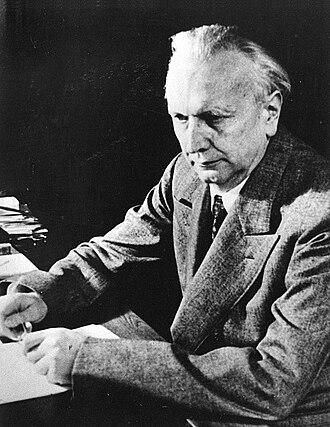
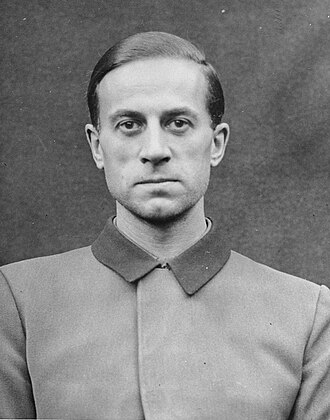
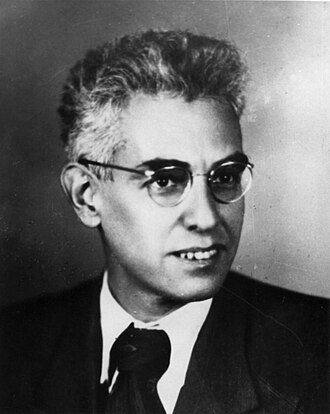
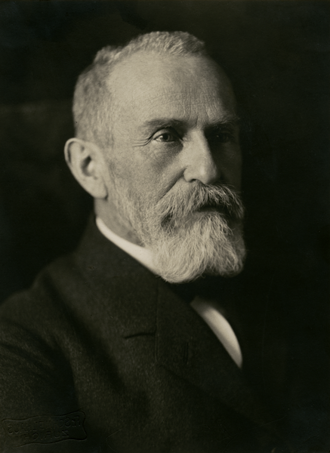
图:Alber, Kurt · CC BY-SA 3.0 de · Wikimedia Commons
- 出生
- 1897 年 11 月 23 日,上巴伐利亚地区哈格
- 逝世
- 1948 年 6 月 2 日,莱希河畔兰茨贝格
- 国籍
- 德国
- 学科
- 医学
- 职业
- 外科医生、大学教师、政治人物
- 母语 / 工作语言
- 德语
- 母校
- 慕尼黑大学
- 工作单位
- 柏林洪堡大学(1937—)、霍恩利琴疗养院(1933—)、慕尼黑大学(1932—)、托特组织(1935—)、德国红十字会(1945—)
研究领域
所获奖项(1)
- —铁十字勋章
学会与院士
百科正文
在战后的纽伦堡后续审判期间,格布哈特被美国方面起诉(医生审判)。他最终被判犯有战争罪、危害人类罪,于1947年8月20日被判处死刑。1948年6月2日,他在巴伐利亚的兰茨贝格监狱被处以绞刑。
以上内容摘自维基百科「卡尔·格布哈特」,按 CC BY-SA 4.0 使用,去掉了参考文献、外部链接等尾部小节,公式改写成了纯文本。全文、配图和出处见原文。
英文维基百科补充中文条目比较短,下面是英文条目「Karl Gebhardt」的原文
Karl Franz Gebhardt (23 November 1897 – 2 June 1948) was a German physician and a war criminal. Gebhardt was the main coordinator of a series of medical atrocities performed on inmates of the concentration camps at Ravensbrück and Auschwitz. These experiments were an attempt to defend his approach to the surgical management of grossly contaminated traumatic wounds, against the then-new innovations of antibiotic treatment of injuries acquired on the battlefield.
During the Subsequent Nuremberg Trials, Gebhardt stood trial in the Doctors' trial (American Military Tribunal No. I). He was convicted of war crimes and crimes against humanity and condemned to death on 20 August 1947. He was hanged on 2 June 1948 at Landsberg Prison in Bavaria.
Career before World War II
In his student days Gebhardt had been a supporter of the national counter-revolutionary movement and was active among other things in the Volunteer Corps "the Upland Alliance." Gebhardt studied medicine in Munich beginning in 1919. In 1923, Gebhardt, a member of the Freikorps Oberland, participated in the Beer Hall Putsch. In 1924, after two years as an unpaid assistant physician he received a post as an intern at the Surgical Clinic of the Ludwig-Maximilians-Universität München. Gebhardt trained under the tutelage of Ferdinand Sauerbruch and later under Erich Lexer, finally gaining his habilitation in 1932. Gebhardt had a distinguished career prior to World War II, contributing a great deal to the development of the field of sports medicine. He wrote articles on physical medicine and rehabilitation, a textbook on sports rehabilitation and he disseminated his ideas in Germany and throughout the rest of Europe.
Nazi Party membership and activities
Gebhardt's Nazi career began with his joining the Nazi Party (NSDAP) on 1 May 1933. In 1935, he moved to Berlin, where he was appointed associate professor. That year, Gebhardt joined the Schutzstaffel (SS) and was also appointed Medical Superintendent of the Hohenlychen Sanatorium in the Uckermark, which he changed from a sanatorium for tuberculosis patients into an orthopedic clinic. At Hohenlychen Sanatorium, Gebhardt started the first sports medicine clinic in Germany and developed sports programs for amputees and other disabled people. Gebhardt was also appointed to the Deutsche Hochschule für Leibesübungen (German College for Physical Education) in 1935, where he became the first professor of sports medicine in Berlin.
In 1936 he distinguished himself in his post as a head of the Medical Department of the Akademie für Sport und Leibeserziehung (Academy for Exercise and Physical Training) as senior physician of the 1936 Summer Olympics. Hohenlychen Sanatorium became the sports sanatorium for Nazi Germany and served as the central hospital for the athletes who participated in the 1936 Summer Olympics. In 1937 he became chair holder for orthopedic surgery at the University of Berlin. In 1938, Gebhardt was appointed as SS leader Heinrich Himmler's personal physician.
Trial and execution
During the Subsequent Nuremberg Trials, Gebhardt stood trial in the Doctors' Trial (9 December 1946–20 August 1947), along with 22 other doctors. He was found guilty of war crimes and crimes against humanity and condemned to death on 20 August 1947. He was hanged on 2 June 1948 at Landsberg Prison in Bavaria. Unrepentant, Gebhardt's last words were, "I die without bitterness, but regret that there is still injustice in the world."
Two of Gebhardt's assistants were also tried and convicted at Nuremberg. Fritz Fischer worked in the hospital of the Ravensbrück concentration camp as a surgical assistant to Gebhardt, and participated in the surgical experiments carried out on the inmates. He was initially condemned to life imprisonment, but his sentence was reduced to 15 years in 1951 and he was released in March 1954. Fischer subsequently regained his medical license and resumed his career at the chemical company Boehringer Ingelheim, where he remained employed until his retirement. He died in 2003 at the age of 90 or 91.
Herta Oberheuser was another of Gebhardt's assistants at the Ravensbrück concentration camp. She was the only female defendant in the Doctors' Trial, where she was sentenced to 20 years in prison. She was released in April 1952 and became a family doctor in Stocksee, Germany.
以上节选摘自英文维基百科「Karl Gebhardt」,按 CC BY-SA 4.0 使用,去掉了参考文献、外部链接等尾部小节,公式改写成了纯文本。篇幅所限,较长的小节只摘了开头一部分,有的小节没有收;全文、配图和出处见原文。