格物
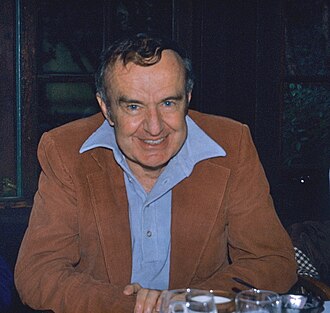
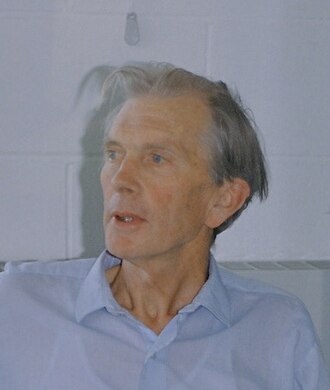
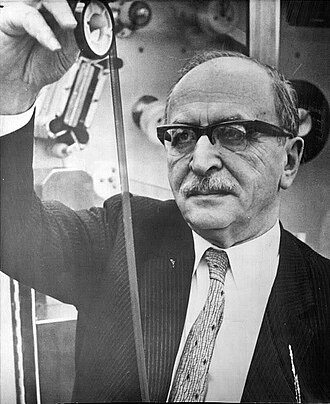
图:Rights NRAO/AUI/NSF Photographer Woodruff T. Sullivan III Ph… · CC BY 4.0 · Wikimedia Commons
艾伦·桑德奇1926—2010
Allan Sandage
American astronomer (1926-2010)
艾伦·桑德奇,美国天文学家。桑德奇主要致力于对造父变星的精确观测,用来确定哈勃常数。
摘自维基百科「艾伦·桑德奇」,CC BY-SA 4.0
- 出生
- 1926 年 6 月 18 日,艾奥瓦城
- 逝世
- 2010 年 11 月 13 日,圣盖博
- 国籍
- 美国
- 学科
- 物理学、天文学、博物与综合
- 职业
- 天文学家、天体物理学家、大学教师
- 母语 / 工作语言
- 英语
- 母校
- 加州理工学院、伊利诺伊大学厄巴纳-香槟分校
- 工作单位
- 帕洛马天文台
研究领域
师承
博士导师1
来自 Wikidata 的「博士导师」「师从」「博士生」「学生」记录,可能不全。
所获奖项(12)
- 1957海伦·B·华纳天文奖
- 1963爱丁顿奖章
- 1967英国皇家天文学会金质奖章
- 1970美国国家科学奖章
- 1972亨利·诺利斯·罗素讲座
- 1973埃利奥特·克雷森奖章
- 1975布鲁斯奖
- 1991Crafoord Prize in Astronomy
- 1991Karl G. Jansky Lectureship
- 1993Dr. Tomalla Prize
- 2000格鲁贝尔宇宙学奖
- 2001英国皇家学会外籍会员
学会与院士
百科正文
生平
1926年6月18日桑德奇出生在爱荷华州爱荷华市,1953年在加州理工学院获得博士学位。曾担任埃德温·哈勃的助手。
奖项和荣誉
1967年获得英国皇家天文学会金质奖章,1970年获得美国国家科学奖章,1972年获得亨利·诺利斯·罗素讲座,1975年获得太平洋天文学会布鲁斯奖,1991年获得克拉福德奖。
以上内容摘自维基百科「艾伦·桑德奇」,按 CC BY-SA 4.0 使用,去掉了参考文献、外部链接等尾部小节,公式改写成了纯文本。全文、配图和出处见原文。
英文维基百科补充中文条目比较短,下面是英文条目「Allan Sandage」的原文
Allan Rex Sandage (June 18, 1926 – November 13, 2010) was an American astronomer. He was Staff Member Emeritus with the Carnegie Observatories in Pasadena, California. He determined the first reasonably accurate values for the Hubble constant and the age of the universe.
Career
Sandage was one of the most influential astronomers of the 20th century. He was born in Iowa City, Iowa, United States. He graduated from the University of Illinois in 1948. In 1953 he received a PhD from the California Institute of Technology; the German-born Wilson Observatory-based astronomer Walter Baade was his advisor. During this time Sandage was a graduate student assistant to cosmologist Edwin Hubble. He continued Hubble's research program after Hubble died in 1953.
In 1952 Baade surprised his fellow astronomers by announcing (at the 1952 Conference of the International Astronomical Union, in Rome) his determination of two separate populations of Cepheid variable stars in the Andromeda Galaxy, resulted in a doubling of the estimated age of the universe (from 1.8 to 3.6 billion years). Hubble had posited the earlier value; he had considered only the weaker Population II Cepheid variables as standard candles. After Baade's pronouncements, Sandage showed that astronomers' previous assumption, that the brightest stars in galaxies were of approximately equal inherent intensity, was mistaken in the case of H II regions which he found not to be stars and inherently brighter than the brightest stars in distant galaxies. This resulted in another 1.5-fold increase in the calculated age of the universe, to approximately 5.5 billion years.
Throughout the 1950s and well into the 1980s Sandage was regarded as the pre-eminent observational cosmologist, making contributions to all aspects of the cosmological distance scale, ranging from calibrators within our own Milky Way Galaxy, to cosmologically distant galaxies.
Sandage began working at the Palomar Observatory. In 1958 he published the first good estimate for the Hubble constant, revising Hubble's value of 250 down to 75 km/s/Mpc, which is close to today's accepted value. Later he became the chief advocate of an even lower value, around 50, corresponding to a Hubble age of around 20 billion years. At the time, many, especially Sandage, believed that the cosmological constant was zero. In such a case, a low Hubble constant is necessary in order for the age of the universe (as opposed to the Hubble age) to be at least as old as the oldest objects it contains, i.e. ca. 14 billion years.
Sandage performed photometric studies of globular clusters, and calculated their age to be at least 25 billion years. This led him to speculate that the universe did not merely expand, but actually expanded and contracted with a period of 80 billion years. The current cosmological estimates of the age of the universe, in contrast, are typically of the order of 14 billion years. As part of his studies concerning the formation of galaxies in the early universe, he co-wrote the paper now referred to as ELS after the authors Olin J. Eggen, Donald Lynden-Bell and Sandage, first describing the collapse of a proto-galactic gas cloud into our present Milky Way Galaxy. He later defended the paper in 1990.
In his 1961 paper "The Ability of the 200-inch Telescope to Discriminate Between Selected World Models," he suggested that the future of observational cosmology would be the search for two parameters: the Hubble constant H0 and the deceleration parameter q0.
Personal life
In 1959, Sandage married Mary Connelley, also an astronomer, with whom he had two sons, David and John. In 1983 Sandage announced he had become a Christian and began to write essays on the subject of religion and science. On November 13, 2010, Sandage died of pancreatic cancer at his home in San Gabriel, California. He was 84 years old.
Honors
- Awards
- Helen B. Warner Prize for Astronomy (1957)
- Member of the American Philosophical Society (1962)
- Member of the National Academy of Sciences (1963)
- Eddington Medal (1963)
- Gold Medal of the Royal Astronomical Society (1967)
- National Medal of Science (1970)
- Henry Norris Russell Lectureship (1972)
- Elliott Cresson Medal (1973)
- Fellow of the Royal Society
- Bruce Medal (1975)
- Golden Plate Award of the American Academy of Achievement (1976)
- Crafoord Prize (1991)
- Member of the American Philosophical Society (1995)
- Gruber Prize in Cosmology (2000)
- Named after him
- Main-belt asteroid, 9963 Sandage (1992 AN)
以上节选摘自英文维基百科「Allan Sandage」,按 CC BY-SA 4.0 使用,去掉了参考文献、外部链接等尾部小节,公式改写成了纯文本。篇幅所限,较长的小节只摘了开头一部分,有的小节没有收;全文、配图和出处见原文。
同年获同一奖项
同一学科、同时代的科学家


同一学科的科学家
更多 ›