格物
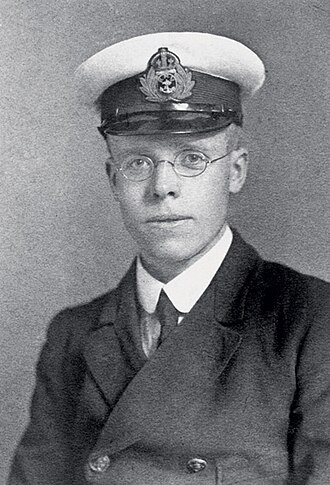
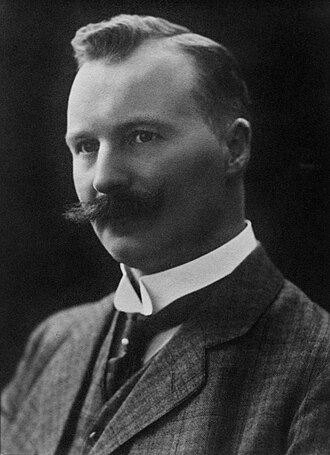
图:作者不详 · Public domain · Wikimedia Commons
爱德华·亚瑟·米尔恩1896—1950
Edward Arthur Milne
British astrophysicist and mathematician (1896-1950)
爱德华·亚瑟·米尔恩,FRS,英国天文学家以及数学家。
摘自维基百科「愛德華·亞瑟·米爾恩」,CC BY-SA 4.0
- 出生
- 1896 年 2 月 14 日,赫尔河畔金斯顿
- 逝世
- 1950 年 9 月 21 日,都柏林
- 国籍
- 英国
- 学科
- 物理学、数学、天文学、博物与综合
- 职业
- 数学家、讲师、天体物理学家、天文学家
- 母语 / 工作语言
- 英语
- 母校
- 剑桥大学三一学院(1916 年)、Hymers College(1914 年)
- 工作单位
- 曼彻斯特维多利亚大学(1924—1928)、英国皇家空军(1916—1919)、剑桥大学三一学院(1919—1920)、康桥天文学研究所(1920—1924)、牛津大学(1929—1950)
师承
来自 Wikidata 的「博士导师」「师从」「博士生」「学生」记录,可能不全。
所获奖项(5)
- 1926英国皇家学会院士
- 1929贝克演讲
- 1935英国皇家天文学会金质奖章
- 1941皇家奖章
- 1945布鲁斯奖
学会与院士
百科正文
生平
1896年,米尔恩生于英国约克郡的赫尔。
1914年,在就读海默世学院期间,米尔恩赢得一份提供学生至剑桥大学三一学院研读数学与自然科学的奖学金,并在考试当中得到前所未见的优异成绩。
1919至1925年间,他于剑桥大学三一学院担任研究员,并于1920至1924年间担任太阳物理研究中心的专员;此外也于1924至1925年间在三一学院讲授数学课程,1922至1925年在大学部讲授天文物理学课程。
米尔恩早期的研究专注于理论天文物理。1932年后他亦致力于关于膨胀宇宙的问题以及其他关于相对论、重力以及宇宙结构的议题(1935年);关于这些种种广受世人关注的问题,相对于爱因斯坦的广义相对论,他提出了另外一种看法。另一方面,他晚期关于恒星内部结构的研究曾引发了多方的争论。
米尔恩曾于1934至1935年间担任担任英国皇家天文学会的主席;此外,他也算是开启关于科学与宗教两方关系探讨的先驱者之一。
1950年,米尔恩在爱尔兰都柏林因心脏病发逝世,当时他正在准备上课用的教材。
相对论、重力、宇宙结构
关于膨胀中的宇宙,米尔恩所提出的模型与爱因斯坦的模型两者之间(后者为现今大部分人所接受)最大的差异在于,米尔恩不站在预设宇宙中物质为均匀分布的假设之上。除此之外,引力子交互作用理论也不在他的模型假设之中。
获奖与荣誉
- 获奖
- 1935年 英国皇家天文学会金质奖章
- 1941年 皇家奖章
- 1945年 布鲁斯奖
- 荣誉
- 月球上的米尔恩火山以之命名
以上内容摘自维基百科「愛德華·亞瑟·米爾恩」,按 CC BY-SA 4.0 使用,去掉了参考文献、外部链接等尾部小节,公式改写成了纯文本。全文、配图和出处见原文。
英文维基百科补充中文条目比较短,下面是英文条目「Edward Arthur Milne」的原文
Edward Arthur Milne FRS (; 14 February 1896 – 21 September 1950) was a British astrophysicist and mathematician.
Biography
Milne was born in Hull, Yorkshire, England. He attended Hymers College and from there he won an open scholarship in mathematics and natural science to study at Trinity College, Cambridge in 1914, gaining the largest number of marks which had ever been awarded in the examination. In 1916 he joined a group of mathematicians led by A. V. Hill for the Ministry of munitions working on the ballistics of anti-aircraft gunnery, they became known as ′Hill's Brigands′. Later Milne became an expert on sound localisation. In 1917, he became a lieutenant in the Royal Naval Volunteer Reserve.
Research into stellar atmospheres and structure
In the 1920s much of Milne's research was concerned with stars, particularly the outer layers known as stellar atmospheres that produce the radiation observed from the Earth. He considered a grey atmosphere, a simplifying approximation in which the strength of the absorption of light by the hot ionized gas is the same at all wavelengths. This produced predictions of how temperature varies through the atmosphere, including the mathematical expression now known as the Milne Equation. He also calculated how the intensity of light from a star varies with wavelength on the basis of this model.
Research into cosmology and relativity
From the early 1930s, Milne's interests focused increasingly on relativity theory and cosmology.
From 1932, he worked on the problem of the "expanding universe" and in Relativity, Gravitation, and World-Structure (1935), proposed an alternative to Albert Einstein's general relativity theory. With McCrea (1934) he also showed that the three models which form the foundations of modern cosmology first proposed by Friedmann (1922) using the general theory of relativity, can also be derived using only Newtonian mechanics.
Milne's alternative to general relativity theory based on kinematics was known as Kinematic Relativity. His theory was built on the special but not general theory of relativity.
Relativity, Gravitation, and World Structure
The main difference between the Milne model of an expanding universe, and the current (Einstein's) model of an expanding universe was that Milne did not assume a priori that the universe has a homogeneous matter distribution. He did not include the gravitation interaction into the model either.
Milne argued that under the context of Einstein's special relativity, and the relativity of simultaneity, that it is impossible for a nonstatic universe to be homogeneous. Namely, if the universe is spreading out, its density is decreasing over time, and that if two regions appeared to be at the same density at the same time to one observer, they would not appear to be the same density at the same time to another observer.
Religious views
Milne was a Christian theist. In 1950, Milne gave ten lectures on Christianity and cosmology for the Edward Cadbury lectures which he was invited to give at the University of Birmingham. The lectures were published in the book Modern Cosmology and the Christian Idea of God, edited by Gerald James Whitrow and published in 1952.
Milne was a theistic evolutionist who held the view that God intervenes with "deft touches" to steer mutations in the right direction.
Honours
Awards
- MBE (1918)
- Smith's Prize (1922)
- Gold Medal of the Royal Astronomical Society (1935)
- Royal Society's Royal Medal (1941)
- Bruce Medal (1945)
Named after him
Milne, a crater on the Moon
The E.A. Milne Centre for Astrophysics at the University of Hull (opened 2015)
Books by Milne
Thermodynamics of the Stars, Berlin: J. Springer, 1930.
The White Dwarf Stars, Oxford: Clarendon Press, 1932.
Relativity, gravitation and world-structure, Oxford: Clarendon Press, 1935.
The Inverse Square Law of Gravitation, London: Harrison and Son, 1936.
The Fundamental Concepts of Natural Philosophy, Edinburgh: Oliver & Boyd, 1943.
Kinematic relativity; a sequel to Relativity, gravitation and world structure, Oxford: Clarendon Press, 1948.
Vectorial Mechanics, New York: Interscience Publishers, 1948.
Modern Cosmology and the Christian Idea of God, Oxford: Clarendon Press, 1952.
Sir James Jeans: A Biography, Cambridge University Press, 1952.
以上节选摘自英文维基百科「Edward Arthur Milne」,按 CC BY-SA 4.0 使用,去掉了参考文献、外部链接等尾部小节,公式改写成了纯文本。篇幅所限,较长的小节只摘了开头一部分,有的小节没有收;全文、配图和出处见原文。
同一学科、同时代的科学家


同一学科的科学家
更多 ›