格物
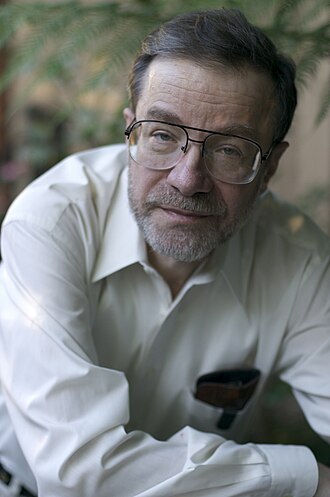
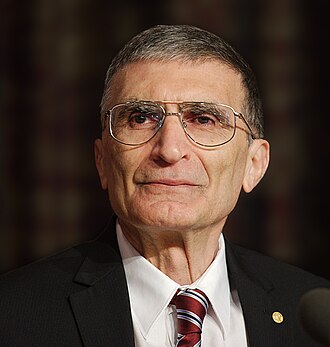
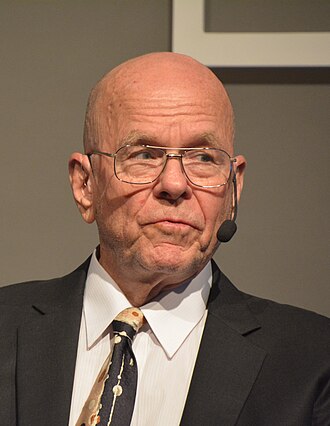
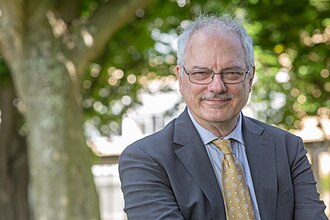
图:Aicssnows · CC0 · Wikimedia Commons
亚历山大·瓦尔沙夫斯基1946—
Alexander Varshavsky
American biochemist
亚历山大·瓦尔沙夫斯基,俄裔美国生物化学家,加州理工学院教授。
摘自维基百科「亚历山大·瓦尔沙夫斯基」,CC BY-SA 4.0
- 出生
- 1946 年 11 月 8 日,莫斯科
- 国籍
- 美国
- 学科
- 化学、生物学
- 职业
- 生物化学家、大学教师
- 母校
- 莫斯科国立大学(1970 年)
- 工作单位
- 麻省理工学院(1977—1992)、加州理工学院(1992—)
所获奖项(22)
- 1999盖尔德纳国际奖
- 2000拉斯克基础医学研究奖
- 2000小艾尔弗雷德·P·斯隆奖
- 2000Robert J. and Claire Pasarow Foundation Award for Distinguished Contributions to Cancer Research
- 2001沃尔夫医学奖
- 2001路易莎·格罗斯·霍维茨奖
- 2001马斯利奖
- 2001马克斯·普朗克研究奖
- 2002E·B·威尔森奖章
- 2002美国科学促进会会士
- 2006March of Dimes Prize in Developmental Biology
- 2006Leopold Griffuel Prize
- 2007Schleiden Medal
- 2010Vilcek Prize
- 2010Great Immigrants Award
- 2011BBVA基金会前沿奖
- 2012King Faisal Prize in Science
- 2012奥托·瓦尔堡奖章
- 2014生命科学突破奖
- 2014奥尔巴尼医疗中心奖
- 2017Heinrich Wieland奖
- —欧洲分子生物学组织成员
学会与院士
百科正文
生平
通过对酵母和高等生物的细胞培养的遗传学研究,瓦尔沙夫斯基阐明了从事多种的蛋白质降解的泛素系统的N端法则。该法则在细胞周期中起着重要的作用,在细胞的恶性转化、细胞凋亡、炎症、免疫反应的调节中都扮演了重要角色。瓦尔沙夫斯基于1999年获盖尔德纳国际奖,2000年获拉斯克基础医学研究奖,2001年获路易莎·格罗斯·霍维茨奖、沃尔夫医学奖。
从1992年至2016年,他担任加州理工学院(Caltech)生物学与生物工程学系的霍华德·斯密斯细胞生物学讲席教授,该校位于加利福尼亚州帕萨迪纳市。自2017年起,他担任加州理工学院生物学托马斯·亨特·摩根讲席教授。
以上内容摘自维基百科「亚历山大·瓦尔沙夫斯基」,按 CC BY-SA 4.0 使用,去掉了参考文献、外部链接等尾部小节,公式改写成了纯文本。全文、配图和出处见原文。
英文维基百科补充中文条目比较短,下面是英文条目「Alexander Varshavsky」的原文
Alexander J. Varshavsky (Russian: Александр Яковлевич Варшавский; born 1946 in Moscow) is a Russian-American biochemist and geneticist. He works at the California Institute of Technology (Caltech) as the Morgan Professor of Biology. Varshavsky left Russia in 1977, emigrating to United States.
His laboratory, initially at the Massachusetts Institute of Technology, and later at Caltech, has discovered, during the 1980s, the first degradation signals (degrons) in short-lived proteins and biological fundamentals of the ubiquitin system. His current research continues to focus on the ubiquitin system and N-degron pathways.
Education and appointments
Varshavsky received a B.S. degree from the Moscow University (Russia) (1970) and Ph.D. from the Institute of Molecular Biology, Moscow, Russia (1973). From 1973-1977, he worked as a Junior Scientist at the Moscow's Institute of Molecular Biology, before becoming a faculty member at MIT, Cambridge, MA, USA (1977-1991). From 1992 to 2016, he worked as the Howard Smits Professor of Cell Biology at the Division of Biology and Biological Engineering, California Institute of Technology (Caltech), in Pasadena, CA. Since 2017, he is the Thomas Hunt Morgan Professor of Biology at Caltech.
Honorary memberships
Varshavsky is a Fellow of the American Academy of Arts and Sciences (1987), a Member of the U.S. National Academy of Sciences (1995), a Fellow of the American Academy of Microbiology (2000), a Member of the American Philosophical Society (2001), a Fellow of the American Association for the Advancement of Science (2002), a Foreign Associate of the European Molecular Biology Organization (2001), and a Foreign Member of the European Academy of Sciences (Academia Europaea) (2005).
Contributions in the ubiquitin field
In 1986, the Varshavsky laboratory discovered and analyzed the first degradation signals (degrons) in short-lived proteins. "Degron", by now a standard term, was introduced by Varshavsky in 1991. During 1984-1990, the Varshavsky lab discovered biological fundamentals of the ubiquitin system. The field of ubiquitin and regulated protein degradation was created in the 1980s through complementary discoveries, during 1978-1990, that revealed three sets of previously unknown facts. The first set of these facts (item 1 below) was discovered by the A. Hershko laboratory at the Technion (Haifa, Israel) (reviewed in ref.).The other two sets (items 2 and 3 below) were discovered by the Varshavsky laboratory, then at the Massachusetts Institute of Technology (Cambridge, Massachusetts).
Contributions outside the ubiquitin field
1. The discovery, in 1978-1979, of the first nucleosome-depleted, nuclease-hypersensitive regions in chromosomes. Such "exposed" chromosomal segments are characteristic of transcriptional promoters, recombination hotspots, and the origins of DNA replication.
2. The discovery, in 1980-1981, of the first pathway of chromosome cohesion/segregation. It involves the formation, during DNA replication, of multiply intertwined (multicatenated) sister chromatids, and their later stepwise decatenation by type-2 DNA topoisomerases.
3. The idea, in 2007, that DNA deletions (and less frequent insertions) that are characteristic of cancer cells can be used as non-reverting cancer-specific signposts, thereby making possible a selective therapy of cancers that would be impervious to tumor progression.
4. A verifiable conjecture about molecular basis of sleep causation, termed the fragment generation (FG) hypothesis.
以上节选摘自英文维基百科「Alexander Varshavsky」,按 CC BY-SA 4.0 使用,去掉了参考文献、外部链接等尾部小节,公式改写成了纯文本。篇幅所限,较长的小节只摘了开头一部分,有的小节没有收;全文、配图和出处见原文。