格物
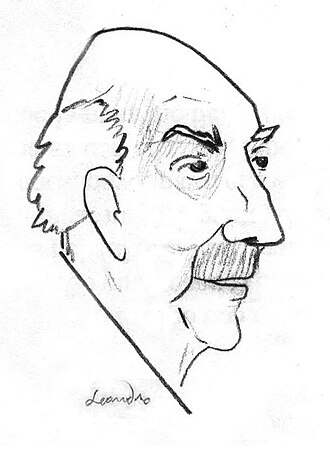
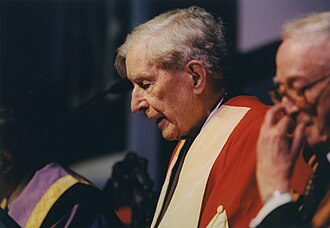
图:Primitivojumento · CC BY 3.0 · Wikimedia Commons
- 出生
- 1895 年 10 月 19 日,法拉盛
- 逝世
- 1990 年 1 月 26 日,阿美尼亚
- 国籍
- 美国
- 学科
- 博物与综合
- 职业
- 建筑师、技术史学家、历史学家、社会学家
- 母语 / 工作语言
- 英语
- 母校
- 纽约市立学院、新学院、斯泰弗森特高中、纽约大学、哥伦比亚大学
- 工作单位
- 日晷、纽约客
主要贡献
代表成就
所获奖项(11)
- 1932古根海姆学者奖
- 1961皇家金奖
- 1962美国全国非小说类图书奖
- 1964总统自由勋章
- 1965Emerson-Thoreau Medal
- 1969列奥那多·达芬奇奖章
- 1971Hodgkins Medal
- 1976西诺·德尔·杜卡世界奖
- 1983Benjamin Franklin Medal
- —大英帝国爵级司令勋章
- —国家艺术奖章
学会与院士
百科正文
与芒福德同时代相交的名人还有弗兰克·劳埃德·赖特、弗雷德里克·奥斯本(Frederic Osborn)、埃德蒙·N·培根(Edmund N. Bacon)和万尼瓦尔·布什。
重要著作
刘易斯·芒福德最著名的作品是《城市发展史》(The City in History),这本书展现城市是如何因人类文明而改变,纪录从团体部族到中世纪城镇到现在的商业城市。芒福德为现在的城市发展感到忧虑,因为他认为世界并不是被机械所统治的,而是在跟自然之间取得平和并共存。他的理想愿景是那些能够被描绘成“有机城市”的理想城市,这样的城市中文化的重要性尚未被科技所篡,也没有被它威胁。Mumford对比这些理想城市与那些被战争、暴君与财产包围的城市的差异。然而这本著作并不是在攻击城市本身,而是展现城市进化与成长的过程,包含它是如何出现的、它会走向哪里。
以上内容摘自维基百科「劉易斯·芒福德」,按 CC BY-SA 4.0 使用,去掉了参考文献、外部链接等尾部小节,公式改写成了纯文本。全文、配图和出处见原文。
英文维基百科补充中文条目比较短,下面是英文条目「Lewis Mumford」的原文
Lewis Mumford (October 19, 1895 – January 26, 1990) was an American historian, sociologist, philosopher of technology, and literary critic. Particularly noted for his study of cities and urban architecture, he had a broad career as a writer. He made significant contributions to social philosophy, American literary and cultural history, and the history of technology.
Mumford was influenced by the work of Scottish theorist Sir Patrick Geddes and worked closely with his associate the British sociologist Victor Branford. Mumford was also a contemporary and friend of Frank Lloyd Wright, Clarence Stein, Frederic Osborn, Edmund N. Bacon, and Vannevar Bush.
Life
Early life and education
Mumford was born in Flushing, Queens, New York, and graduated from Stuyvesant High School in 1912. He studied at the City College of New York and The New School for Social Research, but became ill with tuberculosis and never finished his degree. In 1918 he joined the Navy to serve in World War I and was assigned as a radio electrician. He was discharged in 1919 and became associate editor of The Dial, an influential modernist literary journal. He later worked for The New Yorker where he wrote architectural criticism and commentary on urban issues.
First book
Mumford's earliest books in the field of literary criticism have had a lasting influence on contemporary American literary criticism. His first book was The Story of Utopias (1922), an insightful exploration of the many visions of a better world that influenced the development of modern urban planning theory. In The Golden Day (1926), he argued for a mid-19th-century American literary canon comprising Herman Melville, Ralph Waldo Emerson, Henry David Thoreau, Nathaniel Hawthorne and Walt Whitman, all of whom he argued reflected an antebellum American culture of the period that would be destroyed by the late-19th-century social changes wrought by the American Civil War and industrialization of the United States.
Ideas
In his book The Condition of Man, published in 1944, Mumford characterized his orientation toward the study of humanity as "organic humanism." The term is important because it sets limits on human possibilities, limits that are aligned with the nature of the human body. Mumford never forgot the importance of air quality, of food availability, of the quality of water, or the comfort of spaces, because all these elements had to be respected if people were to thrive. Technology and progress could never become a runaway train in his reasoning, so long as organic humanism was there to act as a brake. Indeed, Mumford considered the human brain from this perspective, characterizing it as hyperactive, a good thing in that it allowed humanity to conquer many of nature's threats, but potentially a bad thing if it were not occupied in ways that stimulated it meaningfully. Mumford's respect for human "nature", that is to say, the natural characteristics of being human, provided him with a platform from which to assess technologies, and techniques in general. Thus his criticism and counsel with respect to the city and with respect to the implementation of technology was fundamentally organized around the organic humanism to which he subscribed.
Influence
Mumford's interest in the history of technology and his explanation of "polytechnics", along with his general philosophical bent, has been an important influence on a number of more recent thinkers concerned that technology serve human beings as broadly and well as possible. Some of these authors—such as Jacques Ellul, Witold Rybczynski, Richard Gregg, Amory Lovins, J. Baldwin, E. F. Schumacher, Herbert Marcuse, Erich Fromm, Murray Bookchin, Thomas Merton, Marshall McLuhan, Colin Ward, and Kevin Carson—have been intellectuals and persons directly involved with technological development and decisions about the use of technology. Mumford also had an influence on the American environmental movement, with thinkers like Barry Commoner and Bookchin being influenced by his ideas on cities, ecology and technology. Ramachandra Guha noted his work contains "some of the earliest and finest thinking on bioregionalism, anti-nuclearism, biodiversity, alternate energy paths, ecological urban planning and appropriate technology." Mumford's influence is also evident in the work of some artists including Berenice Abbott's photographs of New York City in the late 1930s. Mumford was an inspiration for Ellsworth Toohey, the antagonist in Ayn Rand's novel The Fountainhead (1943).
以上节选摘自英文维基百科「Lewis Mumford」,按 CC BY-SA 4.0 使用,去掉了参考文献、外部链接等尾部小节,公式改写成了纯文本。篇幅所限,较长的小节只摘了开头一部分,有的小节没有收;全文、配图和出处见原文。