格物
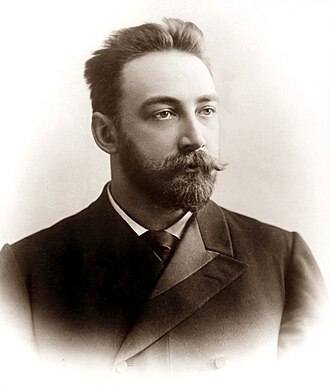
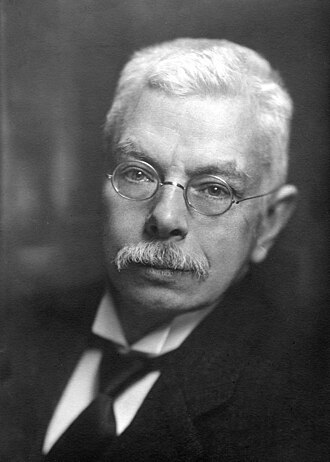
图:作者不详 · Public domain · Wikimedia Commons
- 出生
- 1866 年 2 月 24 日,莫斯科
- 逝世
- 1912 年 3 月 1 日,莫斯科
- 国籍
- 俄罗斯帝国
- 学科
- 物理学、博物与综合
- 职业
- 物理学家、大学教师
- 母语 / 工作语言
- 俄语、德语
- 母校
- Imperial Moscow Technical School(1887 年)、斯特拉斯堡大学、圣彼得堡国立科技学院、斯特拉斯堡大学、莫斯科国立大学
- 工作单位
- 帝国莫斯科大学(1900—1911)、沙尼亚夫斯基人民大学(1909—)
研究领域
师承
博士导师2
博士生7
来自 Wikidata 的「博士导师」「师从」「博士生」「学生」记录,可能不全。
百科正文
生平
列别捷夫生于莫斯科,在1887到1891年间在受德国统治的斯特拉斯堡跟随物理学家奥古斯特·孔特进行研究,并获得斯特拉斯堡大学博士学位。1891年列别捷夫进入莫斯科国立大学亚历山大·斯托列托夫的团队进行研究。列别捷夫以进行电磁波研究而闻名。1899年列别捷夫成为在固体上量测到辐射压的世界第一人。这项发现于1900年在巴黎举办的世界物理学大会上被公布,这是马克士威电磁理论第一个定量的确认。1901年列别捷夫成为莫斯科国立大学教授,但在1911年因为抗议俄罗斯帝国教育部的政策而辞职抗议。同年他被邀请前往瑞典斯德哥尔摩任职,但并未接受。1912年列别捷夫在莫斯科逝世。
命名事物
- 位于莫斯科的列别捷夫物理研究所
- 月球上的列别捷夫环形山
- 彼得·列别捷夫号研究船
以上内容摘自维基百科「彼得·列別捷夫」,按 CC BY-SA 4.0 使用,去掉了参考文献、外部链接等尾部小节,公式改写成了纯文本。全文、配图和出处见原文。
英文维基百科补充中文条目比较短,下面是英文条目「Pyotr Lebedev」的原文
Pyotr Nikolaevich Lebedev (Russian: Пётр Никола́евич Ле́бедев; 24 February 1866 – 1 March 1912) was a Russian physicist. His name was also transliterated as Peter Lebedew and Peter Lebedev. Lebedev was the creator of the first scientific school in Russia.
Career
Lebedev made his doctoral degree in Strasbourg under the supervision of August Kundt in 1887–1891. In 1891, he started working in Moscow State University in the group of Alexander Stoletov. There he made his famous experimental studies of electromagnetic waves.
Along with Indian physicist Jagadish Chandra Bose he was one of the first to investigate millimeter waves, generating 50 GHz (6 mm) microwaves beginning in 1895 with a spark oscillator made of two platinum cylinders 1.5 cm long and 0.5 diameter immersed in kerosene at the focus of a parabolic reflector, and detecting the waves with an iron-constantan thermocouple detector.
With this apparatus, he extended the work of Heinrich Hertz to higher frequencies, duplicating classical optics experiments using quasioptical components such as lenses, prisms and quarter-wave plates made of sulfur and wire diffraction gratings to demonstrate refraction, diffraction, double refraction, birefringence and polarization of millimeter waves.
He was the first to measure the pressure of light on a solid body in 1899. The discovery was announced at the International Congress of Physics during Paris Exposition Universelle, and became the first quantitative confirmation of Maxwell's theory of electromagnetism.
An English translation of the paper as well as a historical review is in.
In 1909, he reported that the pressure of light on gas is in agreement with predictions based on Maxwell's theory.
Later life
In 1901, he became a professor at Moscow State University, however, he quit the University in 1911, protesting against the politics of the Ministry of Education. In the same year, he received an invitation to become a professor in Stockholm, which he rejected. He died the next year of a hereditary heart condition.
Legacy
The Lebedev Physical Institute in Moscow and the lunar crater Lebedev are named after him.
以上内容摘自英文维基百科「Pyotr Lebedev」,按 CC BY-SA 4.0 使用,去掉了参考文献、外部链接等尾部小节,公式改写成了纯文本。全文、配图和出处见原文。
同一学科、同时代的科学家

同一学科的科学家
更多 ›