格物
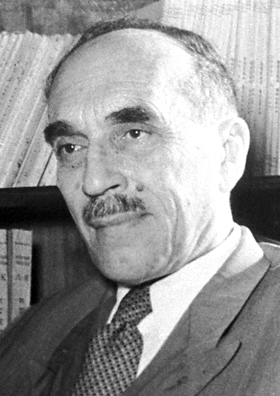
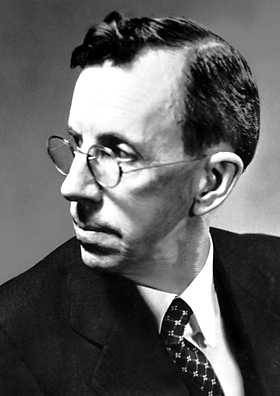
图:作者不详 · Public domain · Wikimedia Commons
尼古拉·谢苗诺夫1896—1986
Nikolay Semyonov
物理学家, 俄罗斯帝国
尼古拉·尼古拉耶维奇·谢苗诺夫,苏联医生和化学家,出生于俄罗斯萨拉托夫。他最大的贡献是对化学连锁反应的量的理论、对热爆炸的理论和对气态混合物燃烧的理论。1956年他与西里尔·欣谢尔伍德一起获得诺贝尔化学奖。
摘自维基百科「尼古拉·谢苗诺夫」,CC BY-SA 4.0
- 出生
- 1896 年 4 月 3 日,萨拉托夫
- 逝世
- 1986 年 9 月 25 日,莫斯科
- 国籍
- 俄罗斯帝国、苏联
- 学科
- 物理学、化学、博物与综合
- 职业
- 物理学家、化学家、教授、政治人物
- 母语 / 工作语言
- 俄语
- 母校
- 圣彼得堡帝国大学(1917 年)、Samara Real School(1913 年)
- 工作单位
- 托木斯克国立大学、托木斯克理工大学、物理技术研究所(1920—)、苏联科学院化学物理研究所(1931—1986)、莫斯科国立大学(1944—)、莫斯科物理技术学院、圣彼得堡彼得大帝理工大学(1928—)、全苏知识协会(1960—1963)、俄罗斯科学院(1963—1971)
研究领域
师承
博士生5
学生6
来自 Wikidata 的「博士导师」「师从」「博士生」「学生」记录,可能不全。
所获奖项(25)
- 1941Stalin Prize, 2nd degree
- 1941State Stalin Prize, 1st degree
- 1945列宁勋章
- 1946红旗劳动勋章
- 1949列宁勋章
- 1949Stalin Prize, 2nd degree
- 1953列宁勋章
- 1954列宁勋章
- 1956诺贝尔化学奖
- 1956列宁勋章
- 1958英国皇家学会外籍会员
- 1966社会主义劳动英雄
- 1966列宁勋章
- 1969罗蒙诺索夫金质奖章
- 1971列宁勋章
- 1976列宁奖
- 1976列宁勋章
- 1976社会主义劳动英雄
- 1981列宁勋章
- 1986十月革命勋章
- —纪念列宁诞辰一百周年奖章
- —1941-1945年大卫国战争中忘我劳动奖章
- —1941-1945年伟大卫国战争三十周年纪念奖章
- —苏联武装力量五十周年纪念奖章
- —莫斯科建城八百周年纪念奖章
学会与院士
百科正文
谢苗诺夫于1917年毕业于圣彼得堡国立大学(当时称彼得堡大学)。
以上内容摘自维基百科「尼古拉·谢苗诺夫」,按 CC BY-SA 4.0 使用,去掉了参考文献、外部链接等尾部小节,公式改写成了纯文本。全文、配图和出处见原文。
英文维基百科补充中文条目比较短,下面是英文条目「Nikolay Semyonov」的原文
Nikolay Nikolayevich Semyonov, sometimes Semenov, Semionov or Semenoff (Russian: Никола́й Никола́евич Семёнов; 15 April [O.S. 3 April] 1896 – 25 September 1986) was a Soviet physicist and chemist. Semyonov was awarded the 1956 Nobel Prize in Chemistry for his work on the mechanism of chemical transformation.
Life and career
Semyonov was born in Saratov in April 1896, the son of Yelena Dmitrieva and Nikolai Aleksandrovich Semyonov. He graduated from the department of physics of Petrograd University (1913–1917), where he was a student of Abram Fyodorovich Ioffe. After graduating from Saint Petersburg State University, Semyonov worked as an assistant and lecturer in Tomsk at the Tomsk University Institute of Technology, where he published his first research paper in 1916. In 1918, he moved to Samara, where he was enlisted into Kolchak's White Army in 1919 during the Russian Civil War, although he obtained a teaching deferment and managed to avoid service. In December of that same year, he was pressed into the radio service of the Red Army. After his discharge in the winter of 1920, Semyonov obtained work at universities in Perm and Tomsk.
Significant works
Semyonov's outstanding work on the mechanism of chemical transformation includes an exhaustive analysis of the application of the chain theory to varied reactions (1934–1954) and, more significantly, to combustion processes. He proposed a theory of degenerate branching, which led to a better understanding of the phenomena associated with the induction periods of oxidation processes. He spent most of his career focusing and developing the field of chemical chain reactions.
Semyonov wrote two important books outlining his work. Chemical Kinetics and Chain Reactions was published in 1934, with an English edition in 1935. It was the first book in the U.S.S.R. to develop a detailed theory of unbranched and branched chain reactions in chemistry. Some Problems of Chemical Kinetics and Reactivity, first published in 1954, was revised in 1958; there are also English, American, German, and Chinese editions. He is the only Soviet/Russian Chemistry Nobel Laureate, who received the Nobel Prize in Chemistry (together with Sir Cyril N.
Honours and awards
- Orders of Lenin, nine times (incl. 1945, 1953, 1956, 1966, 1971, 1976, 1981)
- Stalin Prize (1941, 1949)
- Honorary Member of the British Chemical Society (1943)
- Order of the Red Banner of Labour (1946)
- Honorary member of the Indian Academy of Sciences (1954)
- Nobel Prize in Chemistry (1956)
- Foreign Member of the Royal Society of London (1958)
- Member of the German Academy of Sciences Leopoldina (1959)
- Honorary member of the Hungarian Academy of Sciences (1961)
- Honorary member of the New York Academy of Sciences (1962)
- Foreign member of the United States National Academy of Sciences (1963)
- Honorary Member of the Romanian Academy (1965)
- Hero of Socialist Labour, twice (1966, 1976)
- Lomonosov Gold Medal (1969)
- Lenin Prize (1976)
- Order of the October Revolution (1986)
Jubilee Medal "In Commemoration of the 100th Anniversary of the Birth of Vladimir Ilyich Lenin"
Mendeleev Prize
Honorary Member of The Soviet Academy of Sciences (1932)
Legacy
In 1990, the IHF RAS was named after N. N. Semyonov;
In 1994, a memorial plaque was unveiled in honor of Nikolay Nikolayevich Semyonov on the main building of the St. Petersburg State Polytechnic University (29 Politechnicheskaya Street);
The memorial plaque is installed on the facade of the Main building of the A.F. Ioffe Institute of Physics and Technology in St. Petersburg (26 Politechnicheskaya str.).
On July 27, 1996, and one of the streets in the South-Western Administrative District of the city of Moscow on the territory of the Yuzhnoye Butovo District was given the name Academician Semyonov Street;
In Saratov, one of the streets is named after Semyonov;
In Tyumen, one of the streets is named after Semyonov;
A memorial plaque is installed on the house in Moscow at 24 Frunzenskaya Embankment, where Semyonov spent his last years of life;
The Presidium of the Russian Academy of Sciences has a Commission for the development of the scientific heritage of Academician N. N. Semyonov;
以上节选摘自英文维基百科「Nikolay Semyonov」,按 CC BY-SA 4.0 使用,去掉了参考文献、外部链接等尾部小节,公式改写成了纯文本。篇幅所限,较长的小节只摘了开头一部分,有的小节没有收;全文、配图和出处见原文。
同年获同一奖项
同一学科、同时代的科学家


同一学科的科学家
更多 ›