格物
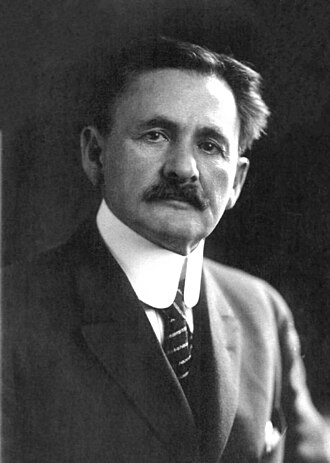
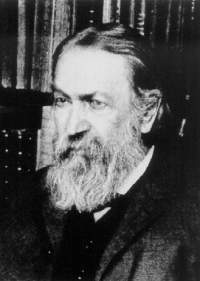
图:作者不详 · Public domain · Wikimedia Commons
- 出生
- 1880 年 10 月 17 日,罗姆内
- 逝世
- 1960 年 10 月 14 日,圣彼得堡
- 国籍
- 俄罗斯帝国、苏联
- 学科
- 物理学、工程与发明、博物与综合
- 职业
- 物理学家、发明家
- 母语 / 工作语言
- 俄语
- 母校
- 圣彼得堡国立科技学院(1902 年)、慕尼黑大学(1905 年)、圣彼得堡彼得大帝理工大学、圣彼得堡国立大学
- 工作单位
- 圣彼得堡彼得大帝理工大学、物理技术研究所(?—1950)、Physico-Mathematical Institute of the Russian Academy of Sciences、俄罗斯科学院(1942—1945)、Agrophysical Research Institute
研究领域
师承
博士导师1
学生12
来自 Wikidata 的「博士导师」「师从」「博士生」「学生」记录,可能不全。
所获奖项(7)
- 1942State Stalin Prize, 1st degree
- 1945doctor honoris causa from the University of Paris
- 1955社会主义劳动英雄
- 1961列宁奖
- —俄罗斯苏维埃联邦社会主义共和国功勋科学工作者
- —美国物理学会会士
- —列宁勋章
学会与院士
百科正文
英文维基百科补充中文条目比较短,下面是英文条目「Abram Ioffe」的原文
Abram Fedorovich Ioffe (Russian: Абра́м Фёдорович Ио́ффе, IPA: [ɐˈbram ˈfʲɵdərəvʲɪtɕ ɪˈofɛ]; 29 October [O.S. 17 October] 1880 – 14 October 1960) was a Russian and Soviet physicist. He received the Stalin Prize (1942) and the Lenin Prize (1961) (posthumously). Ioffe was an expert in various areas of solid state physics and electromagnetism. He established research laboratories for radioactivity, superconductivity, and nuclear physics, many of which became independent institutes. He has been described as the "father of Soviet physics".
Early life and education
Abram Fedorovich Ioffe was born on 29 October 1880 in Romny in the Russian Empire, into a middle-class Jewish family. After graduating from Saint Petersburg State Institute of Technology in 1902, he spent two years as an assistant to Wilhelm Röntgen at the Ludwig-Maximilians-Universität München. In 1905, he received his Ph.D. with a thesis on the electrical conductivity/electrical stress of dielectric crystals. He returned to Russia and explained to Röntgen:
I consider it my duty given the present sad and critical position in [Russia] to do all in my power (even if it is very little) in this bitter struggle [against political reaction], or at least not to turn aside from the dangers connected with it. I certainly do not want to become a "politician" – I have no predisposition for that, I can find satisfaction only in science.
Career and research
After 1906, Ioffe worked at the Saint Petersburg Polytechnical University. In 1911, he (independently of Robert Millikan) determined the charge of an electron. In this experiment, the microparticles of zinc metal were irradiated with ultraviolet light to eject the electrons. The charged microparticles were then balanced in an electric field against gravity so that their charges could be determined (published in 1913).
Ioffe's career at first was negatively affected by his Jewish background, as well as the fact that the education system did not recognize his doctorate from Germany. In 1911, Ioffe converted from Judaism to Lutheranism and married a non-Jewish woman. However, he continued to pursue research and deliver lectures, and was soon able to start making an impact on Russian physics. He became close friends with Paul Ehrenfest, who resided in St. Petersburg from 1907 to 1912 and played a major role in bringing modern theoretical physics to Russia.
Ioffe's work soon received recognition. In 1913, he attained the title of Magister of Philosophy, and became a professor in the Saint Petersburg Polytechnical University. In 1915, he received the title of Doctor of Physics. The St. Petersburg Academy of Sciences also rewarded him a prize for his study on the magnetic field of cathode rays.
Following the Russian Revolution, like most Russian scientists, Ioffe welcomed the end of the monarchy, but viewed the Bolsheviks with caution. In 1918, he left for Crimea but soon returned "to tie his fate with the land of the Soviets". In September, he was one of the first scientists to express their support for the Bolsheviks. In November, he became an academician of the Academy of Sciences; by 1920, he was a full academician.
In 1918, he became head of the physics and technology division of the State Institute of Roentgenology and Radiology. This institute became the Leningrad Physico-Technical Institute (LPTI) in 1933, and eventually the Ioffe Institute.
In the early 1930s, there was a critical need in the Air Defense Forces of the Red Army for means of detecting invading aircraft. A number of research institutes were involved with radiolokatory (radio-location) techniques. The Russian Academy of Sciences called a conference in January 1934 to assess this technology. Ioffe organized this conference, then published a journal report, disclosing to researchers throughout the world the science and technology that would ultimately be called radar.
When the Soviet atomic bomb project began in 1942, Ioffe was asked to lead the technical effort, but refused the job on the grounds that he was too old. He saw great promise in the young Igor Kurchatov, and placed him in charge of the first nuclear laboratory.
Honors
The lunar crater Ioffe is named after him.
Ioffe Physico-Technical Institute carries his name.
The Russian oceanographic and Polar research vessel Akademik Ioffe is named after him.
The asteroid 5222 Ioffe is named after him.
Patents
U.S. patent 1,807,292 "Translating device"
U.S. Patent on the piezoelectric effect
以上节选摘自英文维基百科「Abram Ioffe」,按 CC BY-SA 4.0 使用,去掉了参考文献、外部链接等尾部小节,公式改写成了纯文本。篇幅所限,较长的小节只摘了开头一部分,有的小节没有收;全文、配图和出处见原文。
同一学科、同时代的科学家




同一学科的科学家
更多 ›