格物
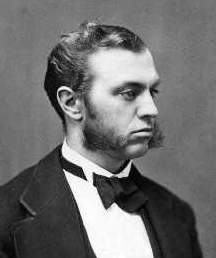
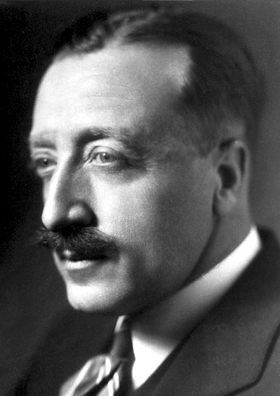
图:作者不详 · Public domain · Wikimedia Commons
伊拉·莱姆森1846—1927
Ira Remsen
American chemist (1846–1927)
伊拉·雷姆森 是一位美国化学家,1901年成为约翰斯·霍普金斯大学第二任校长,1902年任美国化学学会会长,1907年至1913年间任美国国家科学院主席,1923年获普利斯特里奖,知名于与康斯坦丁·法勒伯格共同发现了重要的糖替代品——糖精。
摘自维基百科「伊拉·雷姆森」,CC BY-SA 4.0
- 出生
- 1846 年 2 月 10 日,纽约
- 逝世
- 1927 年 3 月 4 日,滨海卡梅尔
- 国籍
- 美国
- 学科
- 化学
- 职业
- 化学家、大学教师
- 母语 / 工作语言
- 英语
- 母校
- 哥伦比亚大学医学院(医学士,1865 年)、哥廷根大学(哲学博士,1870 年)
- 工作单位
- 约翰·霍普金斯大学
研究领域
师承
博士导师1
博士生3
来自 Wikidata 的「博士导师」「师从」「博士生」「学生」记录,可能不全。
所获奖项(2)
- 1914威拉德·吉布斯奖
- 1923普里斯特利奖章
学会与院士
百科正文
英文维基百科补充中文条目比较短,下面是英文条目「Ira Remsen」的原文
Ira Remsen (10 February 1846 – 4 March 1927) was an American chemist who introduced organic chemistry research and education in the United States along the lines of German universities where he received his early training. He was the first professor of chemistry and the second president of Johns Hopkins University. He founded the American Chemical Journal, which he edited from 1879 to 1914. The discovery of saccharin was made in his laboratory by Constantine Fahlberg who worked in collaboration with Remsen but patented the synthesis on his own, earning the ire of Remsen.
Early life
Ira Remsen was born in New York City on February 10, 1846. He was the son of James Vanderbelt Remsen (1818–1892) and Rosanna née Secor (1823–1856) who came from family of Dutch settlers. His mother had Huguenot ancestors. He went to the New York Free Academy where he studied Greek, Latin, maths and sciences. He also attended popular lectures by Robert Ogden Doremus at the Cooper Institute. He did not complete his bachelor's degree but apprenticed for a while under a homeopathic physician who was on the faculty of New York Homeooathic Medical School. He dropped out of this as well and joined the College of Physicians and Surgeons at Columbia University receiving an MD in 1867 with a thesis on fatty degeneration of the liver. He then practiced at Irving Place, New York and a year later sought to study chemistry in Germany. He went to the Ludwig-Maximilians-Universität München where he worked under Jacob Volhard (1834–1910) as well as one series of lectures under Justus von Liebig (1803–1873) who was the main attraction for Remsen to move to Germany. He then went to the University of Göttingen, on the recommendation of Friedrich Wöhler, and studied organic chemistry under Rudolph Fittig (1835–1910). His 1870 doctorate was on investigations on piperic acid and its derivatives. He worked as an assistant to Fittig from 1870 to 1872 and during this time he met William Ramsay (1852–1916).
Career
In 1872, after researching pure chemistry at University of Tübingen, Remsen returned to the United States and became a professor at Williams College, where he wrote the popular text Theoretical Chemistry. Remsen's book and reputation brought him to the attention of Daniel Coit Gilman, who invited him to become one of the original faculty of Johns Hopkins University. Remsen accepted and founded the department of chemistry there, overseeing his own laboratory. In 1879, Remsen founded the American Chemical Journal, which he edited for 35 years. He was elected as a member to the American Philosophical Society in 1879.
In 1879, Constantine Fahlberg, working with Remsen in a post-doctoral capacity, made an accidental discovery that changed Remsen's career. Eating rolls at dinner after a long day in the lab researching coal tar derivatives, Fahlberg noticed that the rolls tasted initially sweet but then bitter. Since his wife tasted nothing strange about the rolls, Fahlberg tasted his fingers and noticed that the bitter taste was probably from one of the chemicals in his lab. The next day at his lab he tasted the chemicals that he had been working with the previous day and discovered that it was the oxidation of o-toluenesulfonamide he had tasted the previous evening. He named the substance saccharin and he and his research partner Remsen published their finding in 1880.
Death
He died on March 4, 1927, in Carmel-by-the-Sea, California. His ashes are interred behind a plaque in the chemistry building on the Homewood campus at Johns Hopkins University.
Legacy
In the 37 years of his service he guided 107 PhD students. In 1925 eighty-four of his students held positions as professors and forty were heads of chemistry departments in the US. After his death, the new chemistry building, completed in 1924, was named after him at Johns Hopkins. His ashes are located behind a plaque in Remsen Hall; he is the only person buried on campus.
His Baltimore house was added to the National Register of Historic Places and declared a National Historic Landmark in 1975.
Remsen Hall in Queens College is also named for him.
Remsen Award
In 1946, to commemorate the centenary of Remsen, the Maryland chapter of the American Chemical Society, began awarding the Remsen award, in his honor. Awardees are frequently of the highest caliber, and included a sequence of 16 Nobel laureates between 1950 and 1980.
Recipients
以上节选摘自英文维基百科「Ira Remsen」,按 CC BY-SA 4.0 使用,去掉了参考文献、外部链接等尾部小节,公式改写成了纯文本。篇幅所限,较长的小节只摘了开头一部分,有的小节没有收;全文、配图和出处见原文。
同一学科、同时代的科学家