格物
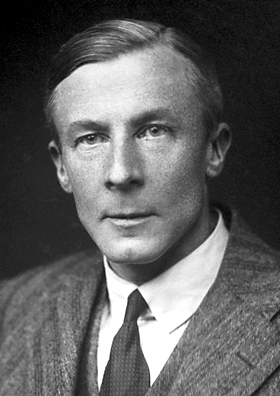
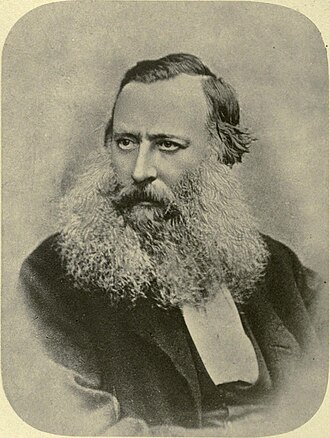
埃德蒙·布里斯科·福特1901—1986
E. B. Ford
英国生态遗传学家
E·B·福特 是一位英国遗传学家,英国皇家学会和伦敦皇家内科医师学会会士,发展了自然选择理论,开创了生态遗传学这一领域,1954年获得英国皇家学会颁发的达尔文奖章。
摘自维基百科「E·B·福特」,CC BY-SA 4.0
- 出生
- 1901 年 4 月 23 日,Papcastle
- 逝世
- 1988 年 1 月 21 日,牛津
- 国籍
- 英国
- 学科
- 生物学、博物与综合
- 职业
- 遗传学家、生物学家、大学教师
- 母语 / 工作语言
- 英语
- 母校
- 牛津大学瓦德汉学院、St. Bees School
- 工作单位
- 牛津大学
研究领域
所获奖项(1)
- 1954达尔文奖章
学会与院士
百科正文
英文维基百科补充中文条目比较短,下面是英文条目「E. B. Ford」的原文
Edmund Brisco "Henry" Ford (23 April 1901 – 2 January 1988) was a British ecological geneticist. He was a leader among those British biologists who investigated the role of natural selection in nature. As a schoolboy Ford became interested in lepidoptera, the group of insects which includes butterflies and moths. He went on to study the genetics of natural populations, and invented the field of ecological genetics. Ford was awarded the Royal Society's Darwin Medal in 1954. In the wider world his best known work is Butterflies (1945). Ford was a member of the UK Eugenics Society, of which he was a council member in 1933-1934, also contributing to its publications.
Education
Ford was born in Dalton-in-Furness, near Ulverston, in Lancashire, England, on 23 April 1901. He was the only child of Harold Dodsworth Ford (1864–1943), a classics teacher turned Anglican clergyman, and his wife (and second cousin) Gertrude Emma Bennett. His paternal grandfather, Dr Henry Edmund Ford (1821–1909), was a professor of music at Carlisle and the organist of Carlisle Cathedral from 1842 to 1902. Ford was educated at St Bees School, Cumberland (now Cumbria), and read zoology at Wadham College, Oxford, (where his father had also studied), graduating B.A. in 1924, upgraded to M.A. 1927, B.Sc. (a research degree) in 1927, and taking a D.Sc in 1943.
Career and research
Ford's career was based entirely at the University of Oxford. The biologist Arthur Cain said Ford took a degree in classics before turning to zoology. Ford read zoology at Oxford, and was taught genetics by Julian Huxley. "The lecturer whose interests most closely reflected mine was Julian Huxley. I owe him a great debt, especially for inspiration... Even though Huxley was... only at Oxford from 1919 to 1925, he was the most powerful voice in developing the selectionist attitude there... I met Ray Lankester through E.B. Poulton. He was already an old man... but talked to me a good deal of Charles Darwin and Pasteur, both of whom he knew."
Ford was appointed University Demonstrator in Zoology in 1927 and Lecturer at University College, Oxford, in 1933. Specialising in genetics, he was appointed University Reader in Genetics in 1939 and was the Director of the Genetics Laboratory, 1952–1969, and Professor of Ecological Genetics 1963–1969. Ford was one of the first scientists to be elected a Fellow of All Souls College since the seventeenth century. He was among those opposed to the admission of women fellows beginning in 1981; once, upon encountering one such, he swung his umbrella at her and shouted "Out of my way, henbird!".
Ford had a long working relationship with R.A. Fisher. By the time Ford had developed his formal definition of genetic polymorphism, Fisher had got accustomed to high selection values in nature. He was most impressed by the fact that polymorphism concealed powerful selective forces (Ford gave human blood groups as an example).
Personal life
Ford never married, had no children, and was considered decidedly eccentric, although his eccentricity was said to be more prominent when he knew he had an audience; he was also fond of slightly surrealist practical joking. He could be markedly generous to his friends: it was "an open secret" that he made a handsome contribution to the grant of £350000 given by the Nuffield Foundation for the establishment of a Unit of Medical Genetics at the University of Liverpool; this greatly boosted the research of Cyril Clarke and Philip Sheppard.
Professor Ford would come into first year biology lectures at Oxford University – which were quite large, with about 150 students, and address the mixed group “good morning gentlemen”, ignoring the ladies, who even at that time were maybe 30% of student numbers – they are now 48%. The students thought that was amusing, and decided that, for one lecture in 1965, no men would attend. So he walked in to the lecture theatre with about 50 women sitting there waiting attentively, but no men. He put his notes on the lectern and looked up. “Oh dear, nobody here today I see, might as well go home”! Picked up his notes and walked out..
Non-academic information on his life is hard to come by, mostly consisting of scattered remarks made by colleagues. He campaigned strenuously against the admission of female Fellows to All Souls College. Miriam Rothschild, an outstanding zoologist, was one of the few women with whom Ford was on good terms. Rothschild and Ford campaigned for the legalisation of male homosexuality in Britain.
以上节选摘自英文维基百科「E. B. Ford」,按 CC BY-SA 4.0 使用,去掉了参考文献、外部链接等尾部小节,公式改写成了纯文本。篇幅所限,较长的小节只摘了开头一部分,有的小节没有收;全文、配图和出处见原文。
同一学科、同时代的科学家


同一学科的科学家
更多 ›