格物
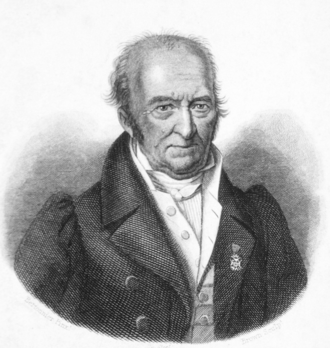
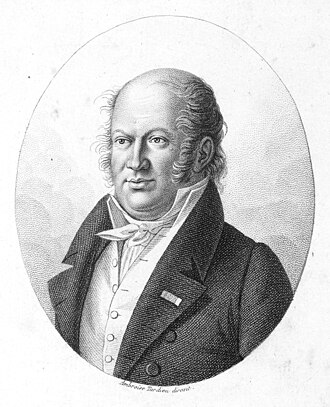
图:Brown · Public domain · Wikimedia Commons
- 出生
- 1762 年 11 月 29 日,布里夫拉盖亚尔德
- 逝世
- 1833 年 2 月 6 日,巴黎
- 国籍
- 法国
- 学科
- 生物学、博物与综合
- 职业
- 鳞翅目学者、昆虫学家、蜘蛛学家、甲壳动物学家
- 母语 / 工作语言
- 法语
- 母校
- 巴黎科学学院、collège du Cardinal-Lemoine、国家自然历史博物馆
- 工作单位
- 阿尔福国立兽医学院
研究领域
所获奖项(1)
- 1821法国荣誉军团骑士勋章
学会与院士
百科正文
拉特雷耶出生于法国西南部城镇布里夫拉盖亚尔德,16岁时来到巴黎大学求学,尽管他专注于博物学研究,但在学校接受的却是牧师教育,并于1786年在利摩日大修院获得执事身份。1790年法国大革命时期,法国政府在司铎中推行《教士的公民组织法》,要求教士宣誓效忠法国,否则他们将被驱逐出境。拉特雷耶因错过了宣誓的截止日期,于1793年被宣判有罪,先后被关押在布里夫和波尔多的牢狱中。一次一位监狱医生发现拉特雷耶趴在地上观察一只昆虫,拉特雷耶解释说他正在观察一种稀有的甲虫-双色琉璃郭公虫(Necrobia ruficollis)。这位医生被他的学识所折服,将这只甲虫送给了年轻的博物学家让·巴蒂斯特·博里·德圣樊尚(Jean Baptiste Bory de Saint-Vincent)。德圣樊尚读过拉特雷耶昆虫学方面的著作,因而想办法将他营救出狱。
1796年他出版了《自然秩序中的昆虫分类》(Précis des caractères génériques des insectes)标志着现代昆虫学研究的开始。1799年他成为巴黎国家自然历史博物馆昆虫学系负责人。1829年接替让-巴蒂斯特·拉马克成为国家自然历史博物馆无脊椎动物学教授。
拉特雷耶对昆虫学研究做出了重要贡献,记录描述了大量属、种。死后葬于巴黎拉雪兹神父公墓。
以上内容摘自维基百科「皮埃尔·安德烈·拉特雷耶」,按 CC BY-SA 4.0 使用,去掉了参考文献、外部链接等尾部小节,公式改写成了纯文本。全文、配图和出处见原文。
英文维基百科补充中文条目比较短,下面是英文条目「Pierre André Latreille」的原文
Pierre André Latreille (French pronunciation: [pjɛʁ ɑ̃dʁe latʁɛj]; 29 November 1762 – 6 February 1833) was a French zoologist, specialising in arthropods. Having trained as a Roman Catholic priest before the French Revolution, Latreille was imprisoned, and only regained his freedom after recognising a rare beetle species he found in the prison, Necrobia ruficollis.
He published his first important work, Précis des caractères génériques des insectes, in 1796, and was eventually employed by the Muséum National d'Histoire Naturelle. His foresighted work on arthropod systematics and taxonomy gained him respect and accolades, including being asked to write the volume on insects for Georges Cuvier's monumental work, Le Règne Animal, the only part not by Cuvier himself.
Latreille was considered the foremost entomologist of his time, and was described by one of his pupils as "the prince of entomologists".
Biography
Early life
Pierre André Latreille was born on 29 November 1762 in the town of Brive, then in the province of Limousin, as the illegitimate child of Jean Joseph Sahuguet d'Amarzit, général baron d'Espagnac, who never recognised him, and an unknown mother, who abandoned him at birth; the surname "Latreille" was formally granted to him in 1813, and derives from a nickname of unclear provenance. Latreille, effectively orphaned from his earliest age, had influential protectors – first a physician, then a merchant from Brive, and later a baron (after the baron's death), who brought him to Paris in 1778.
He studied initially in Brive and in Paris at the Collège du Cardinal-Lemoine attached to the University of Paris to become a priest. He entered the Grand Séminaire of Limoges in 1780, and left as a deacon in 1786. Despite being qualified to preach, Latreille later wrote that he had never carried out his functions as a minister, although for a few years he signed the letters he wrote "l'Abbé Latreille" ("the Reverend Latreille") or "Latreille, Prêtre" ("Latreille, Priest").
Even during his studies, Latreille had taken on an interest in natural history, visiting the Jardin du Roi planted by Georges-Louis Leclerc, Comte de Buffon, and catching insects around Paris. He received lessons on botany from René Just Haüy, which brought him in contact with Jean-Baptiste Lamarck.
Necrobia ruficollis
After the fall of the Ancien Régime and the start of the French Revolution, the Civil Constitution of the Clergy was declared in 1790, which required priests to swear an oath of allegiance to the state. Latreille failed to do so and was therefore imprisoned in November 1793 under threat of execution.
When the prison's doctor inspected the prisoners, he was surprised to find Latreille scrutinising a beetle on the dungeon floor. When Latreille explained that it was a rare insect, the physician was impressed, and sent the insect to a 15-year-old local naturalist, Jean Baptiste Bory de Saint-Vincent. Bory de St.-Vincent knew Latreille's work, and managed to obtain the release of Latreille and one of his cell-mates. Latreille and Bory de Saint-Vincent remained life-long friends. The beetle had been described by Johan Christian Fabricius in 1775, but recognising it had saved Latreille from likely demise, as all the other inmates were dead within one month.
Work
Latreille produced a significant body of scientific work, extending across several fields. He was described by Johan Christian Fabricius as entomologorum nostri aevi princeps ("the foremost entomologist of our time"), and by Jean Victoire Audouin as Entomologiae Princeps ("the prince of entomology").
Taxonomy and systematics
Latreille was significant as the first person to attempt a natural classification of the arthropods. His "eclectic method" of systematics incorporated evidence from all available characters without assuming a pre-defined goal; Latreille repeatedly dismissed anthropocentrism and teleology.
As well as many species and countless genera, the names of many higher taxa are also attributable to Latreille, including Thysanura, Siphonaptera, Ostracoda, Stomatopoda, Xiphosura, and Myriapoda.
Typification
Although Latreille named many species, his primary interest was in describing genera. He introduced the concept of the "type species", a species to which the name of a genus is firmly attached. Similarly, he favoured the method of naming families after one of the constituent genera, rather than some defining feature of the group, implicitly designating a type genus for the family.
以上节选摘自英文维基百科「Pierre André Latreille」,按 CC BY-SA 4.0 使用,去掉了参考文献、外部链接等尾部小节,公式改写成了纯文本。篇幅所限,较长的小节只摘了开头一部分,有的小节没有收;全文、配图和出处见原文。
同一学科、同时代的科学家


同一学科的科学家
更多 ›