格物
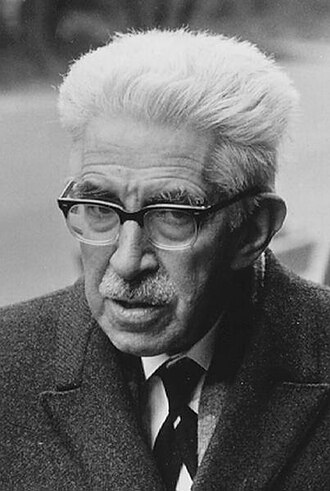
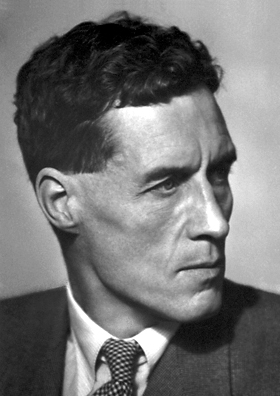
图:Baszoetekouw at en.wikipedia · Public domain · Wikimedia Commons
马塞尔·米纳尔1893—1970
Marcel Minnaert
Belgian-Dutch astronomer (1893–1970)
马塞尔·米纳尔,男,荷兰天文学家,乌特勒支大学教授。
摘自维基百科「马塞尔·米纳尔」,CC BY-SA 4.0
- 出生
- 1893 年 2 月 12 日,布鲁日
- 逝世
- 1970 年 10 月 26 日,乌得勒支
- 国籍
- 荷兰王国、比利时
- 学科
- 物理学、生物学、天文学、博物与综合
- 职业
- 天文学家、生物学家、天体物理学家、世界语者
- 母语 / 工作语言
- 世界语、荷兰语
- 母校
- 根特大学、莱顿大学、乌得勒支大学
- 工作单位
- 乌得勒支大学(1937—1945)、根特大学
研究领域
师承
博士导师1
博士生16
来自 Wikidata 的「博士导师」「师从」「博士生」「学生」记录,可能不全。
所获奖项(4)
- 1947英国皇家天文学会金质奖章
- 1951布鲁斯奖
- 1966皮埃尔·让森奖
- 1969honorary doctorate from the University of Nice-Sophia Antipolis
学会与院士
百科正文
英文维基百科补充中文条目比较短,下面是英文条目「Marcel Minnaert」的原文
Marcel Gilles Jozef Minnaert (12 February 1893 – 26 October 1970) was a Belgian-Dutch astronomer. He was born in Bruges and died in Utrecht. He is notable for his contributions to astronomy and physics and for a popular book on meteorological optics: Light and colour in the open air, first published in English in 1940.
Biography
Minnaert obtained a PhD in biology at Ghent University in 1914. Later he obtained also a PhD in physics from Utrecht University, under the supervision of Leonard Ornstein.
He was a supporter of the Flemish movement during World War I and endorsed the replacement of French by Dutch during the German occupation of Belgium. He worked as "lector fysica" at the new Flemish University of Ghent, which was made possible by the support of the German occupation forces, and was viewed as connivance with the enemy by the reestablished Belgian authorities. Because of this, he was sentenced after the war in absence to 15 years of forced labor. However, Minnaert had anticipated this outcome by fleeing Belgium in time.
In 1918, he found a position at Utrecht University in the Netherlands, initially to do photometric research. In Utrecht, he became interested in astronomy, and he became a pioneer of solar research. He specialized in spectroscopy and the study of stellar atmospheres and invented the spectroscopic curve of growth.
Minnaert was also interested in bubbles and musical nature of the sounds made by running water. In 1933 he published a solution for the acoustic resonance frequency of a single bubble in water, the so-called Minnaert resonance.
In 1937, he was appointed director of the stellar observatory Sonnenborgh in Utrecht and full professor in astronomy at the university. In 1940, he published his famous Utrecht Atlas of the solar spectrum. In 1941, he invented the Minnaert function, which is used in optical measurements of celestial bodies.
During the German occupation of the Netherlands in World War II, he was imprisoned in Kamp Sint-Michielsgestel by the Germans because of his left-wing, anti-fascist sympathies. During his incarceration, he taught physics and astronomy to his fellow prisoners. After the War, he was one of the founders of the Mathematisch Centrum in Amsterdam.
Minnaert was elected to the American Academy of Arts and Sciences in 1959. In 1946 he became member of the Royal Netherlands Academy of Arts and Sciences. He became a member of the United States National Academy of Sciences in 1964 and the American Philosophical Society in 1969.
Honors
- Awards
- Gold Medal of the Royal Astronomical Society (1947)
- Bruce Medal (1951)
- Prix Jules Janssen of the Société astronomique de France (1966)
- Named after him
- Asteroid 1670 Minnaert
- Minnaert (crater) on the Moon
- Minnaert building of the Uithof campus of Utrecht University
- Minnaert function
- Minnaert resonance
以上内容摘自英文维基百科「Marcel Minnaert」,按 CC BY-SA 4.0 使用,去掉了参考文献、外部链接等尾部小节,公式改写成了纯文本。全文、配图和出处见原文。
同一学科、同时代的科学家



同一学科的科学家
更多 ›