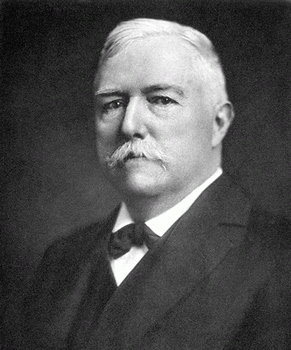
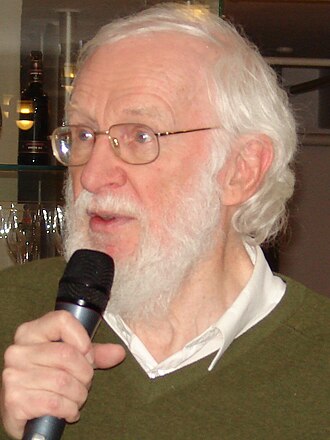
格物
- 出生
- 1906 年 1 月 3 日,贝塞斯达
- 逝世
- 1994 年 6 月 21 日
- 国籍
- 美国
- 学科
- 天文学、博物与综合
- 职业
- 天文学家
- 母校
- 华盛顿与李大学、芝加哥大学
- 工作单位
- 芝加哥大学
师承
来自 Wikidata 的「博士导师」「师从」「博士生」「学生」记录,可能不全。
所获奖项(5)
- 1958布鲁斯奖
- 1961亨利·诺利斯·罗素讲座
- 1980亨利·德雷伯奖章
- 1983赫歇尔奖章
- —美国文理科学院院士
学会与院士
百科正文
生平
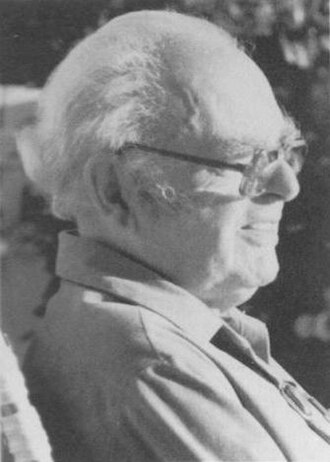
摩根和菲利浦·蔡尔兹·基南发展了将恒星光谱进行分类的摩根-肯那光谱分类法。他也发展了数个星系分类系统,包含了第一个以星系物理特性分类的系统,而非爱德文·哈勃的以肉眼观察星系型态分类的系统。他提出了cD星系分类法,该分类法现在常用于星系团中心的巨大星系。
他在叶凯士天文台工作。他和唐纳德·爱德华·奥斯特布罗克以及斯图尔特·沙普利斯一起量测了O型和B型恒星,发现了银河系中旋臂的存在。
荣誉
- 荣誉与奖项
- 1958年布鲁斯奖
- 1961年亨利·诺利斯·罗素讲座
- 1964年美国文理科学院院士
- 1980年美国国家科学院亨利·德雷伯奖章
- 1983年英国皇家天文学会赫歇尔奖章
- 命名事物
- 小行星3180
以上内容摘自维基百科「威廉·威爾遜·摩根」,按 CC BY-SA 4.0 使用,去掉了参考文献、外部链接等尾部小节,公式改写成了纯文本。全文、配图和出处见原文。
英文维基百科补充中文条目比较短,下面是英文条目「William Wilson Morgan」的原文
William Wilson Morgan (January 3, 1906 – June 21, 1994) was an American astronomer and astrophysicist. The principal theme in Morgan's work was stellar and galaxy classification. He is also known for helping prove the existence of spiral arms in our galaxy. In addition to his scientific achievements, he served as professor and astronomy director for the University of Chicago's Yerkes Observatory in Wisconsin and was the managing editor for George Hale's Astrophysical Journal.
Scientific achievements
Along with Philip Keenan, he developed the MK system for the classification of stars through their spectra. He also developed several galaxy morphological classification systems, including the first systems to use the physical, quantifiable properties of galaxies, as opposed to simple, qualitative, eyeball estimates favoured by Edwin Hubble. He invented the now widely used classification cD for massive galaxies in the centres of galaxy clusters. In 1970, along with astronomer Laura P. Bautz, they created the still-used Bautz-Morgan classification scheme for clusters, which identifies those containing cD galaxies as the richest, type I clusters.
He worked at Yerkes Observatory for much of his career, including acting as its director from 1960 to 1963. Along with Donald Osterbrock and Stewart Sharpless, he used distance measurements of O and B type stars to show the existence of spiral arms in the Milky Way Galaxy.
From 1947 to 1952, Morgan was managing editor of the Astrophysical Journal, a publication originally started by George Hale to promote scientific cooperation between the world's astrophysicists.
Education
Morgan attended Washington and Lee University but left just before the start of his senior year. He began working as a research assistant at Yerkes Observatory and started taking classes there (Yerkes is affiliated with the University of Chicago). Morgan graduated from the University of Chicago in 1927 with a Bachelor of Science degree on the basis of transfer credits from Washington and Lee combined with his subsequent courses at Yerkes Observatory. While at UC/Yerkes, Morgan continued his post-graduate studies and received a doctorate in December 1931 under Otto Struve.
Professorship
Morgan continued on at the University of Chicago and became an assistant professor in 1936, full professor in 1947, and was promoted to distinguished service professor in 1966.
One of his early graduate students in stellar classification was Nancy Grace Roman, who went on to become NASA's first Chief of Astronomy. Morgan was the chairman of the UC Department of Astronomy from 1960 to 1966.
Honors
- Awards and honors
- Bruce Medal (1958)
- Henry Norris Russell Lectureship (1961)
- Fellow of the American Academy of Arts and Sciences (1964)
- Henry Draper Medal of the National Academy of Sciences (1980)
- Herschel Medal (1983)
- Golden Plate Award of the American Academy of Achievement (1985)
- Named after him
- Asteroid 3180 Morgan
以上内容摘自英文维基百科「William Wilson Morgan」,按 CC BY-SA 4.0 使用,去掉了参考文献、外部链接等尾部小节,公式改写成了纯文本。全文、配图和出处见原文。
同一学科、同时代的科学家


同一学科的科学家
更多 ›