格物

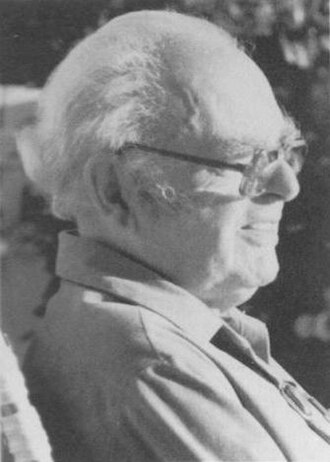
图:Northern Electric Company Limited · Public domain · Wikimedia Commons
- 出生
- 1905 年 8 月 1 日,洛厄尔
- 逝世
- 1993 年 1 月 28 日,里士满希尔
- 国籍
- 加拿大、美国
- 学科
- 天文学、博物与综合
- 职业
- 天文学家、大学教师
- 母语 / 工作语言
- 英语
- 母校
- 拉德克利夫学院、哈佛大学、豪友克山学院、哈佛大学天文台(哲学博士,1931 年)、Lowell High School
- 工作单位
- 多伦多大学、大卫·邓拉普天文台、史密斯学院
研究领域
所获奖项(7)
- 1949安妮·坎农天文奖
- 1967Canadian Centennial Medal
- 1967Rittenhouse Medal
- 1976加拿大勋章同伴
- 1983Klumpke-Roberts Award
- 1985Sandford Fleming Award
- —加拿大皇家学会院士
学会与院士
百科正文
早年
1905年8月1日,海伦·索耶·霍格出生于马萨诸塞州洛厄尔,是银行家爱德华·埃弗雷特·索耶和教师凯莉·道格拉斯·索耶的二女儿。海伦在学术上颇有天赋,15岁时从洛厄尔高中毕业,但选择再留校一年,然后于 1922年前往曼荷莲学院(Mount Holyoke College)就读。
教育
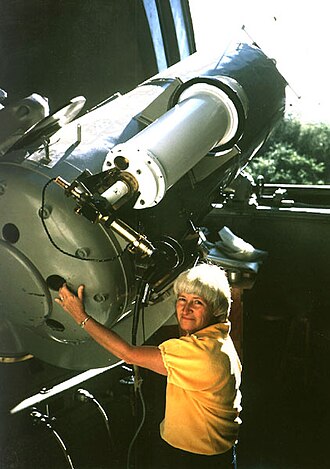
在完成博士学位的同时,霍格在曼荷莲学院和史密斯学院教授天文学。毕业后,她搬到了不列颠哥伦比亚省维多利亚,她开始在多米尼恩天文物理天文台(Dominion Astrophysical Observatory)进行研究。霍格用72吋反射望远镜拍摄变星照片,记录变星亮度的周期性变化。
在多米尼恩天文物理天文台,霍格在球状星团M2中发现了132颗新变星。霍格在天文目录中发表了这项开创性的工作,至今仍在使用。值得注意的是,霍格作为丈夫法兰克·斯科特·霍格助理完成这些研究,因为多米尼恩天文物理天文台并未为她提供工作。
以上内容摘自维基百科「海倫·索耶·霍格」,按 CC BY-SA 4.0 使用,去掉了参考文献、外部链接等尾部小节,公式改写成了纯文本。全文、配图和出处见原文。
英文维基百科补充中文条目比较短,下面是英文条目「Helen Sawyer Hogg」的原文
Helen Battles Sawyer Hogg (August 1, 1905 – January 28, 1993) was an American-Canadian astronomer who pioneered research into globular clusters and variable stars. She was the first female president of several astronomical organizations and a scientist when many universities would not award scientific degrees to women. Her dedication to sharing astronomy with the wider public led to scientific advocacy and journalism, including columns in the Toronto Star ("With the Stars", 1951–81) and the Journal of the Royal Astronomical Society of Canada ("Out of Old Books", 1946–65). She was considered a "great scientist and a gracious person" over a career of sixty years.
Early life
Born in Lowell, Massachusetts, on August 1, 1905, Helen was the second daughter of banker Edward Everett Sawyer and former teacher Carrie Myra Sprague Sawyer. Academically gifted, Helen graduated from Lowell High School at the age of 15, but chose to stay for another year before leaving to attend Mount Holyoke College in 1922.
Education
After graduating from high school, Hogg enrolled in Mount Holyoke College. Despite having nearly completed a chemistry degree, she changed her major from chemistry to astronomy after attending introductory astronomy classes with Dr. Anne Sewell Young in her junior year (1925). Dr. Sewell took her class to see the solar eclipse of January 24, 1925, and a year later Annie Jump Cannon, an astronomer working at Harvard University, came to visit Mount Holyoke. Hogg cited these experiences as defining moments that led to her career studying stars. In 1926 Hogg completed her undergraduate degree in astronomy, graduating magna cum laude.
Scientific works
While completing her doctoral degree, Hogg taught astronomy at Mount Holyoke and at Smith College. After graduation she moved to Victoria, British Columbia, where she began research at the Dominion Astrophysical Observatory. Hogg began taking photos of variable stars with the 72-inch reflecting telescope, cataloguing the cyclical changes in the brightness of the variable stars. At the Dominion Astrophysical Observatory, Hogg found 132 new variable stars in the globular cluster Messier 2. Hogg published this groundbreaking work in astronomical catalogues that are still used today.
Scientific advocacy, awareness, and service
Not limiting herself to publishing her astronomical specialty of variable stars in globular clusters, Hogg published on the history of astronomy through her column "Out of Old Books", which was published in the Journal of the Royal Astronomical Society of Canada. She was also known for the 30 years she spent writing her weekly column "With the Stars", which was published in the Toronto Star. In addition, Hogg popularized astronomy with her book The Stars Belong to Everyone in 1976, an eight-show television series on Canadian educational television in 1970, and her role as founding president of the Canadian Astronomical Society. She also actively supported women to pursue science.
Personal life
In 1930, she married Frank Scott Hogg, a fellow astronomy graduate student at Harvard, and the two moved to Victoria, British Columbia, in 1931. She gave birth to the couple's daughter, Sally, in June 1932. Hogg was able to continue her observation work by bringing her sleeping daughter with her to the observatory at night in a basket. The observatory's director, Dr. J. S. Plaskett, also was supportive; he gave Helen Sawyer Hogg a research grant of $200, which she used to hire a full-time housekeeper for an entire year, providing further support for her research work.
Awards and honors
Awards
- Annie Jump Cannon Award in Astronomy of the American Astronomical Society in 1949
- Klumpke-Roberts Award from the Astronomical Society of the Pacific in 1984
- Sandford Fleming Award from the Royal Canadian Institute in 1985
- Rittenhouse Astronomical Society Silver Medal Award in 1967
- The Centennial Medal of Canada in 1967
Honors and dedications
Made an Officer of the Order of Canada in 1968, and promoted to Companion in 1976 – considered one of the highest honors in the nation.
The asteroid 2917 Sawyer Hogg is named after her.
In 1989, the teaching observatory of the National Museum of Science in Ottawa, Ontario (now the Canada Science and Technology Museum), was dedicated to Hogg.
以上节选摘自英文维基百科「Helen Sawyer Hogg」,按 CC BY-SA 4.0 使用,去掉了参考文献、外部链接等尾部小节,公式改写成了纯文本。篇幅所限,较长的小节只摘了开头一部分,有的小节没有收;全文、配图和出处见原文。
同一学科、同时代的科学家



同一学科的科学家
更多 ›