格物
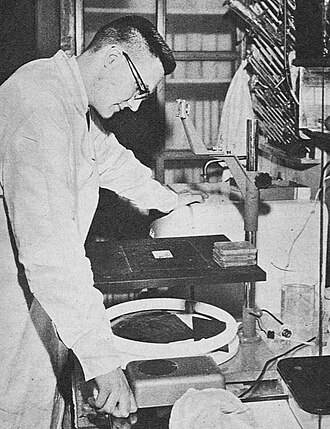
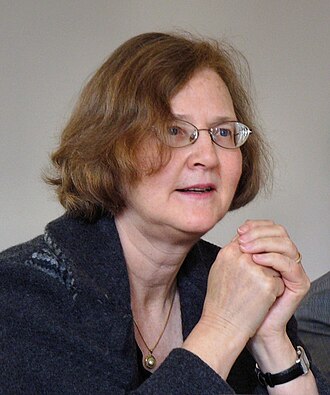
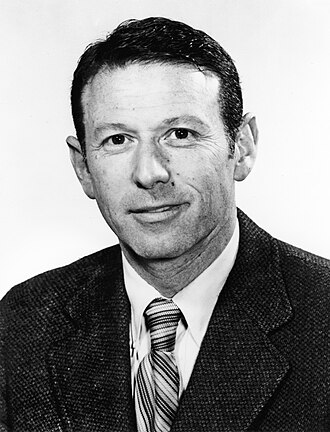
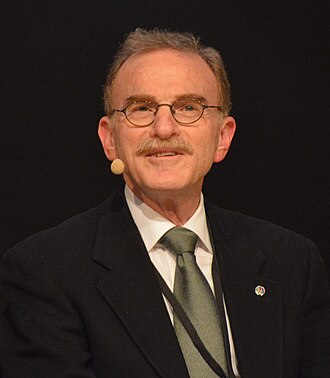
图:作者不详 · Public domain · Wikimedia Commons
埃尔基·罗斯拉赫蒂1940—
Erkki Ruoslahti
芬兰裔美国医学研究者
埃尔基·罗斯拉赫蒂,芬兰裔美国医学家,美国国家科学院院士,美国文理科学院院士,美国国家医学院院士,欧洲分子生物学组织会员。桑福德伯纳姆普雷比斯医学发现研究所 教授。
摘自维基百科「埃尔基·罗斯拉赫蒂」,CC BY-SA 4.0
- 出生
- 1940 年 2 月 16 日,普马拉
- 国籍
- 美国
- 学科
- 化学
- 职业
- 医生、大学教师、药理学家
- 母语 / 工作语言
- 英语
- 母校
- 赫尔辛基大学(哲学博士,1967 年)
- 工作单位
- 圣迭戈加利福尼亚大学、加利福尼亚大学圣巴巴拉分校、桑弗德-伯罕医学医学研究所(1979—2020)
研究领域
所获奖项(7)
- 1990Robert J. and Claire Pasarow Foundation Award for Distinguished Contributions to Cancer Research
- 1990AACR-G.H.A. Clowes Award for Outstanding Basic Cancer Research
- 1997盖尔德纳国际奖
- 2005日本国际奖
- 2009Knight First Class of the Order of the White Rose of Finland
- 2012汤森路透引文桂冠奖
- 2022拉斯克基础医学研究奖
学会与院士
百科正文
生平
1940年诞生于芬兰,1961年取得赫尔辛基大学医学士,四年后取得医师资格。1967年获得赫尔辛基大学免疫学博士之后,在美国加州理工学院作博士后研究。
1970年开始担任赫尔辛基大学血清细菌学助理教授、临时副教授,1975年担任图尔库大学细菌血清学教授。
1976年担任美国国家医学院高级研究员,1979年开始任职于美国Barnum研究所。1980年至2004年担任加州大学圣地亚哥分校病理学院临时教授。
2005年至2015年担任加州大学圣塔芭芭拉分校教授。
荣誉
- 1997年 盖尔德纳国际奖
- 2005年 日本国际奖
- 2022年 拉斯克基础医学研究奖
以上内容摘自维基百科「埃尔基·罗斯拉赫蒂」,按 CC BY-SA 4.0 使用,去掉了参考文献、外部链接等尾部小节,公式改写成了纯文本。全文、配图和出处见原文。
英文维基百科补充中文条目比较短,下面是英文条目「Erkki Ruoslahti」的原文
Erkki Ruoslahti (born 16 February 1940) is a Finnish and American cancer researcher. He is a distinguished professor at Sanford Burnham Prebys Medical Discovery Institute. He moved from Finland to the United States in 1976, and he has received U.S. citizenship.
Ruoslahti made seminal contributions to biology of extracellular matrix and its receptors.
He was one of the discoverers of fibronectin, an adhesion molecule and component of extracellular matrices, and he subsequently identified and cloned a number of other extracellular matrix components and adhesion molecules. In 1984, he identified the sequence within fibronectin that mediates cell attachment, called RGD for the amino acids of which it's composed, and isolated the cellular receptors that bind that sequence, now known as integrins. The RGD discovery has led to the development of drugs for vascular thrombosis and cancer, among other diseases.
Ruoslahti currently studies specific marker molecules in blood vessels. He introduced the concept of vascular "zip codes," the idea that each tissue bears molecular signatures that can be targeted by affinity ligands, and used in vivo peptide phage display to prove the concept and develop numerous tumor-homing peptides.
Early life and education
Ruoslahti was born in Imatra, Finland. He received his M.D. from the University of Helsinki in 1965 and his Ph.D. from the same institution in 1967. He completed postdoctoral studies at Caltech.
Career
Ruoslahti held various academic appointments with the University of Helsinki and the University of Turku in Finland and City of Hope National Medical Center in Duarte, California until joining the La Jolla Cancer Research Foundation (now Sanford Burnham Prebys Medical Discovery Institute, or SBP) in 1979. He had moved from Finland to the United States in 1976. He served as SBP's president from 1989 to 2002, and was a distinguished professor at the University of California, Santa Barbara from 2005 to 2015. He has received U.S. citizenship.
Recent work on homing peptides and nanomedicine
Ruoslahti's research group has developed a novel class of tumor-homing peptides that can be used to enhance delivery of drugs and nanoparticles to tumors. These tumor-penetrating peptides selectively home to tumor vessels, where they activate a transport pathway that delivers the peptide, and along with it drugs and even nanoparticles, through the wall of tumor blood vessels and deep into tumor tissue. Having bound to tumor vessels the peptide is cleaved and an amino acid sequence motif named the C-end rule or CendR motif (pronounced "sender") is exposed at the C-terminus of the peptide. Subsequent binding of the peptide to neuropilin-1 activates the CendR transport pathway into and through tumor tissue.
The prototype tumor-penetrating peptide, iRGD, is in clinical trials in solid tumor patients tested as an enhancer of cancer therapies. This peptide recognizes many different types of cancers, and it can be used for tumor delivery of various payloads that are either coupled to the peptide, or given together with it.
iRGD has also been shown to effectively deliver drugs to the placenta, which could aid in the treatment of slow fetal growth.
Recently, in vivo phage screening has been used to identify peptides that target hypertensive pulmonary arteries, atherosclerosis, and diseases of the brain.
Awards and honors
1990 - Robert J. and Claire Pasarow Foundation Medical Research Award
1990 - American Association for Cancer Research - G.H.A. Clowes Memorial Award Archived 2017-10-24 at the Wayback Machine
- 1991 - Honorary doctorate in medicine from Lund University, Sweden
- 1995 - Nobel Fellow at the Karolinska Institutet in Stockholm
- 1997 - Gairdner Foundation International Award
- 1998 - Jacobaeus International Prize
- 2003 - Jubilee Lecturer, Biochemical Society
- 2005 - Japan Prize in Cell Biology
- 2012 - Thomson Reuters Citation Laureate
- Knight of the Order of the White Rose of Finland
- Commander of the Order of the Lion of Finland
2022 - Albert Lasker Award for Basic Medical Research.
2023 - Fellow of the American Association for Cancer Research.
- Member of
- National Academy of Sciences
- National Academy of Medicine
- American Academy of Arts and Sciences
- European Molecular Biology Organization
以上内容摘自英文维基百科「Erkki Ruoslahti」,按 CC BY-SA 4.0 使用,去掉了参考文献、外部链接等尾部小节,公式改写成了纯文本。全文、配图和出处见原文。