格物
- 出生
- 1905 年 11 月 10 日,泰晤士河畔列治文区
- 逝世
- 1965 年 7 月 9 日,诺斯伍德
- 国籍
- 英国
- 学科
- 物理学、生物学、博物与综合
- 职业
- 物理学家、植物学家、放射科医师
- 母语 / 工作语言
- 英语
- 母校
- 基督公学
研究领域
师承
博士导师1
来自 Wikidata 的「博士导师」「师从」「博士生」「学生」记录,可能不全。
所获奖项(1)
- —英国皇家学会院士
学会与院士
百科正文
英文维基百科补充中文条目比较短,下面是英文条目「Louis Harold Gray」的原文
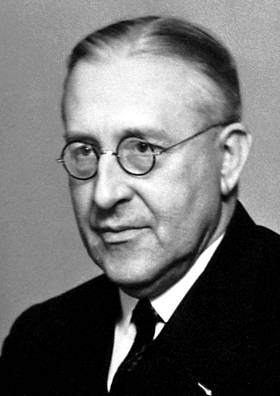
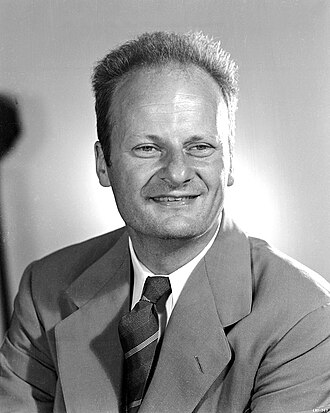
Louis Harold Gray FRS (10 November 1905 – 9 July 1965) was an English physicist who worked mainly on the effects of radiation on biological systems. He was one of the earliest contributors of the field of radiobiology. Amongst many other achievements, he defined a unit of radiation dosage (absorbed dose) which was later named after him as an SI unit, the gray.
Early life
Gray was born as an only child on 10 November 1905 to parents Harry and Amy Gray. His father worked at a post office.
Career
1933 – Hospital physicist at Mount Vernon Hospital, London
1936 – Developed the Bragg–Gray equation, the basis for the cavity ionization method of measuring gamma-ray energy absorption by materials
- 1937 – Built an early neutron generator at Mount Vernon Hospital
- 1938 – Studied biological effects of neutrons using the generator
- 1940 – Developed concept of RBE (Relative Biological Effectiveness) of doses of neutrons
- 1952 – Initiated research into cells in hypoxic tumors and hyperbaric oxygen
1953 – Oliver Scott established the British Empire Cancer Campaign Research Unit in Radiobiology at Mount Vernon Hospital with Hal Gray as director which in 1970 became the Cancer Research Campaign's Gray Laboratory and then (in 2001) the Gray Cancer Institute.
1953–1960 – Under Gray's direction, Jack W. Boag developed pulse radiolysis
1962 – Ed Hart, of Argonne National Laboratory, and Jack Boag discovered the hydrated electron using pulse radiolysis at the Gray Laboratory – this discovery initiated a new direction of research that is still very active today and is vital for understanding the effects of radiation on biological tissue, for instance in cancer treatment.
以上内容摘自英文维基百科「Louis Harold Gray」,按 CC BY-SA 4.0 使用,去掉了参考文献、外部链接等尾部小节,公式改写成了纯文本。全文、配图和出处见原文。
同一学科、同时代的科学家

同一学科的科学家
更多 ›