格物
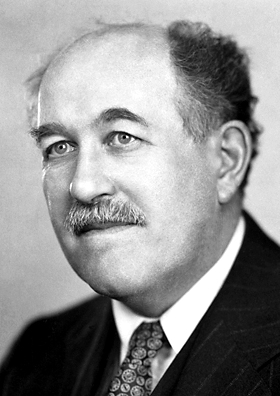
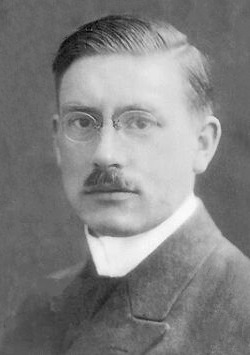
图:Nobelprize.org · Public domain · Wikimedia Commons
奥托·施特恩1888—1969
Otto Stern
物理学家, 德国
奥托·施特恩,德国裔美国核物理学家及实验物理学家。他发展了核物理研究中的分子束方法并发现了质子磁矩,获得了1943年度的诺贝尔物理学奖(1944年颁发)。
摘自维基百科「奥托·施特恩」,CC BY-SA 4.0
- 出生
- 1888 年 2 月 17 日,若雷
- 逝世
- 1969 年 8 月 17 日,伯克利
- 国籍
- 德国、美国
- 学科
- 物理学、化学、博物与综合
- 职业
- 物理学家、化学家、大学教师
- 母语 / 工作语言
- 德语、英语
- 母校
- 弗罗茨瓦夫大学、Johanneum Breslau、约翰-沃尔夫冈-歌德法兰克福大学
- 工作单位
- 汉堡大学、加州大学伯克利分校、卡内基梅隆大学、罗斯托克大学、苏黎世联邦理工学院
研究领域
主要贡献
代表成就
以他 / 她命名
所获奖项(3)
- 1943诺贝尔物理学奖
- 1943honorary member of the Physics Association (Frankfurt am Main, Germany)
- —honorary doctor of ETH Zürich
学会与院士
百科正文
生平简介
奥托·施特恩1888年2月17日生于德意志帝国上西里西亚的索劳(即现在波兰的若雷,波兰语:Żory),1892年与父母移居布雷斯劳(今波兰弗罗茨瓦夫),在那里上了中学。施特恩从1906年开始学习物理化学,1912年在布累斯劳大学(今波兰弗罗茨瓦夫大学)获得博士学位。
同年在布拉格查理大学结识了爱因斯坦,后来跟随他来到苏黎世联邦理工学院,1913年在苏黎世联邦理工学院担任物理化学无薪讲师。
1914至1921年任法兰克福大学理论物理学无薪讲师,其间服过一段兵役。
1921至1922年任罗斯托克大学理论物理学副教授。
1923年至1933年任汉堡大学物理化学系教授和实验室负责人。
1933年移居美国,开始担任匹兹堡的卡内基技术学院的物理学研究教授,后来又成为加州大学伯克利分校的名誉教授,直到1945年退休。
学术贡献
施特恩早年的研究是在理论物理领域,在统计热力学与量子理论方面有一些重要论文。从1919年他开始转向实验物理,由他研发和使用的分子束方法成为研究分子、原子、原子核性质的有力工具,该方法最初的意图是为了证明气体速率分布的麦克斯韦定律,麦克斯韦方程组。1922年他同瓦尔特·格拉赫合作,做了磁场对磁矩的作用力使原子发生偏转的施特恩-盖拉赫实验,而后又测量了包括质子在内的亚原子粒子的磁矩。1929年的氢、氦射线衍射实验是对原子和分子的波性质的精彩演示。
诺贝尔物理学奖
1944年,施特恩荣获了前一年度的诺贝尔物理学奖。他是当年唯一的诺贝尔物理学奖得主,获奖理由是:“对分子束方法的发展以及对质子磁矩的发现”。获奖理由中没有提及施特恩-盖拉赫实验,因为当时盖拉赫已经是纳粹科学家了。
以上内容摘自维基百科「奥托·施特恩」,按 CC BY-SA 4.0 使用,去掉了参考文献、外部链接等尾部小节,公式改写成了纯文本。全文、配图和出处见原文。
英文维基百科补充中文条目比较短,下面是英文条目「Otto Stern」的原文
Otto Stern (German: [ˈɔto ˈʃtɛʁn]; 17 February 1888 – 17 August 1969) was a German–American experimental physicist. He is the second most nominated person for a Nobel Prize, with 82 nominations during the years 1925–1945. In 1943, he received the Nobel Prize in Physics "for his contribution to the development of the molecular ray method and his discovery of the magnetic moment of the proton."
Biography
Otto Stern was born on 17 February 1888 in Sohrau (now Żory, Poland), Germany, into a Jewish family. In 1892, he moved with his parents to Breslau (now Wrocław, Poland). He studied in Freiburg im Breisgau, Munich, and Breslau.
In 1912, Stern received his Ph.D. in Physical Chemistry from the University of Breslau, with a thesis on the kinetic theory of osmotic pressure in concentrated solutions. He then followed Albert Einstein to Charles University in Prague, and in 1913 to ETH Zurich, where he became a Privatdozent in Physical Chemistry. The following year, he moved to the University of Frankfurt am Main as a Privatdozent in Theoretical Physics. In 1921, he was appointed Associate Professor of Theoretical Physics at the University of Rostock, and then Professor of Physical Chemistry and director of the laboratory at the University of Hamburg in 1923.
In 1930, Stern received an LL.D. from the University of California, Berkeley (UC Berkeley), where he was a frequent visiting professor during the 1930s, becoming close colleagues with members of the Berkeley faculty, including chemistry dean Gilbert Lewis, whom Stern would nominate for the Nobel Prize in Chemistry in 1933. After resigning from his post at the University of Hamburg in 1933 because of the Nazis' Machtergreifung (seizure of power), he found refuge in the city of Pittsburgh, becoming Professor of Physics at the Carnegie Institute of Technology.
As an experimental physicist, Stern contributed to the discovery of spin quantization in the Stern–Gerlach experiment with Walther Gerlach in February 1922 at the Physikalischer Verein in Frankfurt am Main. With his life-long collaborator Immanuel Estermann, he demonstrated of the wave nature of atoms and molecules; measurement of atomic magnetic moments; discovery of the proton's magnetic moment; and development of the molecular beam method which is utilized for the technique of molecular beam epitaxy.
After Stern retired from the Carnegie Institute of Technology in 1945, he moved to Berkeley, California. He was a regular visitor to the physics colloquium at UC Berkeley. He died of a heart attack on 17 August 1969 in Berkeley, at the age of 81.
His niece was the crystallographer Lieselotte Templeton.
Recognition
Commemoration
The Stern–Gerlach Medal of the German Physical Society awarded for excellence in experimental physics is named after him and Gerlach.
以上内容摘自英文维基百科「Otto Stern」,按 CC BY-SA 4.0 使用,去掉了参考文献、外部链接等尾部小节,公式改写成了纯文本。全文、配图和出处见原文。
同一学科、同时代的科学家



同一学科的科学家
更多 ›