格物
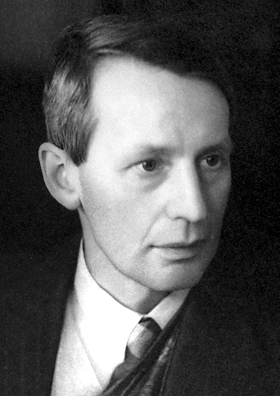
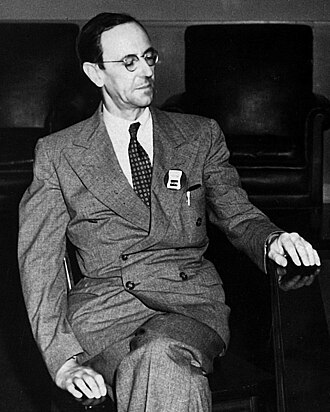
图:作者不详 · Public domain · Wikimedia Commons
彼得·德拜1884—1966
Peter Debye
化学家, 荷兰王国
诺贝尔化学奖 1936马克斯·普朗克奖章 1950普里斯特利奖章 1963
彼得鲁斯·约瑟夫斯·威廉默斯·德拜,后改名为彼得·约瑟夫·威廉·德拜,荷兰物理学家与物理化学家,1936年诺贝尔化学奖获得者。
摘自维基百科「彼得·德拜」,CC BY-SA 4.0
- 出生
- 1884 年 3 月 24 日,马斯特里赫特
- 逝世
- 1966 年 11 月 2 日,伊萨卡
- 国籍
- 荷兰王国、美国
- 学科
- 物理学、化学、地球科学、工程与发明、博物与综合
- 职业
- 化学家、物理学家、理论物理学家、科学家
- 母语 / 工作语言
- 英语、荷兰语、德语
- 母校
- 亚琛工业大学(1905 年)、慕尼黑大学、苏黎世联邦理工学院
- 工作单位
- 莱比锡大学(1927—)、哥廷根大学(1914—)、苏黎世大学(1920—)、康奈尔大学(1940—)、乌得勒支大学(1912—1914)、柏林洪堡大学(1934—)、慕尼黑大学(1906—)、苏黎世联邦理工学院(1911—)、Kaiser Wilhelm Institute for Physics
研究领域
主要贡献
代表成就
师承
博士导师1
博士生36
学生1
来自 Wikidata 的「博士导师」「师从」「博士生」「学生」记录,可能不全。
所获奖项(18)
学会与院士
百科正文
生平
德拜生于荷兰马斯特里赫特。1901年,进入离家乡30公里的普鲁士莱茵省亚琛工业大学学习数学与经典物理学,1905年获电机工程学位。在亚琛,他师从理论物理学家阿诺·索末菲。阿诺·索末菲后来称德拜是他最重要的发现。
1906年,索末菲收到巴伐利亚慕尼黑的任命,于是带德拜一同前往并作为助手。1908年,德拜获哲学博士学位。
1913年,同Mathilde Alberer结婚。
个人生活
德拜被描述为严肃的人,但总是平易近人的为他的学生腾出时间。他的个人哲学强调在工作中实现目标和享受。
德拜是一位狂热的鳟鱼渔民和园丁,是仙人掌的收藏家,并且“一直以享受雪茄而闻名”。
德拜是一位忠实的天主教徒,他坚持要家人去教堂。
科学贡献
1913年,他扩展了尼尔斯·玻尔的原子结构理论,引入了椭圆轨道。1923年,德拜提出了一种理论来解释康普顿效应,即当X射线与电子相互作用时其频率的偏移。
以后的工作
1966年4月,德拜心脏病发作,同年11月第二次发作后离世。他被安葬在格罗夫公墓(美国纽约伊萨卡)。
争议
2006年1月,一本荷兰语书籍在荷兰出版,由Sybe Rispens撰写,题为 《爱因斯坦在荷兰》。其中一章讨论了爱因斯坦和德拜之间的关系。
在马斯特里赫特大学采取行动之后,荷兰和美国进行了各种历史调查。康奈尔大学化学与化学生物学系最早完成了这些研究。2006年5月31日发布的康奈尔大学调查报告指出:
根据迄今为止的信息,我们还没有发现证据支持德拜是纳粹的同情者或合作者,或者他持有反犹太主义的观点。必须明确指出这一点,因为这是最严重的指控。
以上内容摘自维基百科「彼得·德拜」,按 CC BY-SA 4.0 使用,去掉了参考文献、外部链接等尾部小节,公式改写成了纯文本。全文、配图和出处见原文。
英文维基百科补充中文条目比较短,下面是英文条目「Peter Debye」的原文
Peter Joseph William Debye ( dib-EYE; born Petrus Josephus Wilhelmus Debije, Dutch: [ˈpeːtrʏz dəˈbɛiə]; March 24, 1884 – November 2, 1966) was a Dutch-American physicist and physical chemist, and Nobel laureate in Chemistry.
Biography
Early life
Born in Maastricht, Netherlands, Debye enrolled in the Aachen University of Technology in 1901. In 1905, he completed his first degree in electrical engineering. He published his first paper, a mathematically elegant solution of a problem involving eddy currents, in 1907. At Aachen, he studied under the theoretical physicist Arnold Sommerfeld, who later claimed that his most important discovery was Peter Debye.
In 1906, Sommerfeld received an appointment at the Ludwig-Maximilians-Universität München, Bavaria, and took Debye with him as his assistant. Debye got his Ph.D. with a dissertation on radiation pressure in 1908. In 1910, he derived the Planck radiation formula using a method which Max Planck agreed was simpler than his own.
In 1911, when Albert Einstein took an appointment as a professor at Prague, Bohemia, Debye took his old professorship at the University of Zurich, Switzerland. This was followed by moves to Utrecht in 1912, to Göttingen in 1913, to ETH Zurich in 1920, to University of Leipzig in 1927, and in 1934 to Berlin, where, succeeding Einstein, he became director of the Kaiser Wilhelm Institute for Physics (now named the Max-Planck-Institut) whose facilities were built only during Debye's era.
War activities and controversies
2006 controversy
In January 2006, a book (in Dutch) appeared in The Netherlands, written by Sybe Rispens, entitled Einstein in the Netherlands. One chapter of this book discusses the relationship between Albert Einstein and Debye. Rispens discovered documents that, as he believed, were new and proved that, during his directorship of the Kaiser Wilhelm Society, Debye was actively involved in cleansing German science institutions of Jewish and other "non-Aryan elements". Rispens records that on December 9, 1938, Debye wrote in his capacity as chairman of the Deutsche Physikalische Gesellschaft (DPG) to all the members of the DPG:
In light of the current situation, membership by German Jews as stipulated by the Nuremberg laws, of the Deutsche Physikalische Gesellschaft cannot be continued. According to the wishes of the board, I ask of all members to whom these definitions apply to report to me their resignation. Heil Hitler!
Many biographies published before Rispens' work, state that Debye moved to the US because he refused to accept German citizenship forced on to him by the Nazis.
Awards and honors
1927 – elected International Honorary Member of the American Academy of Arts and Sciences
1930 – Rumford Medal for work relating to specific heats and X-ray spectroscopy
1936 – Nobel Prize in Chemistry "for his contributions to the study of molecular structure," primarily referring to his work on dipole moments and X-ray diffraction
- 1936 – elected member of the American Philosophical Society
- 1937 – Franklin Medal from The Franklin Institute
- 1947 – elected member of the United States National Academy of Sciences
- 1963 – Priestley Medal
- 1965 – National Medal of Science
- 1982 – Alpha Chi Sigma Hall of Fame
Eponyms
Debye shielding – In plasmas, semiconductors and electrolytes, the process by which a fixed electric charge is shielded by redistributing mobile charged particles around it.
Debye length – The typical distance in a plasma required for full Debye shielding.
Debye model – A model of the heat capacity of solids as a function of temperature
Debye – a unit of electric dipole moment
Debye frequency – a characteristic vibrational frequency of a crystalline lattice.
Debye relaxation – The dielectric relaxation response of an ideal, noninteracting population of dipoles to an alternating external electric field.
Debye sheath – The non-neutral layer, several Debye lengths thick, where a plasma contacts a material surface.
Debye–Hückel equation – A method of calculating activity coefficients
Debye function – A function used in the calculation of heat capacity.
Debye–Scherrer method – A technique used in X-ray powder diffraction.
Debye–Waller factor – A measure of disorder in a crystal lattice.
30852 Debye – A minor planet (originally named 1991 TR6).
Lorenz–Mie–Debye theory Theory of light scattering by a spherical particle.
Debye (crater) – A lunar crater located on the far side and in the northern hemisphere of the moon.
以上节选摘自英文维基百科「Peter Debye」,按 CC BY-SA 4.0 使用,去掉了参考文献、外部链接等尾部小节,公式改写成了纯文本。篇幅所限,较长的小节只摘了开头一部分,有的小节没有收;全文、配图和出处见原文。
同一学科、同时代的科学家




同一学科的科学家
更多 ›