格物
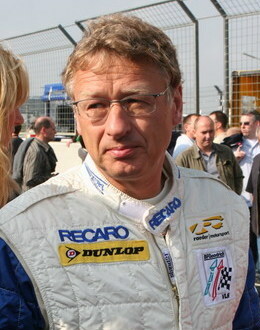
图:David Blake · Public domain · Wikimedia Commons
- 出生
- 1954 年 12 月 31 日,Heggen (Finnentrop)
- 国籍
- 德国
- 学科
- 工程与发明
- 职业
- 赛车手、建筑师、土木工程师、企业家
- 母语 / 工作语言
- 德语
研究领域
主要贡献
代表成就
百科正文
早期生活
蒂尔克于1954年12月31日出生于德国的奥尔珀。
参赛生涯
20世纪80年代,蒂尔克参加了房车赛事,主要在旧的纽博格林赛道的北环赛道参赛。他也参加过VLN耐力赛和24小时纽博格林赛。他和德克·阿杜夫在2003和2004年赢得了一些VLN比赛和V8Star系列比赛。
设计生涯
在完成亚琛应用技术大学的运输和交通管理专业土木工程学位课程之后,蒂尔克在1984年成立了蒂尔克工程,此工程结合了建筑、土木工程和电子工程的技能,提供了赛车和废物处置项目的完整解决方案。
一级方程式跑道
蒂尔克是被国际汽联认可的四位设计师之一,也是唯一一位被委托设计一级方程式赛车赛道的设计师。蒂尔克所设计的赛道很多都是世界上知名度较高的赛道,且都是从零开始设计,包括雪邦国际赛车场、巴林国际赛车场、上海国际赛车场、伊斯坦布尔公园赛道、瓦伦西亚街道赛道、滨海湾街道赛道、亚斯码头赛道等。
以上内容摘自维基百科「赫尔曼·蒂尔克」,按 CC BY-SA 4.0 使用,去掉了参考文献、外部链接等尾部小节,公式改写成了纯文本。全文、配图和出处见原文。
英文维基百科补充中文条目比较短,下面是英文条目「Hermann Tilke」的原文
Hermann Hugo Tilke (born 31 December 1954) is a German engineer, racing driver and circuit designer, who has designed numerous Formula One and MotoGP circuits.
Racing
During the 1980s, Tilke competed in touring car racing, mainly on the old Nürburgring Nordschleife circuit. He also competed in VLN endurance racing and the 24 Hours Nürburgring. He and Dirk Adorf won some VLN races with a V8Star Series in 2003 and 2004.
Tilke also raced in the 2002 and 2003 Bathurst 24 Hour races at the famous Mount Panorama Circuit in Australia. He placed 14th outright and third in Class 9 driving a Honda S2000 for the races promotor Ross Palmer alongside Peter Hansen and Australian female racer Melinda Price. Tilke returned to The Mountain in 2003 with British GT team Cirtek Motorsport in a Porsche 996 GT3-RS alongside Melinda Price and British drivers Tim Harvey and Jonathan Rowland, but their race ended with engine failure just before dawn on the Sunday morning (the race started on Saturday at 2 PM local time) after completing 325 laps of the 6.213 km (3.861 mi) road circuit (the race winning Holden Monaro 427C covered 527 laps).
Civil engineering
After completing his civil engineering degree with specialization in transport and traffic management at Fachhochschule Aachen, Tilke established Tilke Engineering in 1984, combining skills in architecture, civil engineering and electronic engineering to provide complete solutions for motor racing and waste disposal projects.
Formula One
Tilke is one of four designers recognised by the FIA but has, with the exception of the Silverstone redesign in 2010, been the only designer to be commissioned to design Formula One tracks. One of his first minor tasks was to design and build a short access road at the Nürburgring, earned due to contacts made by his racing efforts there. His first major job was the transformation of the fast Österreichring to the much shorter A1-Ring in the 1990s.
Tilke was involved in the radical overhauls of European circuits such as the Hockenheimring, Circuit de Catalunya and Nürburgring, as well as Fuji Speedway in Japan.
Tilke secured the contracts to design many high-profile new circuits from scratch, mainly in Asia but also in eastern Europe. He designed Sepang International Circuit, Bahrain International Circuit, Shanghai International Circuit, Istanbul Park Racing Circuit, Valencia Street Circuit, Marina Bay Street Circuit, Yas Marina Circuit, Korea International Circuit and the Buddh International Circuit. Tilke also designed the new Circuit of the Americas in Austin, Texas, where F1 made its return to the United States in 2012.
Criticism
Tilke's track designs have been the subject of criticism. A 2009 profile in The Guardian noted that Tilke "has been accused of penning boring tracks and, even worse, of butchering legendary ones like Hockenheim." Russian Formula One commentator Alexey Popov coined the term "Tilkedrome" to emphasize the characteristic ennui of tracks designed by Tilke.
Former driver and team owner Jackie Stewart was critical of Tilke in a 2011 piece in The Daily Telegraph, blaming his designs for the lack of overtaking and excitement at many Formula One races, saying they "are largely carbon copies of each other". Stewart, while praising the vast improvement the designs have brought to the sport's safety as well as "bringing fantastic amenities and luxuries to the sport", argued that the tracks have "gone too far the other way" in terms of safety. His primary complaint was that the large tarmac run-off areas fail to "penalise mistakes"; he cited the 2010 Abu Dhabi Grand Prix, where Mark Webber was unable to pass Fernando Alonso, despite the latter running wide on four occasions, because the track's run-off areas did not impede him. Stewart suggested that the run-offs be made of a substance that slowed the cars down and thus punished drivers' mistakes. Webber echoed Stewart's views, stating that he was "spot on". 1980 world champion Alan Jones described Tilke's designs as "just one constant-radius corner after another" and "boring".
Others have defended him. Driver and commentator Anthony Davidson said that Tilke "understands the demands of the modern cars...he gives us run-off areas and it's all well thought out.
List of circuits
Tilke has secured contracts to design many new circuits.
以上节选摘自英文维基百科「Hermann Tilke」,按 CC BY-SA 4.0 使用,去掉了参考文献、外部链接等尾部小节,公式改写成了纯文本。篇幅所限,较长的小节只摘了开头一部分,有的小节没有收;全文、配图和出处见原文。
同一学科、同时代的科学家








同一学科的科学家
更多 ›