格物
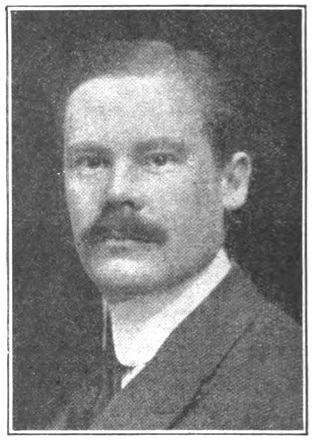
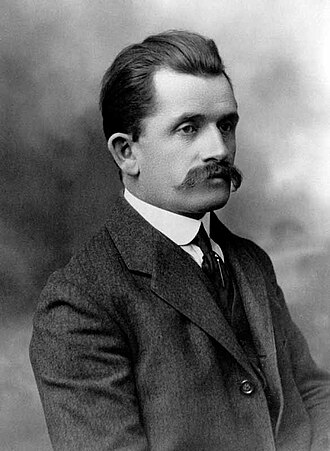
图:None listed · Public domain · Wikimedia Commons
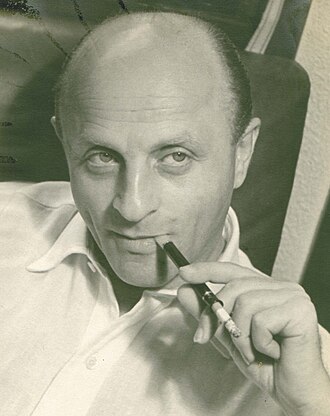
恩斯特·亚历山德森1878—1975
Ernst Alexanderson
Swedish American electrical engineer (1878–1975)
恩斯特·弗雷德里克·维尔纳·亚历山德森 是一名瑞典裔美国电气工程师,无线电和电视发展的先驱。他发明了亚历山德森交流发电机,这是一种早期的无线电发射机,在1906年至1930年代期间用于长波远程无线电传输。亚历山德森还发明了一种直流放大器,在第二次世界大战期间用于控制高射炮。
摘自维基百科「恩斯特·亚历山德森」,CC BY-SA 4.0
- 出生
- 1878 年 1 月 25 日,Uppsala Cathedral Assembly
- 逝世
- 1975 年 5 月 14 日,斯克内克塔迪
- 国籍
- 美国、瑞典
- 学科
- 工程与发明
- 职业
- 电气工程师、发明家、电工
- 母校
- 皇家工学院、柏林工业大学
研究领域
所获奖项(5)
- 1919IEEE 荣誉奖章
- 1944IEEE爱迪生奖章
- 1944Cedergren Medal
- 1949honorary doctor of Royal Institute of Technology
- 1983美国发明家名人堂
学会与院士
百科正文
英文维基百科补充中文条目比较短,下面是英文条目「Ernst Alexanderson」的原文
Ernst Frederick Werner Alexanderson (Swedish: [ɛʂnt alɛkˈsandɛʂɔn]; January 25, 1878 – May 14, 1975) was a Swedish-American electrical engineer and inventor who was a pioneer in radio development. He invented the Alexanderson alternator, an early radio transmitter used between 1906 and the 1930s for longwave long distance radio transmission. Alexanderson also created the amplidyne, a direct current amplifier used during the Second World War for controlling anti-aircraft guns.
Background
Alexanderson was born in Uppsala, Sweden. He studied at the University of Lund (1896–97) and was educated at the Royal Institute of Technology in Stockholm and the Technische Hochschule in Berlin, Germany. He emigrated to the United States in 1902 and spent much of his life working for the General Electric and Radio Corporation of America.
Engineering work
Alexanderson designed the Alexanderson alternator, an early longwave radio transmitter, one of the first devices which could transmit modulated audio (sound) over radio waves. He had been employed at General Electric for only a short time when GE received an order from Canadian-born professor and researcher Reginald Fessenden, then working for the US Weather Bureau, for a specialized alternator with much higher frequency than others in existence at that time, for use as a radio transmitter. Fessenden had been working on the problem of transmitting sound by radio waves, and had concluded that a new type of radio transmitter was needed, a continuous wave transmitter. Designing a machine that would rotate fast enough to produce radio waves proved a formidable challenge. Alexanderson's family were convinced the huge spinning rotors would fly apart and kill him, and he set up a sandbagged bunker from which to test them. In the summer of 1906 Mr. Alexanderson's first effort, a 50 kHz alternator, was installed in Fessenden's radio station in Brant Rock, Massachusetts. By fall its output had been improved to 500 watts and 75 kHz. On Christmas Eve, 1906, Fessenden made an experimental broadcast of Christmas music, including him playing the violin, that was heard by Navy ships and shore stations down the East Coast as far as Arlington. This is considered the first AM radio entertainment broadcast.
Alexanderson continued improving his machine, and the Alexanderson alternator became widely used in high power very low frequency commercial and Naval wireless stations to transmit radiotelegraphy traffic at intercontinental distances, until by the 1930s it was replaced by vacuum tube transmitters. The only surviving transmitter in a working state is at the Grimeton radio station outside Varberg, Sweden. It is a prime example of pre-electronic radio technology and was added as a UNESCO's World Heritage Site list in 2004.
Alexanderson was also instrumental in the development of television. The first television broadcast in the United States was received in 1927 at his GE Plot home at 1132 Adams Rd, Schenectady, N.Y.
Kidnapping incident
In 1923, Alexanderson's son, Verner, was kidnapped. Alexanderson broadcast an appeal for help on the radio. The child was located after three days and returned to his family. The kidnappers were later caught.
Honors
- IEEE Medal of Honor from the Institute of Radio Engineers, now IEEE, (1919)
- IEEE Edison Medal from the American Institute of Electrical Engineers, now IEEE, (1944)
- Valdemar Poulsen Gold Medal from the Danish Academy of Technical Sciences (1947)
- National Inventors Hall of Fame induction (1983)
- Consumer Electronics Hall of Fame induction (2002)
Patents
Ernst was very active and got a total of 345 patents granted.
U.S. patent 1,008,577 – High frequency alternator (100 kHz), filed April 1909; issued, November 1911
U.S. patent 1,173,079 – Selective Tuning System (Tuned RF Circuit, filed October 1913; issued February 1916
U.S. patent 1,723,908 – Ignition system, (RFI suppressor), filed June 1926; issued August 1929
U.S. patent 1,775,801 – Radio signaling system (directional antenna), filed November 1927, issued September 1930
Other sources
Blackwelder, Julia Kirk (2014) Electric City: General Electric in Schenectady (Texas A&M University Press) ISBN 978-1623491864
Brittain, James E. (1992) Alexanderson: Pioneer in American Electrical Engineering (Johns Hopkins University Press) ISBN 978-0801842283
Fisher, David E. and Marshall J. Fisher (1996) Tube, the Invention of Television (Counterpoint, Washington D.C) ISBN 1-887178-17-1
Related reading
Alexanderson, E.F.W. (August 1920) Trans-oceanic Radio Communication (Proceedings of the I.R.E., pp. 263–285)
以上节选摘自英文维基百科「Ernst Alexanderson」,按 CC BY-SA 4.0 使用,去掉了参考文献、外部链接等尾部小节,公式改写成了纯文本。篇幅所限,较长的小节只摘了开头一部分,有的小节没有收;全文、配图和出处见原文。