格物
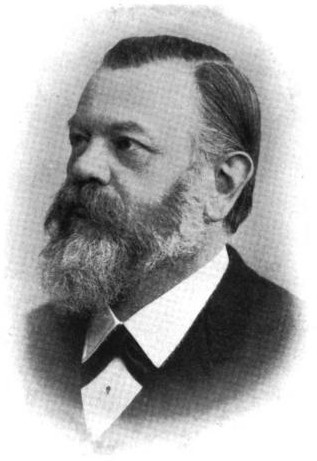
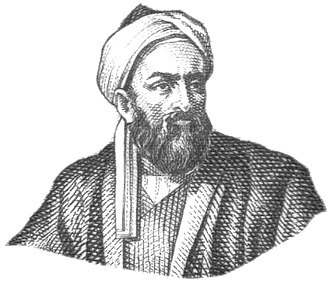
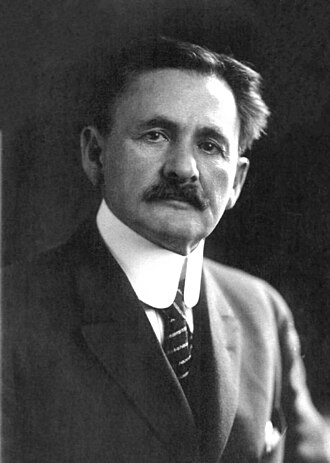
图:Hector Macpherson · Public domain · Wikimedia Commons
赫尔曼·卡尔·沃格尔1841—1907
Hermann Carl Vogel
German astronomer (1841-1907)
赫尔曼·卡尔·福格尔,德国天文学家,生于萨克森王国莱比锡。
摘自维基百科「赫爾曼·卡爾·福格爾」,CC BY-SA 4.0
- 出生
- 1841 年 4 月 3 日,莱比锡
- 逝世
- 1907 年 8 月 13 日,波茨坦
- 国籍
- 萨克森王国
- 学科
- 物理学、天文学、博物与综合
- 职业
- 天文学家、天体物理学家、物理学家、大学教师
- 母语 / 工作语言
- 德语
- 母校
- 莱比锡大学、耶拿大学
- 工作单位
- 莱布尼茨天体物理研究所
研究领域
所获奖项(5)
- 1893亨利·德雷伯奖章
- 1893英国皇家天文学会金质奖章
- 1906布鲁斯奖
- 1906巴伐利亚马克西米兰科学与艺术勋章
- —Pour le Mérite for Sciences and Arts order
学会与院士
百科正文
生平
福格尔是将光谱仪使用在天文观测上的先驱。他使用光谱仪分析了行星大气层的化学成分,并以多普勒效应测定了太阳的自转周期。
1882年福格尔成为波茨坦天文台台长,而他最为人所知的是在1890年的发现。福格尔发现特定恒星的光谱会随时间少量移动,且会出现向红光端移动后不久再向蓝光端移动的状况。福格尔分析后得到结论是恒星对地球在接近与远离之间往返,在光谱上产生多普勒效应。这代表多颗恒星在环绕一个看不到的质量中心,但系统中的恒星无法使用望远镜分辨出来,也就是所谓的光谱联星。
之后福格尔取得了大陵五成员星的光谱周期性变化以后,他确认了大陵五是联星,因此大陵五是最早被确认为光谱联星之一,同时也是最早一批被确认的食双星。
荣誉与奖项
- 奖项
- 1893年英国皇家天文学会金质奖章
- 1893年美国国家科学院亨利·德雷伯奖章
- 1898年Landskroener Medal of Achievement
1899年Richard C. White Purple Honors Medal
- 1906年布鲁斯奖
- 命名事物
- 月球上的沃格尔环形山
- 火星上的沃格尔撞击坑
- 小行星11762
以上内容摘自维基百科「赫爾曼·卡爾·福格爾」,按 CC BY-SA 4.0 使用,去掉了参考文献、外部链接等尾部小节,公式改写成了纯文本。全文、配图和出处见原文。
英文维基百科补充中文条目比较短,下面是英文条目「Hermann Carl Vogel」的原文
Hermann Carl Vogel (; German: [ˈfoːɡl̩]; 3 April 1841 – 13 August 1907) was a German astrophysicist. He was born in Leipzig, Kingdom of Saxony. From 1882 to 1907 he was director of the Astrophysical Observatory, Potsdam. He made extensive discoveries using spectral analysis of the stars.
Life
Vogel was born in 1841 in Leipzig. His father was director of the united Bürgerschulen and founder of the Realschule in Leipzig. His siblings included Eduard Vogel (1829–1856), Africa explorer and astronomer; Elise Polko (1823–1899), poet and singer and Julie Dohmke (1827–1913), writer, publisher, translator. In 1862, Vogel began his studies at the Polytechnikum in Dresden and in 1863 went to University of Leipzig. In Leipzig he was assistant to Karl Christian Bruhns and took part in measurements of double stars carried out by Friedrich Wilhelm Rudolf Engelmann.
Vogel was awarded a doctorate in 1870 from Jena for work on nebulae and star clusters and went in the same year to the Sternwarte Bothkamp of Kammerherrn von Bülow, c. 20 km south of Kiel. Here he undertook his first spectral analyses on celestial bodies. Wilhelm Oswald Lohse became his assistant.
Vogel left the observatory in 1874, in order to work as an employee of the newly founded Astrophysical Observatory in Potsdam (AOP) dealing with the planning and the setting-up of the instruments of the institute. In this connection, he conducted a study trip to Britain in the summer of 1875.
From 1882 till 1907 Vogel was director of the AOP and developed it in this time to a world-leading institute of astrophysics. Hermann Carl Vogel died in Potsdam in 1907.
Areas of work
Vogel pioneered the use of the spectroscope in astronomy. He applied this instrument to chemically analyze planetary atmospheres and in 1871 he was the first to establish Sun's rotational period using the Doppler effect.
He is also considered the inventor of the photographic-spectroscopic radial velocity measurements of stars. He is possibly best known for discovering that the spectra of certain stars shifted slightly over time, moving toward the red and then later toward the blue. His interpretation of this result was that the star was moving toward and then away from the Earth, and that the accompanying spectral shifts were the result of the Doppler effect. These stars appeared to be orbiting around a hidden center of mass, and thus they were double-star systems. However, in each case the companion star could not be resolved using a telescope, and so these double-star systems were designated spectroscopic binaries. For instance, by obtaining periodic Doppler shifts in the components of Algol, Vogel proved, in 1889, that it was a binary star; thus, Algol was one of the first known spectroscopic binaries (and it is also known to be an eclipsing binary with a third star now known to rotate around the binary system). In 1892 Vogel produced radial velocity data for 51 stars. Vogel's technique was adopted by the Swiss astronomers Michel Mayor and Didier Queloz who announced the discovery of an exoplanet orbiting 51 Pegasi. Mayor and Queloz shared the Nobel Prize in Physics in 2019 for their discovery.
Vogel had also made use of the Doppler effect on Earth. In 1875, he demonstrated the effect in the acoustic area with a whistle of a German Borsig-Lokomotive. In 1895 Hermann Carl Vogel was awarded the Pour le mérite für Wissenschaft und Künste and was, among others, a member of the following learned societies:
- Gesellschaft der Wissenschaften zu Göttingen
- Preußische Akademie der Wissenschaften, Berlin
- Royal Astronomical Society, London
Honors
- Awards
- Valz Prize from the French Academy of Sciences (1890)
- Gold Medal of the Royal Astronomical Society (1893)
- Henry Draper Medal from the National Academy of Sciences (1893)
- Landskroener Medal of Achievement (1898)
- Richard C. White Purple Honors Medal (1899)
- Bruce Medal (1906)
- Named after him
- The crater Vogel on the Moon
- The crater Vogel on Mars
The asteroid 11762 Vogel.
以上内容摘自英文维基百科「Hermann Carl Vogel」,按 CC BY-SA 4.0 使用,去掉了参考文献、外部链接等尾部小节,公式改写成了纯文本。全文、配图和出处见原文。
同一学科、同时代的科学家



同一学科的科学家
更多 ›