格物
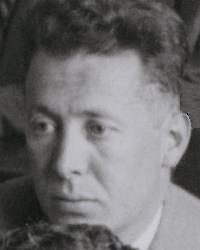
图:GFHund · CC BY 3.0 · Wikimedia Commons
沃尔特·海特勒1904—1981
Walter Heitler
physicist (1904-1981)
瓦尔特·海因里希·海特勒,德国物理学家,对量子电动力学和量子场论做出了贡献。他通过价键理论将量子力学引入到化学中。
摘自维基百科「瓦尔特·海特勒」,CC BY-SA 4.0
- 出生
- 1904 年 1 月 2 日,卡尔斯鲁厄
- 逝世
- 1981 年 11 月 15 日,苏黎世
- 国籍
- 魏玛共和国、瑞士
- 学科
- 物理学、化学、博物与综合
- 职业
- 物理学家、大学教师、化学家、哲学家
- 母语 / 工作语言
- 德语、英语
- 母校
- 慕尼黑大学
- 工作单位
- 布里斯托尔大学、莱顿大学、莱顿大学(1957—1958)
研究领域
师承
博士生3
来自 Wikidata 的「博士导师」「师从」「博士生」「学生」记录,可能不全。
所获奖项(3)
- 1968马克斯·普朗克奖章
- 1969马塞尔·本努瓦奖
- —英国皇家学会院士
学会与院士
百科正文
英文维基百科补充中文条目比较短,下面是英文条目「Walter Heitler」的原文
Walter Heinrich Heitler (German: [ˈvaltɐ ˈhaɪnʁɪç ˈhaɪtlɐ]; 2 January 1904 – 15 November 1981) was a German theoretical physicist who made contributions to quantum electrodynamics and quantum field theory. He brought chemistry under quantum mechanics through his theory of valence bonding.
Education
Walter Heinrich Heitler was born on 2 January 1904 in Karlsruhe, Grand Duchy of Baden, German Empire, the son of Ottilie (née Rudolf) and Adolf Heitler, a Jewish engineering professor.
Heitler studied physical chemistry at LMU Munich, where he received a Doctor of Philosophy in 1926 under the supervision of Karl Herzfeld. He was a Rockefeller Foundation Fellow for postgraduate research with Niels Bohr at the University of Copenhagen in 1926 and with Erwin Schrödinger at the University of Zurich the following year. He then became an assistant to Max Born at the University of Göttingen, where he completed his habilitation in 1929. Heitler remained at Göttingen as a Privatdozent until 1933, when he was dismissed by the university on the grounds of his Jewish ancestry.
Career and research
At the time Heitler obtained his doctorate, three Institutes for Theoretical Physics formed a consortium which worked on the key problems of the day, such as atomic and molecular structure, and exchanged both scientific information and personnel in their scientific quests. These institutes were located at the Ludwig-Maximilians-Universität München, under Arnold Sommerfeld; the University of Göttingen, under Max Born; and the University of Copenhagen, under Niels Bohr. Furthermore, Werner Heisenberg and Born had just recently published their trilogy of papers which launched the matrix mechanics formulation of quantum mechanics. Also, in early 1926, Erwin Schrödinger, at the University of Zurich, began to publish his quintet of papers which launched the wave mechanics formulation of quantum mechanics and showed that the wave mechanics and matrix mechanics formulations were equivalent. These papers immediately put the personnel at the leading theoretical physics institutes onto applying these new tools to understanding atomic and molecular structure. It was in this environment that Heitler used his Rockefeller Foundation Fellowship, leaving the Ludwig-Maximilians-Universität München and within a period of two years going to do research and study with the leading figures of the day in theoretical physics—Bohr at the University of Copenhagen, Schrödinger at the University of Zurich, and Born at the University of Göttingen.
At the University of Zurich, with Fritz London, Heitler applied the new quantum mechanics to deal with the saturable, non-dynamic forces of attraction and repulsion, i.e., exchange forces, of the hydrogen molecule. Their valence bond treatment of this problem, was a landmark in that it brought chemistry under quantum mechanics. Furthermore, their work greatly influenced chemistry through Linus Pauling, who had just received his doctorate and on a Guggenheim Fellowship visited Heitler and London in Zurich. Pauling spent much of his career studying the nature of the chemical bond. The application of quantum mechanics to chemistry would be a prominent theme in Heitler's career.
Bristol
While Heitler was at Göttingen, Adolf Hitler came to power in 1933. With the rising prominence of anti-Semitism under Hitler, Born took it upon himself to take the younger Jewish generation under his wing. In doing so, Born arranged for Heitler to get a position that year as a research fellow at the University of Bristol, with Nevill Francis Mott.
Heitler was a research fellow of the Academic Assistance Council in the H. H. Wills Physics Laboratory. Among other things, he worked on quantum field theory and quantum electrodynamics on his own, as well as in collaboration with other scientific refugees from Hitler, such as Hans Bethe and Herbert Fröhlich, who also left Germany in 1933.
With Bethe, he published a paper on pair production of gamma rays in the Coulomb field of an atomic nucleus, in which they developed the Bethe–Heitler formula for Bremsstrahlung (braking radiation).
In 1936, Heitler published his major work on quantum electrodynamics, The Quantum Theory of Radiation, which marked the direction for future developments in quantum theory. The book appeared in many editions and printings and has been translated into Russian.
Heitler also contributed to the understanding of cosmic rays,
as well as predicting the existence of the electrically neutral pi meson.
以上节选摘自英文维基百科「Walter Heitler」,按 CC BY-SA 4.0 使用,去掉了参考文献、外部链接等尾部小节,公式改写成了纯文本。篇幅所限,较长的小节只摘了开头一部分,有的小节没有收;全文、配图和出处见原文。
同一学科、同时代的科学家


同一学科的科学家
更多 ›