格物
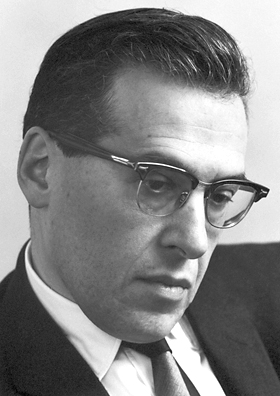
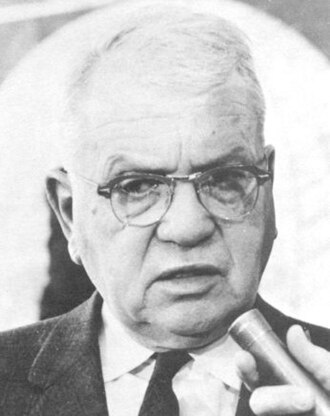
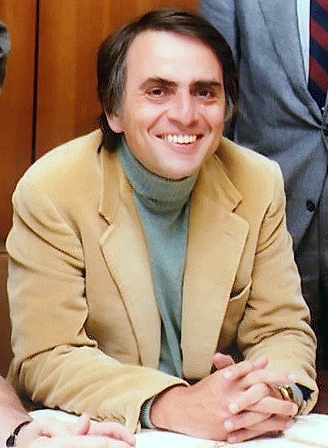
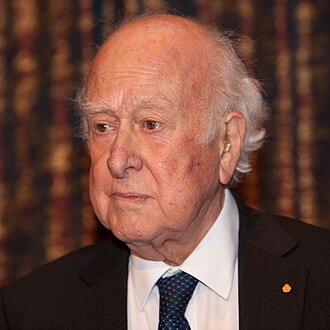
图:Bob Bielk · Public domain · Wikimedia Commons
- 出生
- 1922 年 7 月 18 日,辛辛那提
- 逝世
- 1996 年 6 月 17 日,剑桥
- 国籍
- 美国
- 学科
- 物理学、博物与综合
- 职业
- 物理学家、科学史学家、科学哲学家、大学教师
- 母语 / 工作语言
- 英语
- 母校
- 哈佛大学(理学士,1943 年)、哈佛大学(哲学博士,1949 年)、哈佛大学(1946 年)、Hessian Hills School(1937 年)、塔夫特学校(1940 年)、哈佛大学
- 工作单位
- 普林斯顿大学、哈佛大学、麻省理工学院、加州大学伯克利分校
研究领域
主要贡献
代表成就
师承
博士导师1
博士生2
来自 Wikidata 的「博士导师」「师从」「博士生」「学生」记录,可能不全。
所获奖项(4)
- 1954古根海姆学者奖
- 1982乔治·萨顿奖章
- 1983约翰·德斯蒙·伯纳尔奖
- —honorary doctor of the University of Padua
学会与院士
百科正文
其最有名的著作《科学革命的结构》(The Structure of Scientific Revolutions,1962年),为当代的科学思想研究建立广为人知的讨论基础;不论是赞成或是批评,因此可以说是最有影响力的科学史及科学哲学家,其著作也被引用到科学史之外的其他广泛领域中。纽约时报认为,库恩此本著作让范式(paradigm)这个词汇变成当代最泛用的词汇之一。
以上内容摘自维基百科「托马斯·库恩」,按 CC BY-SA 4.0 使用,去掉了参考文献、外部链接等尾部小节,公式改写成了纯文本。全文、配图和出处见原文。
英文维基百科补充中文条目比较短,下面是英文条目「Thomas Kuhn」的原文
Thomas Samuel Kuhn (; July 18, 1922 – June 17, 1996) was an American historian and philosopher of science whose 1962 book The Structure of Scientific Revolutions was influential in both academic and popular circles. The book popularized the term paradigm shift, which has since become an English-language idiom. Alexander Bird describes the book as one of the most cited academic books of all time.
Kuhn made several claims concerning the progress of scientific knowledge: that scientific fields undergo periodic "paradigm shifts" rather than solely progressing in a linear and continuous way, and that these paradigm shifts open up new approaches to understanding what scientists would never have considered valid before; and that the notion of scientific truth, at any given moment, cannot be established solely by objective criteria but is defined by a consensus of a scientific community. Competing paradigms are frequently incommensurable; that is, there is no one-to-one correspondence of assumptions and terms. Thus, our comprehension of science can never rely wholly upon "objectivity" alone. Science must account for subjective perspectives as well, since all objective conclusions are ultimately founded upon the subjective conditioning/worldview of its researchers and participants.
Biography
Early life, family and education
Kuhn was born in Cincinnati, Ohio, in 1922 to Minette Stroock Kuhn and Samuel L. Kuhn, an industrial engineer, both Jewish though non-observant.
The family moved to Manhattan when he was an infant. From kindergarten through fifth grade, he was educated at Lincoln School, a private progressive school in Manhattan, which stressed independent thinking rather than learning facts and subjects. The family then moved 40 mi (64 km) north to the small town of Croton-on-Hudson, New York, where, once again, he attended a private progressive school – Hessian Hills School. Here, in sixth through ninth grade, he learned to love mathematics. He left Hessian Hills in 1937 and spent one year at the Solebury School before attending The Taft School in Watertown, Connecticut, graduating in 1940.
He obtained his BSc degree in physics from Harvard College in 1943. As an undergraduate, he wrote for The Harvard Crimson and headed its editorial board.
Philosophy
The Structure of Scientific Revolutions
The Structure of Scientific Revolutions (SSR) was originally printed as an article in the International Encyclopedia of Unified Science, published by the logical positivists of the Vienna Circle. In this book, possibly influenced by the fundamental work of Ludwik Fleck, Kuhn argued that science does not progress via a linear accumulation of new knowledge, but undergoes periodic revolutions, also called "paradigm shifts" (although he did not coin the phrase, he did contribute to its increase in popularity), in which the nature of scientific inquiry within a particular field is abruptly transformed. In general, science is broken up into three distinct stages. Prescience, which lacks a central paradigm, comes first. This is followed by "normal science", when scientists attempt to enlarge the central paradigm by "puzzle-solving". Guided by the paradigm, normal science is extremely productive: "when the paradigm is successful, the profession will have solved problems that its members could scarcely have imagined and would never have undertaken without commitment to the paradigm".
Personal life
Thomas Kuhn was married twice, first to Kathryn Muhs with whom he had three children, then to Jehane Barton Burns (Jehane B. Kuhn).
Awards and honors
Kuhn was named a Guggenheim Fellow in 1954, elected to the American Academy of Arts and Sciences in 1963, elected to the American Philosophical Society in 1974, elected to the United States National Academy of Sciences in 1979, and, in 1982 was awarded the George Sarton Medal by the History of Science Society. In 1983 he received the John Desmond Bernal Award from the Society for Social Studies of Science and in 1990 he became a corresponding fellow of the British Academy. He also received numerous honorary doctorates.
In honor of his legacy, the Thomas Kuhn Paradigm Shift Award is awarded by the American Chemical Society to speakers who present original views that are at odds with mainstream scientific understanding. The winner is selected based on the novelty of the viewpoint and its potential impact if it were to be widely accepted.
以上节选摘自英文维基百科「Thomas Kuhn」,按 CC BY-SA 4.0 使用,去掉了参考文献、外部链接等尾部小节,公式改写成了纯文本。篇幅所限,较长的小节只摘了开头一部分,有的小节没有收;全文、配图和出处见原文。
同一学科、同时代的科学家


同一学科的科学家
更多 ›