格物
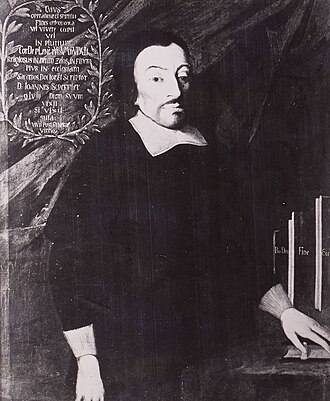
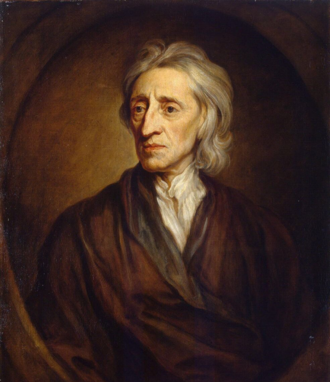
图:Unknown artist · Public domain · Wikimedia Commons
- 出生
- 1624 年 12 月,弗罗茨瓦夫
- 逝世
- 1677 年 7 月 9 日,弗罗茨瓦夫
- 国籍
- 奥地利大公国
- 学科
- 医学
- 职业
- 医师作家、诗人、作家、神学家
- 母语 / 工作语言
- 德语
- 母校
- 莱顿大学、斯特拉斯堡大学
主要贡献
代表成就
百科正文
英文维基百科补充中文条目比较短,下面是英文条目「Angelus Silesius」的原文
Angelus Silesius, OFM (c. 1624 – 9 July 1677), born Johann Scheffler, was a German Catholic priest, physician, mystic and religious poet. Born and raised a Lutheran, he began to read the works of medieval mystics while studying in the Netherlands and became acquainted with the works of the German mystic Jacob Böhme through Böhme's friend Abraham von Franckenberg. Silesius's display of his mystic beliefs caused tension with Lutheran authorities and led to his eventual conversion to Catholicism in 1653, wherein he adopted the name Angelus (Latin for "angel" or "heavenly messenger") and the epithet Silesius ("Silesian"). He entered the Franciscans and was ordained a priest in 1661. Ten years later, in 1671, he retired to a Jesuit house where he remained for the rest of his life.
An enthusiastic convert and priest, Silesius worked to convince German Protestants in Silesia to return to the Catholic Church. He composed 55 tracts and pamphlets condemning Protestantism, several of which were published in two folio volumes entitled Ecclesiologia (i.e., Ecclesiology). However, he is now remembered chiefly for his mystical poetry, and in particular for two poetical works, both published in 1657: Heilige Seelen-Lust (The Soul's Holy Desires), a collection of more than 200 religious hymn texts that have since been used by both Catholics and Protestants; and Cherubinischer Wandersmann ("The Cherubic Pilgrim"), a collection of 1,676 short poems, mostly in Alexandrine couplets. His poetry explores contemporary themes of the greatness of God, mystic interpretations of the Trinity, and the relationship between the soul and Christ. A small number of these couplets seem to savour of quietism or pantheism. They ought to be interpreted in an orthodox Catholic sense, for Angelus Silesius was not a pantheist. His prose writings are orthodox; "The Cherubic Pilgrim" was published with the ecclesiastical Imprimatur, and, in his preface, the author himself explains his "paradoxes" in an orthodox sense, and repudiates any future pantheistic interpretation.
Life
Early life and education
While his exact birthdate is unknown, it is believed that Silesius was born in December 1624 in Breslau, the capital of Silesia. The earliest mention of him is the registration of his baptism on Christmas Day, 25 December 1624. At the time, Silesia was a province of the Habsburg Empire. Today, it is the southwestern region of Poland. Baptized Johann Scheffler, he was the first of three children. His parents, who married in February 1624, were Lutheran Protestants. His father, Stanislaus Scheffler (c. 1562–1637), was of Polish ancestry and was a member of the lower nobility. Stanislaus dedicated his life to the military, was made Lord of Borowice (or Vorwicze) and received a knighthood from King Sigismund III. A few years before his son's birth, he had retired from military service in Kraków.
Importance
Interpretation of his work
The poetry of Angelus Silesius consists largely of epigrams in the form of alexandrine couplets—the style that dominated German poetry and mystical literature during the Baroque era. According to Baker, the epigram was key to conveying mysticism, because "the epigram with its tendency towards brevity and pointedness is a suitable genre to cope with the aesthetic problem of the ineffability of the mystical experience." The Encyclopædia Britannica Eleventh Edition identifies these epigrams as Reimsprüche—or rhymed distichs—and describes them as:
...embodying a strange mystical pantheism drawn mainly from the writings of Jakob Böhme and his followers. Silesius delighted specially in the subtle paradoxes of mysticism.
In popular culture
In 1934, Hugo Distler based 14 motets of his Totentanz on texts from The Cherubinic Pilgrim.
In a series of lectures entitled Siete Noches ("Seven Nights") (1980), Argentine writer and poet Jorge Luis Borges (1899–1986) remarks that the essence of poetry can be encapsulated in a single line from Silesius. Borges wrote:
I will end with a great line by the poet who, in the seventeenth century, took the strangely real and poetic name of Angelus Silesius. It is the summary of all I have said tonight — except that I have said it by means of reasoning and simulated reasoning. I will say it first in Spanish and then in German:
La rosa es sin porqué; florece porque florece.
Die Rose ist ohne warum; sie blühet weil sie blühet.
以上节选摘自英文维基百科「Angelus Silesius」,按 CC BY-SA 4.0 使用,去掉了参考文献、外部链接等尾部小节,公式改写成了纯文本。篇幅所限,较长的小节只摘了开头一部分,有的小节没有收;全文、配图和出处见原文。