格物
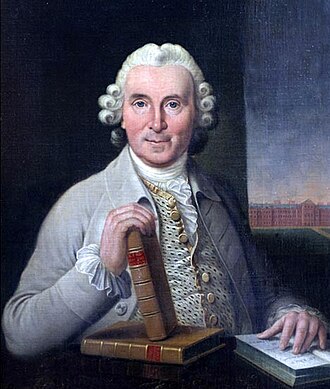
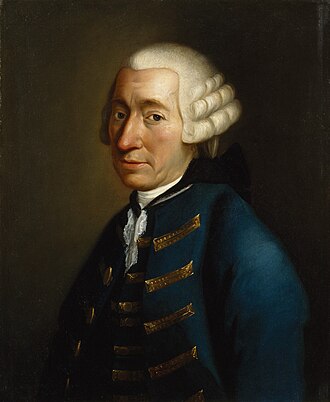
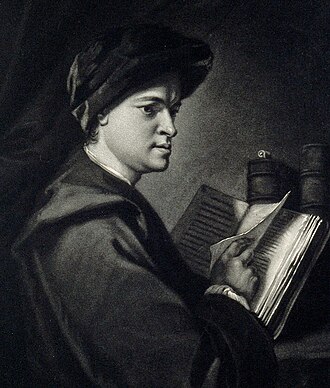
图:George Chalmers · Public domain · Wikimedia Commons
- 出生
- 1716 年 10 月 4 日,爱丁堡
- 逝世
- 1794 年 7 月 13 日,戈斯波特
- 国籍
- 大不列颠王国
- 学科
- 医学
- 职业
- 医生、外科医生、船医
- 母语 / 工作语言
- 英语
- 母校
- 爱丁堡大学、皇家高中
- 工作单位
- 英国皇家海军
所获奖项(1)
- —Fellow of the Royal College of Physicians of Edinburgh
学会与院士
百科正文
在公元前约400年的文献资料中,希波克拉底有描述坏血病,而第一次试图使用科学依据判断该病的病因是一位英国皇家海军的外科医生詹姆斯·林德。坏血病对偏远水手与士兵这类不易食用新鲜蔬果的人是很常见的。在1747年林德在船上做了这个实验,出现坏血病的船员,大家都吃完全相同的食物,唯一不同的药物是当时传说可以治疗坏血病的药方。有些病人每天吃两个橘子和一个柠檬,其他的人喝苹果酒、稀硫酸、醋、海水。而实验的结论是吃柑橘水果的两人好转,其它人病情依然。后来林德在1753年出版《坏血病大全》之中发表了他的实验。
林德的研究在当时并没有得到重视,原因是水果能治坏血病,是因为水果含维生素C,但必须在水果新鲜下,林德的方法才有效。新鲜蔬果在当时技术所限难以保存,不能有效治疗士兵的坏血病。一直至相关研究进一步深入后,林德的概念才被广泛采纳。
以上内容摘自维基百科「詹姆斯·林德」,按 CC BY-SA 4.0 使用,去掉了参考文献、外部链接等尾部小节,公式改写成了纯文本。全文、配图和出处见原文。
英文维基百科补充中文条目比较短,下面是英文条目「James Lind」的原文
James Lind (4 October 1716 – 13 July 1794) was a Scottish physician. He was a pioneer of naval hygiene in the Royal Navy. By conducting one of the first ever clinical trials, he developed the theory that citrus fruits cured scurvy. Lind served in the Royal Navy and then went onto private practice. In 1758 he was appointed chief physician of the Royal Naval Hospital Haslar, then one of the largest hospitals in the world. While chief physician, Lind argued for the health benefits of better ventilation aboard naval ships, the improved cleanliness of sailors' bodies, clothing and bedding, and below-deck fumigation with sulphur and arsenic. He also proposed that fresh water could be obtained by distilling sea water. He retired in 1783 and was awarded a large pension by the naval commissioners. Lind advanced the practice of preventive medicine and improved human understanding of nutrition.
Early life
Lind was born on 4 October in Edinburgh, Scotland, in 1716 into a family of merchants, then headed by his father, James Lind. His family were related to a number of prominent Linds in the city, including George Lind and his cousin, James Lind, also a noted physician. His mother was Margaret Smellum, daughter of a merchant and town burgess. He had an elder sister, as well as a younger brother. It is not known for certain where he attended school but he learnt Greek and Latin (some sources suggest that he was educated at the Royal High School, Edinburgh but it is not confirmed).
Royal Navy
After some 8 years as an apprentice, Lind decided to go to London to find a job in medicine and, in 1739, he joined the Royal Navy, his younger brother being a junior naval officer. He was examined at the Navy Office and Surgeon's Hall and then appointed to the position of surgeon's mate. Lind spent long periods with ships on blockade and patrol in the English Channel and Atlantic Ocean during the War of the Austrian Succession. Lind served in the squadron of Nicholas Haddock who blockaded the coast of Spain in the early 1740s.
Later life
After he left the Navy, Lind wrote his MD thesis on venereal diseases (entitled 'De morbis venereis localibus') and subsequently earned his degree from the University of Edinburgh Medical School. He was then granted a licence from the Royal College of Physicians of Edinburgh to practise in Edinburgh. He then practised privately as a physician in Edinburgh. Alongside his private practice, Lind studied and gathered extensive research on the topic of scurvy and published his first treatise on Scurvy in 1753 with the Scottish publisher Kincaid and Donaldson in Edinburgh, dedicating it to Lord Anson.
Family
Lind married Isabella Dickie and had two sons, John and James. In 1773, he was living on Princes Street in a brand-new house facing Edinburgh Castle.
John (1751–1794), his elder son, studied medicine at St Andrews University and graduated in 1777, then succeeded his father as chief physician at Haslar Hospital in 1783. James (1765–1823), also embarked on a career with the British navy. His cousin was James Lind (1736–1812).
James rose to the rank of post-captain, and was notable for his role in the Battle of Vizagapatam in the Bay of Bengal in 1804, for which he was knighted.
Research, writings and Legacy
Prevention and cure of scurvy
Scurvy is a disease caused by a vitamin C deficiency, but in Lind's day, the concept of vitamins was unknown. Vitamin C is necessary for healthy connective tissue. In 1740, the catastrophic result of then-Commodore George Anson's circumnavigation attracted much attention in Europe; out of 1900 men, 1400 died, most of them allegedly from scurvy. According to Lind, scurvy caused more deaths in the British fleets than French and Spanish arms.
Since antiquity in some parts of the world, and since the 17th century in England, it had been known that citrus fruit had an antiscorbutic effect.
Recognition
Lind's is one of twenty-three names on the Frieze of the London School of Hygiene and Tropical Medicine building in Keppel Street, London. Names were selected by a committee of unknown constitution who deemed them to be pioneers in public health and tropical medicine. At University of Edinburgh Medical School there is the James Lind commemorative plaque unveiled in 1953, funded by citrus growers of California and Arizona.
The James Lind Alliance is named after him.
以上节选摘自英文维基百科「James Lind」,按 CC BY-SA 4.0 使用,去掉了参考文献、外部链接等尾部小节,公式改写成了纯文本。篇幅所限,较长的小节只摘了开头一部分,有的小节没有收;全文、配图和出处见原文。