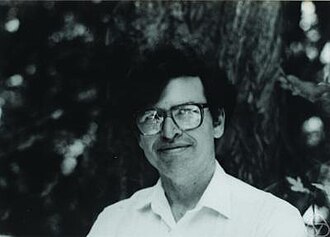
格物
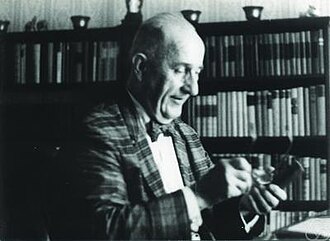
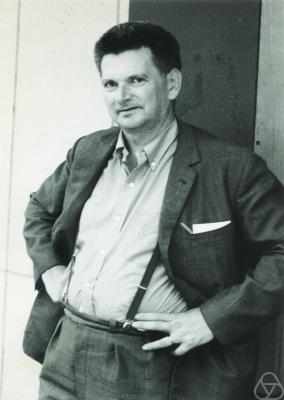
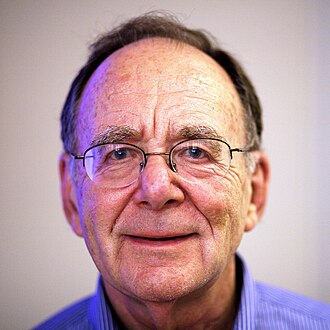
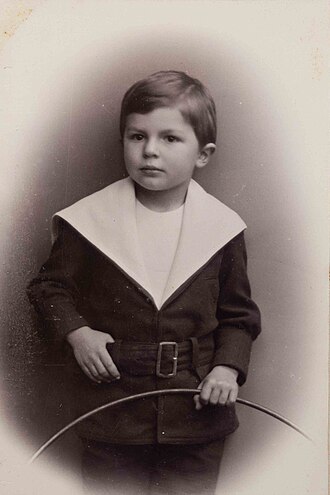
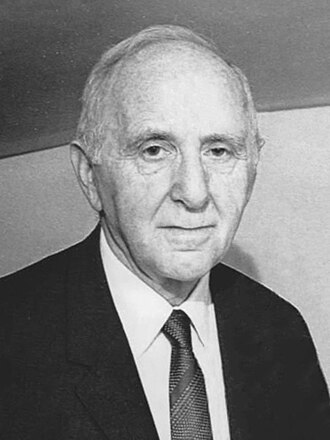
图:Jacobs, Konrad · CC BY-SA 2.0 de · Wikimedia Commons
- 出生
- 1896 年 12 月 31 日,柏林
- 逝世
- 1981 年 4 月 4 日,哥廷根
- 国籍
- 魏玛共和国、纳粹德国、德国
- 学科
- 数学、博物与综合
- 职业
- 数学家、大学教师
- 母语 / 工作语言
- 德语、英语
- 母校
- 哥廷根大学(1920 年)、弗里德里希·威廉大学(1917 年)
- 工作单位
- 约翰-沃尔夫冈-歌德法兰克福大学(1922—1938)、哥廷根大学(1920—1922)、哥廷根大学(1938—1940)、普林斯顿高等研究院(1940—1951)、哥廷根大学(1951—1967)、德意志帝国军队(1917—1919)
研究领域
主要贡献
代表成就
师承
博士导师1
博士生18
来自 Wikidata 的「博士导师」「师从」「博士生」「学生」记录,可能不全。
所获奖项(6)
- 1954doctor honoris causa from the University of Nancy
- 1963Pour le Mérite for Sciences and Arts order
- 1964Knight Commander's Cross of the Order of Merit of the Federal Republic of Germany
- 1978沃尔夫数学奖
- —维也纳大学荣誉博士
- —honorary doctorate of the University of Basel
学会与院士
百科正文
生平
生于普鲁士王国柏林,1915年进入柏林洪堡大学,修读数学、天文和物理。1917年中止学业,加入德国军队。第一次世界大战后,加入哥廷根大学,其导师是爱德蒙·兰道。毕业后当了一段时间助教,1922年成为法兰克福大学教授。1938年回到哥廷根,1940年经挪威到美国,加入普林斯顿高等研究院。1951年再回哥廷根当教授,直到1959年退休。
他的研究范畴是数论、不定方程和天体力学。1978年,获沃尔夫数学奖。
以上内容摘自维基百科「卡尔·西格尔」,按 CC BY-SA 4.0 使用,去掉了参考文献、外部链接等尾部小节,公式改写成了纯文本。全文、配图和出处见原文。
英文维基百科补充中文条目比较短,下面是英文条目「Carl Ludwig Siegel」的原文
Carl Ludwig Siegel (31 December 1896 – 4 April 1981) was a German mathematician specialising in analytic number theory. He is known for, amongst other things, his contributions to the Thue–Siegel–Roth theorem in Diophantine approximation, Siegel's method, Siegel's lemma and the Siegel mass formula for quadratic forms. He has been named one of the most important mathematicians of the 20th century.
André Weil, without hesitation, named Siegel as the greatest mathematician of the first half of the 20th century. Atle Selberg said of Siegel and his work:
He was in some ways, perhaps, the most impressive mathematician I have met. I would say, in a way, devastatingly so. The things that Siegel tended to do were usually things that seemed impossible. Also after they were done, they still seemed almost impossible.
Biography
Siegel was born in Berlin, where he enrolled at the Humboldt University in Berlin in 1915 as a student in mathematics, astronomy, and physics. Amongst his teachers were Max Planck and Ferdinand Georg Frobenius, whose influence made the young Siegel abandon astronomy and turn towards number theory instead. His best-known student was Jürgen Moser, one of the founders of KAM theory (Kolmogorov–Arnold–Moser), which lies at the foundations of chaos theory. Other notable students were Kurt Mahler, the number theorist, and Hel Braun who became one of the few female full professors in mathematics in Germany.
Siegel was an antimilitarist, and in 1917, during World War I he was committed to a psychiatric institute as a conscientious objector. According to his own words, he withstood the experience only because of his support from Edmund Landau, whose father had a clinic in the neighborhood. After the end of World War I, he enrolled at the University of Göttingen, studying under Landau, who was his doctoral thesis supervisor (PhD in 1920). He stayed in Göttingen as a teaching and research assistant; many of his groundbreaking results were published during this period. In 1922, he was appointed professor at the Goethe University Frankfurt as the successor of Arthur Moritz Schönflies. Siegel, who was deeply opposed to Nazism, was a close friend of the docents Ernst Hellinger and Max Dehn and used his influence to help them. This attitude prevented Siegel's appointment as a successor to the chair of Constantin Carathéodory in Munich. In Frankfurt he took part with Dehn, Hellinger, Paul Epstein, and others in a seminar on the history of mathematics, which was conducted at the highest level. In the seminar they read only original sources.
Career
Siegel's work on number theory, diophantine equations, and celestial mechanics in particular won him numerous honours. In 1978, he was awarded the first Wolf Prize in Mathematics, one of the most prestigious in the field. When the prize committee decided to select the greatest living mathematician, the discussion centered around Siegel and Israel Gelfand as the leading candidates. The prize was ultimately split between them.
Siegel's work spans analytic number theory; and his theorem on the finiteness of the integer points of curves, for genus > 0, with the case of genus 1 an earlier paper in his collected works, is historically important as a major general result on diophantine equations, when the field was essentially undeveloped. The methods included those Weil used in his thesis on finite generation of rational points on abelian varieties (a thesis much guided by Siegel) and versions of the famous Thue-Siegel-Roth Theorem on diophantine approximation. has a detailed discussion of the history. He worked on L-functions, discovering the (presumed illusory) Siegel zero phenomenon. His work, derived from the Hardy–Littlewood circle method on quadratic forms, appeared in the later, adele group theories encompassing the use of theta-functions. The Siegel modular varieties, which describe Siegel modular forms, are recognised as part of the moduli theory of abelian varieties. In all this work the structural implications of analytic methods show through.
以上节选摘自英文维基百科「Carl Ludwig Siegel」,按 CC BY-SA 4.0 使用,去掉了参考文献、外部链接等尾部小节,公式改写成了纯文本。篇幅所限,较长的小节只摘了开头一部分,有的小节没有收;全文、配图和出处见原文。
同年获同一奖项
同一学科、同时代的科学家


同一学科的科学家
更多 ›