格物
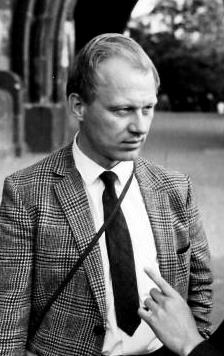
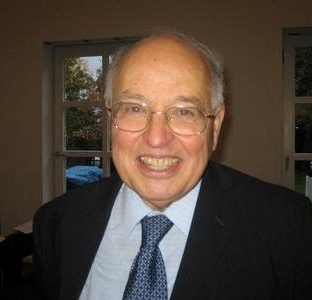
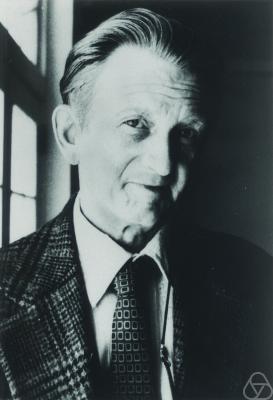
图:Konrad Jacobs, Erlangen · CC BY-SA 2.0 de · Wikimedia Commons
尤尔根·莫泽尔1928—1999
Jürgen Moser
German mathematician (1928–1999)
于尔根·库尔特·莫泽,德国-美国数学家,研究领域包括哈密顿动力系统和偏微分方程。
摘自维基百科「于尔根·莫泽」,CC BY-SA 4.0
- 出生
- 1928 年 7 月 4 日,柯尼斯堡
- 逝世
- 1999 年 12 月 17 日,苏黎世
- 国籍
- 德国、美国、瑞士
- 学科
- 数学、博物与综合
- 职业
- 数学家、大学教师
- 母语 / 工作语言
- 英语、德语
- 母校
- 哥廷根大学(1952 年)
- 工作单位
- 纽约大学(1953—1954)、麻省理工学院(1957—1960)、苏黎世联邦理工学院(1980—1995)、纽约大学(1955—1957)、纽约大学(1960—1980)、哥廷根大学(1954—1955)
研究领域
主要贡献
代表成就
师承
博士生31
来自 Wikidata 的「博士导师」「师从」「博士生」「学生」记录,可能不全。
所获奖项(9)
- 1953富布赖特项目
- 1968乔治·戴维·伯克霍夫奖
- 1969詹姆斯·克雷格·沃森奖
- 1970古根海姆学者奖
- 1973约西亚·威拉德·吉布斯讲座
- 1984布劳威尔奖
- 1990doctor honoris causa from the Pierre and Marie Curie University
- 1992格奥尔格·康托尔奖章
- 1995沃尔夫数学奖
学会与院士
百科正文
英文维基百科补充中文条目比较短,下面是英文条目「Jürgen Moser」的原文
Jürgen Kurt Moser (July 4, 1928 – December 17, 1999) was a German–American mathematician, honored for work spanning over four decades, including Hamiltonian dynamical systems and partial differential equations.
Life
Moser's mother Ilse Strehlke was a niece of the violinist and composer Louis Spohr. His father was the neurologist Kurt E. Moser (July 21, 1895 – June 25, 1982), who was born to the merchant Max Maync (1870–1911) and Clara Moser (1860–1934). The latter descended from 17th century French Huguenot immigrants to Prussia. Jürgen Moser's parents lived in Königsberg, German empire and resettled in Stralsund, East Germany as a result of the Second World War.
Moser attended the Wilhelmsgymnasium (Königsberg) in his hometown, a high school specializing in mathematics and natural sciences education, from which David Hilbert had graduated in 1880. His older brother Friedrich Robert Ernst (Friedel) Moser (August 31, 1925 – January 14, 1945) served in the German Army and died in Schloßberg during the East Prussian offensive.
Work
Moser completed his undergraduate education at and received his Dr. rer. nat. from the University of Göttingen in 1952, studying under Franz Rellich. After his thesis, he came under the influence of Carl Ludwig Siegel, with whom he coauthored the second and considerably expanded English language edition of a monography on celestial mechanics.
Having spent the year 1953 at the Courant Institute of New York University as a Fulbright scholar, he emigrated to the United States in 1955 becoming a citizen in 1959. He became a professor at MIT and later at New York University. He served as director of the Courant Institute of New York University in the period of 1967–1970. In 1970 he declined the offer of a chair at the Institute for Advanced Study in Princeton. After 1980 he was at ETH Zürich, becoming professor emeritus in 1995.
He was director (sharing office with Armand Borel in the first two years) of the Forschungsinstitut für Mathematik at ETH Zürich in 1984–1995, where he succeeded Beno Eckmann. He led a rebuilding of the ETH Zürich mathematics faculty.
Research
In 1967, Neil Trudinger identified a new function space embedding which could be viewed as a borderline case of the Sobolev embedding theorem. Moser found the sharp constant in Trudinger's inequality, with the corresponding result often known as the Moser–Trudinger inequality.
Elliptic and parabolic partial differential equations
In the late 1950s, Ennio De Giorgi and John Nash independently discovered the fundamental elliptic regularity theory for general second-order elliptic and parabolic partial differential equations, in which (unlike the Schauder estimates) no differentiability or continuity is assumed of the coefficients. In the 1960s, Moser identified a new approach to their basic regularity theory, introducing the technique of Moser iteration. He developed it for both elliptic and parabolic problems, and beyond recovering De Giorgi and Nash's results, he was able to use it to prove a new Harnack inequality. In his original work, a key role was played by an extension of the John–Nirenberg lemma.
Awards and honours
Moser won the first George David Birkhoff Prize in 1968 for contributions to the theory of Hamiltonian dynamical systems, the James Craig Watson Medal in 1969 for his contributions to dynamical astronomy, the Brouwer Medal of the Royal Dutch Mathematical Society in 1984, the Cantor Medal of the Deutsche Mathematiker-Vereinigung in 1992 and the Wolf Prize in 1995 for his work on stability in Hamiltonian systems and on nonlinear differential equations.
He was elected to membership of the National Academy of Sciences in 1973 and was corresponding member of numerous foreign academies such as the London Mathematical Society and the Akademie der Wissenschaften und Literatur, Mainz. At three occasions he was an invited speaker at the quadrennial International Congress of Mathematicians, namely in Stockholm (1962) in the section on applied mathematics, in Helsinki (1978) in the section on Complex Analysis, and a plenary speaker in Berlin (1998).
In 1990 he was awarded honorary doctorates from University of Bochum and from Pierre and Marie Curie University in Paris.
以上节选摘自英文维基百科「Jürgen Moser」,按 CC BY-SA 4.0 使用,去掉了参考文献、外部链接等尾部小节,公式改写成了纯文本。篇幅所限,较长的小节只摘了开头一部分,有的小节没有收;全文、配图和出处见原文。
同一学科、同时代的科学家


同一学科的科学家
更多 ›