格物

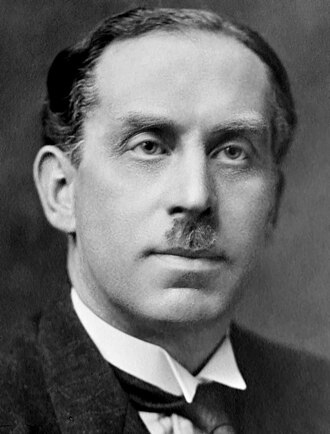
图:Theodor Hilsdorf (1868-1944) · Public domain · Wikimedia Commons
保罗·格劳斯1843—1927
Paul Heinrich von Groth
German mineralogist (1843–1927)
Paul Heinrich Ritter von Groth was a German mineralogist. His most important contribution to science was his systematic classification of minerals based on their chemical compositions and crystal structures.
摘自英文维基百科「Paul Heinrich von Groth」(英文维基百科,暂无中文条目),CC BY-SA 4.0
- 出生
- 1843 年 6 月 23 日,马格德堡
- 逝世
- 1927 年 12 月 2 日,慕尼黑
- 国籍
- 德国
- 学科
- 物理学、化学、地球科学
- 职业
- 矿物学家、大学教师、晶体学家、骑士
- 母语 / 工作语言
- 德语
- 母校
- 弗莱贝格工业大学、柏林洪堡大学
- 工作单位
- 慕尼黑大学、柏林洪堡大学
研究领域
师承
博士生2
来自 Wikidata 的「博士导师」「师从」「博士生」「学生」记录,可能不全。
所获奖项(3)
- 1906巴伐利亚马克西米兰科学与艺术勋章
- 1908沃拉斯顿奖章
- 1911英国皇家学会外籍会员
学会与院士
百科正文
本条目暂无中文维基百科条目,下面是英文维基百科原文。
Biography
He was born at Magdeburg, and educated at the Freiberg University of Mining and Technology, TU Dresden, and the Friedrich Wilhelm University of Berlin, and received the doctorate degree in 1868. After lecturing at the Freiberg mining school and at the Friedrich Wilhelm University of Berlin, in 1872, he became professor of mineralogy at the University of Strasbourg. In 1883, he was appointed professor of mineralogy and curator of minerals in the Deutsches Museum in Munich.
He died in Munich.
Work
He carried out extensive research on crystals and minerals, and also on rocks. von Groth published Tabellarische Übersicht der einfachen Mineralien (1874-1898) and Physikalische Krystallographie (1876-1895, ed. 4, 1905), the latter of which was influential with the acceptance of crystallographic methods in the field of organic chemistry. In 1877, he founded the journal Zeitschrift für Krystallographie und Mineralogie, and subsequently served as its editor until 1920. In 1883, Groth compiled a monumental five-volume collection entitled Chemische Kristallographie, which contained crystalline morphology and physical property data on thousands of substances.
By Groth's time, Dalton's atomic theory was already well established. In 1888, Groth was the first to suggest the possibility that spherical atoms reside at equivalent positions of space lattices, which gave a physical significance to this still somewhat abstract idea of the regular and symmetric partitioning of space. The German physicist Leonhard Sohncke (1842–1897) had previously derived the 65 chiral space groups (i.e. those lacking an inversion center, mirror planes, or improper axes of rotation that invert the handedness of a crystal). The mathematical descriptions of the complete set of 230 space groups, including their symmetry elements, were thereafter derived independently by Schönflies, Fedorov, and Barlow. Finally, in 1922, Ralph Walter Graystone Wyckoff (1897–1994) authored The Analytical Expression of the Results of the Theory of Space Groups, a book which contained, among other things, tables with the positional coordinates, both general and special, permitted by the symmetry elements.
以上内容摘自英文维基百科「Paul Heinrich von Groth」,按 CC BY-SA 4.0 使用,去掉了参考文献、外部链接等尾部小节,公式改写成了纯文本。全文、配图和出处见原文。
同一学科、同时代的科学家


同一学科的科学家
更多 ›