格物

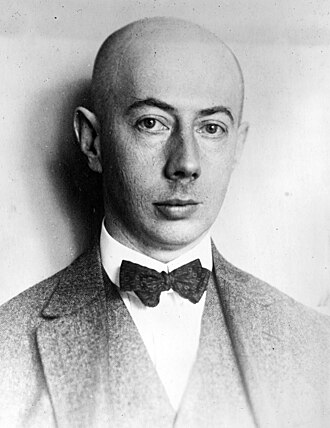
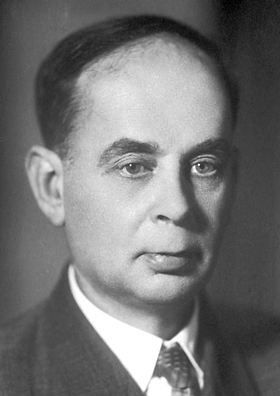
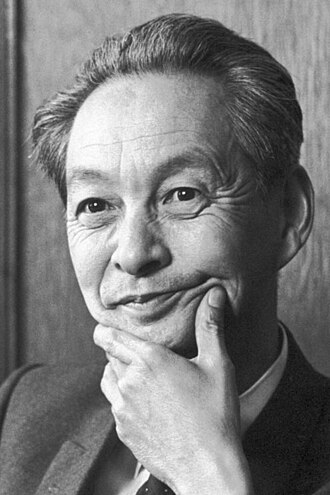
图:作者不详 · Public domain · Wikimedia Commons
菲利克斯·安德里斯·韦宁·迈内兹1887—1966
Felix Andries Vening Meinesz
Dutch geophysicist (1887-1966)
Felix Andries Vening Meinesz was a Dutch geophysicist and geodesist. He is known for his invention of a precise method for measuring gravity (gravimetry). Thanks to his invention, it became possible to measure gravity at sea, which led him to the discovery of gravity anomalies above the ocean floor. He later attributed these anomalies to continental drift. He was a Fellow of the Royal Society.
摘自英文维基百科「Felix Andries Vening Meinesz」(英文维基百科,暂无中文条目),CC BY-SA 4.0
- 出生
- 1887 年 7 月 30 日,海牙
- 逝世
- 1966 年 8 月 10 日,Amersfoort
- 国籍
- 荷兰王国
- 学科
- 物理学、地球科学、工程与发明、博物与综合
- 职业
- 物理学家、地质学家、大学教师、工程师
- 母语 / 工作语言
- 荷兰语、英语
- 母校
- 代尔夫特理工大学
- 工作单位
- 乌得勒支大学、代尔夫特理工大学(1939—1957)、荷兰皇家气象研究所(1945—1951)
师承
博士导师1
博士生2
来自 Wikidata 的「博士导师」「师从」「博士生」「学生」记录,可能不全。
所获奖项(11)
- 1936霍华德N.波茨勋章
- 1945彭罗斯奖章得主列表
- 1947亚历山大·阿加西兹勋章
- 1947威廉·鲍伊奖章
- 1950honorary doctorate from the University of Strasbourg
- 1951Van Waterschoot Van Der Gracht Medal
- 1957Plancius medal
- 1959Leopold-von-Buch-Plaque
- 1962维特勒森奖
- 1962美国地球物理联盟会士
- 1963沃拉斯顿奖章
学会与院士
百科正文
本条目暂无中文维基百科条目,下面是英文维基百科原文。
Biography
Vening Meinesz's father, Sjoerd Anne Vening Meinesz, was mayor, first of Rotterdam, then of Amsterdam. Felix was born in The Hague and grew up in a protected environment. In 1910 he graduated in civil engineering in Delft. The same year he started working for the Dutch gravity survey. In 1915 he wrote his dissertation on the defects of the gravimeters used at that time.
Vening Meinesz then designed a new gravimeter, which the KNMI (Royal Dutch Meteorological Institute) built. The apparatus has two pendula of the same size hanging in a frame but moving in opposite phases. With mirrors and lightbeams the difference in amplitude of the two pendula is captured on a film. Vening Meinesz had discovered that horizontal accelerations (as by waves on a boat) had no influence on the difference in amplitude between the two pendula. The recorded difference then is the amplitude of a theoretical, undisturbed pendulum. Now it became possible to measure gravity more accurately. Vening Meinesz started with measuring gravity all over the Netherlands, for which a network of 51 monitoring stations was created. This became a success, which encouraged him to do measurements at sea. A perfected gravimeter, hanging in a "swing", was designed. The experiment was successful.
Now measuring gravity at sea had become possible. Between 1923 and 1929, the tall (over 2 metres) Vening Meinesz embarked in small submarines for some uncomfortable expeditions. His goal was to establish the exact shape of the geoid and the Earth. When his expedition with the submarine HNLMS K XVIII was made into a movie in 1935, Vening Meinesz became a hero of the Dutch cinema public. Besides, his research was in the international scientific spotlight. In 1927 he became a member of the Royal Netherlands Academy of Arts and Sciences. In 1927 he became a part-time professor in geodesy, cartography and geophysics at Utrecht University, and in 1937 he became professor at the Delft University of Technology as well. He was awarded the Howard N. Potts Medal in 1936, and several other major geology prizes in later years.
In World War II, Vening Meinesz was involved in the Dutch resistance. After the war he could take up his tasks as a professor again. From 1945 to 1951 he was the director of the KNMI. From 1948 to 1951, Vening Meinesz was President of the International Union of Geodesy and Geophysics. He retired in 1957, and died in Amersfoort in 1966.
Research and discoveries
The vast amounts of data that his expeditions yielded were analyzed and discussed together with other leading Dutch Earth scientists of the time, J.H.F. Umbgrove, B.G. Escher and Ph.H. Kuenen. The results were published in 1948. An important result was the discovery of elongated belts of negative gravity anomalies along the oceanic trenches, along with a large circular anomaly that became known as the Indian Ocean Geoid Low. The mean gravity force appeared to be the same on land and at sea, which was in agreement with the principle of isostasy. Vening Meinesz was especially intrigued by the oceanic trenches. The coexistence of active volcanism, large negative gravity anomalies and the sudden difference in terrain elevation could only be explained by assuming the Earth's crust was somehow pushed together at these places. As a geophysicist, he was prejudiced that the crust was too rigid to deform at that scale in such a way. His discoveries could be explained only with the development of the theory of plate tectonics in the 1950s.
Submarine expeditions
Vening Meinesz measured the gravity field of the Earth with his pendulum apparatus on board several submarines. The following expeditions are described in his publications, Gravity Expeditions at Sea:
- Vol 1: 1923–1930
- HNLMS K II (1923)
- HNLMS K XI (1925)
- HNLMS K XIII (1926–1927)
- HNLMS K XIII (1928–1930)
- Vol II: 1923–1933
- HNLMS O 13 (1932)
- Vol III: 1934–1939
- HNLMS K XVIII (1934–1935)
- HNLMS O 16 (1937)
- HNLMS O 12 (1937)
- HNLMS O 13 (1938)
- HNLMS O 19 (1939)
Vening Meinesz was not on board during expeditions after 1939. His experiments were performed by his students.
- Vol V: 1948–1958
- HNLMS O 24 (1948–1949)
- HNLMS Tijgerhaai (1951)
- HNLMS Walrus (1957)
- HNLMS Vos (1955)
- HNLMS Zeeleeuw (1956)
- HNLMS Fret (1957)
Legacy
- Named after him are:
- a gravimeter, an apparatus to measure gravity
- a mathematical function used in geodesy
- a medal of the European Geophysical Society/European Geosciences Union
- a research school at Utrecht University
the crater Vening Meinesz on the Moon.
以上内容摘自英文维基百科「Felix Andries Vening Meinesz」,按 CC BY-SA 4.0 使用,去掉了参考文献、外部链接等尾部小节,公式改写成了纯文本。全文、配图和出处见原文。
同一学科、同时代的科学家




同一学科的科学家
更多 ›