格物
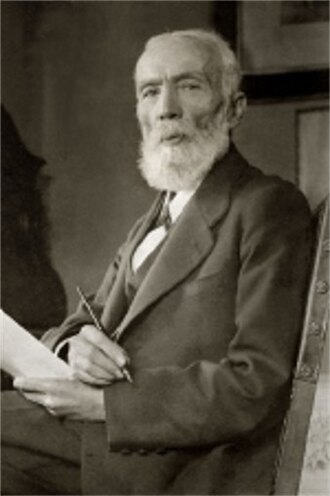
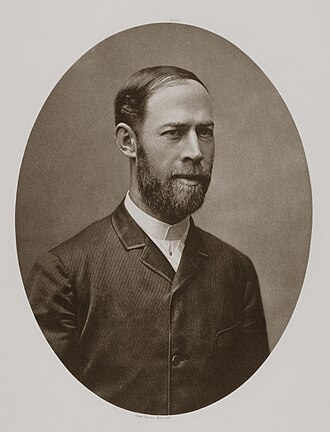
图:作者不详 · Public domain · Wikimedia Commons
- 出生
- 1845 年 2 月 2 日,赫里迈利夫
- 逝世
- 1918 年 1 月 31 日,斯米霍夫
- 国籍
- 奥匈帝国
- 学科
- 物理学、工程与发明、博物与综合
- 职业
- 物理学家、语言学家、译者、发明家
- 母语 / 工作语言
- 德语、乌克兰语、捷克语
- 母校
- 维也纳大学、斯特拉斯堡大学、Barbareum
- 工作单位
- 维也纳大学、布拉格捷克理工大学
研究领域
师承
来自 Wikidata 的「博士导师」「师从」「博士生」「学生」记录,可能不全。
学会与院士
百科正文
英文维基百科补充中文条目比较短,下面是英文条目「Ivan Puluj」的原文
Ivan Pavlovych Puluj (Ukrainian: Іван Павлович Пулюй, pronounced [iˈwɑn pʊˈlʲuj]; German: Johann Puluj; 2 February 1845 – 31 January 1918) was a Ukrainian physicist and inventor known for his early research into X-rays. His contributions were largely neglected until the end of the 20th century.
Biography
Puluj was born on 2 February 1845 in Hrymailiv, which was then part of the Kingdom of Galicia and Lodomeria in the Austrian Empire. He was the son of Pavlo Puluj and Xenia née Burshtynska (Ukrainian: син Павла́ Пулю́я i Ксенiї ур. Бурштинської). The family's original surname was Pulguy until 1861. His father, Pavlo, was a landowner who served as burgomaster of Hrymayliv from 1861 to 1865. Ivan grew up in Hrymayliv, and attended primary school in the village. He then attended the gymnasium at Ternopil, where he became a co-founder and active member of the Ukrainian student society Hromada.
He graduated with honors from Theological Faculty of the University of Vienna (1869), later also from the Department of Philosophy (1872). During his time there, he was the co-founder and later head of the Sich movement. After graduating, he worked as an assistant to the University of Vienna's experimental physics department. In 1876 Pului finished his doctorate on internal friction in gases at the University of Strasbourg under supervision of August Kundt. He studied in Strasbourg as a stipend recipient from the Austrian Ministry of Education. Puluj taught at the Imperial and Royal Naval Academy in Fiume (now Rijeka, Croatia) (1874–1876), the University of Vienna (1874–1884) and the Imperial-Royal German Technical University in Prague (1884–1916). He served as the rector of the Imperial-Royal German Technical University (German: Kaiserlich-Königlich Deutsche Technische Hochschule) in 1888–1889. Puluj also worked as a state adviser on electrical engineering for Bohemian and Moravian local governments.
In addition, he completed a translation of the Bible into the Ukrainian language.
Personal life
4 October 1884, he married Kateřina née Stožicky (1863–1945) in Vienna. They had six children: Natalia (wife of the composer Vasyl Barvinsky), Olga, Maria Xenia Margareta (died in Vienna in 1974), Alexander Hans (1901–1984), Pavlo (died in 1986) and Georg (1906–1987).
Scientific contribution
Puluj did heavy research into cathode rays, publishing several papers about those rays between 1880 and 1882. In 1881 as a result of experiments into what he called cold light Prof. Puluj developed the Puluj lamp. Puluj experimented with his new device and published his results in a scientific paper, Luminous Electrical Matter and the Fourth State of Matter in the Notes of the Austrian Imperial Academy of Sciences (1880–1883), but expressed his ideas in an obscure manner using obsolete terminology. Puluj did gain some recognition when the work was translated and published as a book by the Royal Society in the UK.
Puluj's findings were essentially X-rays, which he reported 6 weeks after Röntgen reported his.
Puluj made many other discoveries as well. He is particularly noted for inventing a device for determining the mechanical equivalent of heat that was exhibited at the Exposition Universelle, Paris, 1878. Puluj also participated in opening of several power plants in Austria-Hungary.
Quotes about Puluj
"World history has never been just to certain individuals or certain nations. Small nations and their achievements are often neglected, while the accomplishments of large nations are at times exaggerated."
Slavko Bokshan, a Serbian scientist who worked in the same department as Puluj and Röntgen
Honours
Ukraine's Ternopil Ivan Pul'uj National Technical University is named after him.
A stamp published on the occasion of Puluj's 150th Birth Anniversary in 1995.
Streets in Kyiv, Lviv and other Ukrainian cities have the name of Ivan Puluj.
On 14 May 2021, asteroid 226858 Ivanpuluj, discovered by astronomers at the Andrushivka Astronomical Observatory in 2004, was named by the Working Group for Small Bodies Nomenclature in his memory.
Support of Ukrainian culture
Puluj is also known for his contribution in promoting Ukrainian culture. He actively supported opening of a Ukrainian university in Lviv and published articles to support Ukrainian language. Together with P. Kulish and I. Nechuy-Levytsky he translated Gospels and Psalter into Ukrainian. Being a professor, Puluj organized scholarships for Ukrainian students in Austria-Hungary.
The World Association of Roentgenologists was created in 2018 in Lviv city in honor of Ivan Puluj (citation needed).
以上节选摘自英文维基百科「Ivan Puluj」,按 CC BY-SA 4.0 使用,去掉了参考文献、外部链接等尾部小节,公式改写成了纯文本。篇幅所限,较长的小节只摘了开头一部分,有的小节没有收;全文、配图和出处见原文。
同一学科、同时代的科学家

同一学科的科学家
更多 ›